





 Portuguese
  English
  Spanish
  3 min of reading
  0 comments


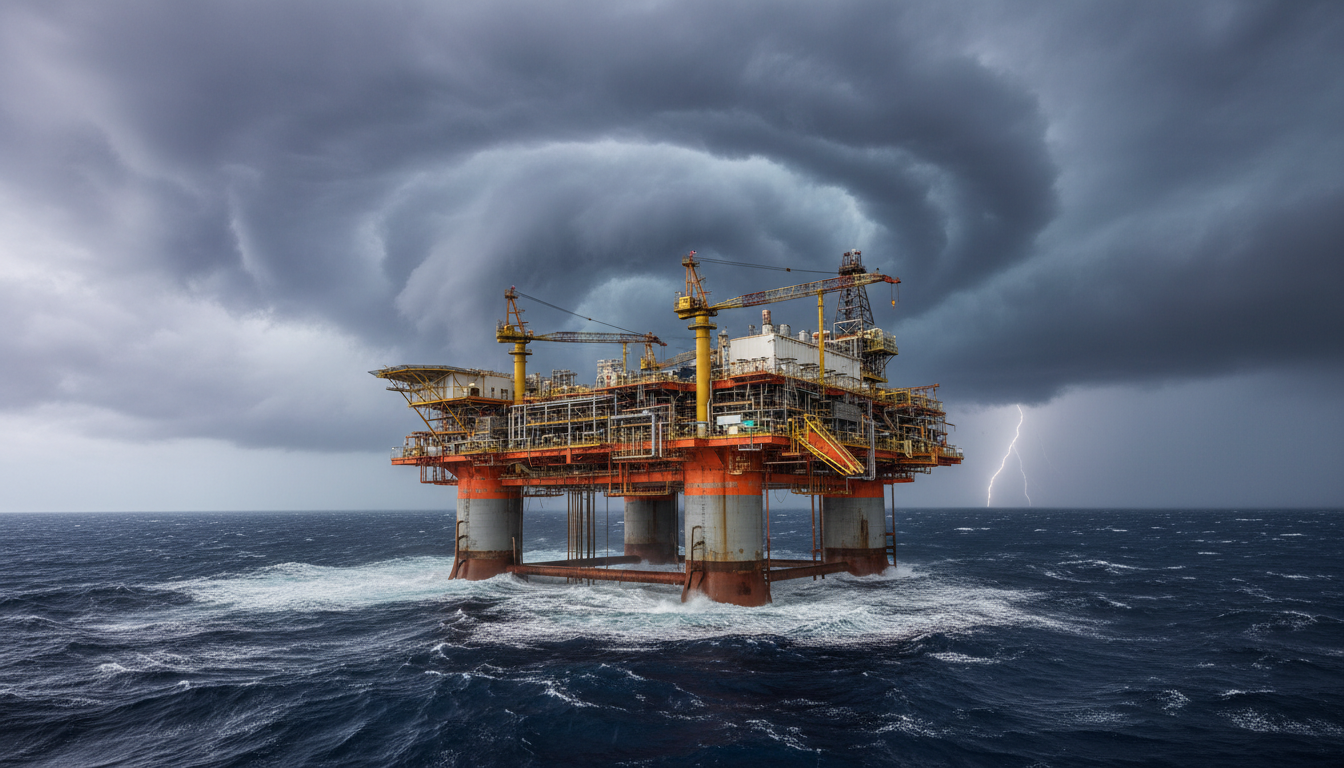
The BP Kaskida field is located in block 292 of the Keathley Canyon, 250 miles from New Orleans, with a reservoir at 20,000 PSI pressure and a total depth of 32,500 feet — conditions for which there was no equipment to handle when the field was discovered in 2006
In 2006, the same drillship that would later be involved in the worst environmental disaster in oil history — the Deepwater Horizon — drilled the well that discovered the BP Kaskida field in the Gulf of Mexico. The well reached a total depth of 32,500 feet and encountered 800 feet of hydrocarbon-bearing sands. However, the technology at the time simply could not cope with the reservoir pressure of 20,000 PSI.
Sixteen years later, with advancements in high-pressure equipment, seismic imaging, and modern drillships, BP finally received approval to develop the field. The BP Kaskida unlocks access to up to 10 billion barrels of discovered resources in the Paleogene region of the Gulf, including the neighboring Tiber field. Thus, it is BP’s first completely new hub in the region since Deepwater Horizon.
The numbers that make BP Kaskida one of the most extreme fields on the planet

- Location: Block 292, Keathley Canyon, ~250 miles from New Orleans
- Water depth: 6,000 feet (1,829 m)
- Total well depth: 32,500 feet (9,900 m)
- Reservoir pressure: 20,000 PSI
- Resources: up to 10 billion barrels (with Tiber-Guadalupe)
- Initial phase: 275 million recoverable BOE, 80,000 bpd, 6 subsea wells
- Investment: less than $5 billion
- Initial production: expected by 2029
- Operator: BP with 100% ownership
Andy Krieger, senior vice president of BP for the Gulf of Mexico and Canada, stated: “By employing an industry-led design solution, BP Kaskida will be simpler to build and operate, improving safety and delivering greater value for BP.”
-
It shouldn’t exist — but it’s there: James Webb telescope captures impossible atmosphere on giant exoplanet that challenges all known astrophysics.
-
An Italian company has created an underwater drone that lives on the ocean floor for 12 consecutive months without returning to the surface, and the embedded artificial intelligence allows it to inspect and repair oil pipelines on its own.
-
Engineered Madeira transforms light into heat and generates electricity even in the dark by redesigning the balsa internally with protected phosphorene and stearic acid, storing 175 kJ/kg, achieving 91% solar conversion and up to 0.65 V still.
-
Europe teams up with China on the SMILE mission to study Earth’s “shield” against the Sun and predict solar storms, while NASA gives little attention to the European contribution that helped take the Artemis II crew towards the Moon.
The shadow of Deepwater Horizon over BP Kaskida

The 2010 disaster leaked 4.9 million barrels of oil in 87 days, polluting 1,300 miles of coastline. Therefore, the approval of BP Kaskida generated immediate controversy. Earthjustice warns that a potential spill could release 4.5 million barrels and take up to 100 days to contain — in waters even deeper than Macondo.
BP Kaskida operates at 6,000 feet deep compared to 5,000 feet of Deepwater Horizon. Furthermore, the environmental organization argues that BP has not demonstrated adequate qualifications to operate under high-pressure and high-temperature conditions. However, BP emphasizes that the design replicates existing platforms with technologies matured since 2022. The pressure for investment in safety technology has never been greater.
What BP Kaskida opens for the future of deepwater oil

Kaskida is BP’s sixth hub in the Gulf, joining Argos, Atlantis, Mad Dog, Na Kika, and Thunder Horse. Additionally, the neighboring Tiber field has an investment decision expected in 2025. Together, the two fields access more than 3 billion barrels of in situ oil in the Paleogene formation.
Still, the project carries real risks. Pressures of 20,000 PSI at extreme depths require equipment that did not exist a decade ago. On the other hand, if BP can safely operate BP Kaskida, it will set a precedent for an entirely new frontier of deepwater exploration in the Gulf of Mexico — and worldwide.




Seja o primeiro a reagir!