





 English
  Francês
  Alemão
  Italiano
  Japonês
  Norueguês
  Portuguese
  Spanish
  4 min of reading


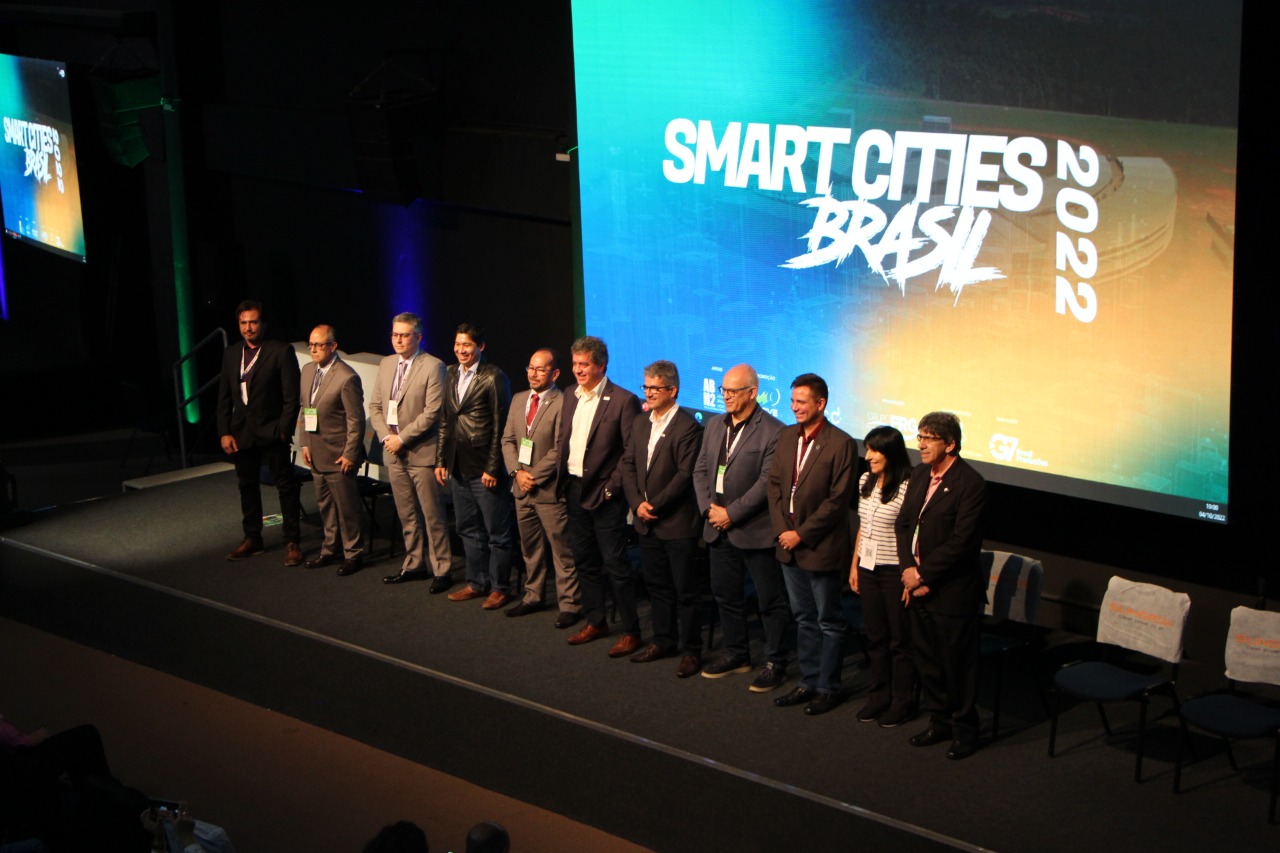
Renewable Event Happened at the Technological Park of Sorocaba, Interior São Paulo, Last Week.
The Brazilian renewable sector was quite active last week. Smart Cities Brasil, organized by Grupo FRG Mídias & Eventos, brought together over 700 people at the Technological Park of Sorocaba, interior São Paulo, as well as generating new business opportunities and millions in investments.
Considered one of the largest renewable-focused events in the country, the event featured three simultaneous forums addressing important growing areas in Brazil such as energy storage, electric mobility, and also the great potential of green hydrogen.
Green Hydrogen Gains Attention
During the opening lecture, Mônica Saraiva Panik, a specialist from the Brazilian Hydrogen Association (ABH2), emphasized how green hydrogen is growing worldwide, as well as how expanding knowledge and the necessary infrastructure for the production of renewable hydrogen will be important moving forward to make this clean fuel more competitive.
-
The Perseverance rover’s radar reveals a river buried 35 meters beneath Mars, pushing the presence of liquid water back to 4.2 billion years and increasing the chances of signs of life on the planet.

-
The climate in 2026 may surprise with extremes even more intense than in 2025, with heatwaves, out-of-season cold, and irregular rainfall in Brazil.

-
Astronomers identify 45 rocky planets that could harbor life, and one of them is just 4.2 light-years from Earth, making it the closest neighbor with the potential to have liquid water on its surface.

-
Archaeologists discover 43,000 ostraca in Egypt with tax lists, drawings, religious texts, and everyday notes that reveal what life was like in ancient Athribis before Cleopatra.


“This sector has such a large value chain that it connects practically all sectors of the economy starting with the electric sector, connecting with the gas market, the synthetic fuels market, and the biofuels market. So it starts from renewable energy, through the transmission of this energy, the production of hydrogen, storage transportation, until the consumer sectors of hydrogen, the entire industry, transport, especially in Brazil the steel sector and the fertilizer sector, cement sector,” she explains.
Renowned Institutions Were Also Present
During Energy Storage Brasil, a forum and fair on energy storage, for example, there were specialists from the Telecommunications Research and Development Center (CPQD), as well as from INMETRO, Itaipu Technological Park, National Bank for Economic and Social Development (BNDES), and National Service for Industrial Training (SENAI).
The potential of storage was extremely addressed, as the technology will provide energy security to the electric sector moving forward, particularly concerning the production of clean energy.
Maria de Fátima Rosolem, a researcher from CPQD, states that the adoption of energy storage is a one-way street and that the more Brazil invests, the better the results will be moving forward.
“The advantage of this technology is that there are significant investments being seen, even with some price issues, but it’s a one-way street, and I say that Brazil needs a program for the development of these new technologies, as we have to employ, we have the conditions that will come with new generations,” she emphasizes.
Meanwhile, during the fourth Move Forum – International Forum on Urban Mobility and Electric Cars, electric mobility in the daily lives of Brazilians also appeared very positive. The country already has over 100,000 electric units in circulation according to the Brazilian Electric Vehicle Association (ABVE) and is expected to grow even more in the coming months.
Flávia Consoni, a specialist from the State University of Campinas (UNICAMP), was one of the speakers at Smart Cities Brasil in 2022 and highlighted that movements like these are essential for decarbonization.
“I think we are already doing a little. I place a lot of weight here on the governance aspect which is this articulation among actors, especially a more direct, more incisive participation of civil society, our industries. I believe we need to show that decarbonization, the energy transition is a necessity. We have countries that are moving very strongly towards it, so how are we going to get there? What steps are we going to take? So movements like these are extremely important,” she stated during the event.
Organized by Grupo FRG Mídias & Eventos, Smart Cities Brasil was considered a success and is already thinking of new purposes for 2023. Tiago Fraga, CEO of Grupo FRG, states that the event exceeded expectations and believes that networking among participants will bring many opportunities to the Brazilian renewable sector.
“Debating this subject in Brazil is the opportunity we have to work on the segmentations of smart cities that range from traffic synchronization, urban electric mobility, cybersecurity, renewable energies, energy storage, hydrogen, and also other pillars that will form the cities of the future,” Fraga states.
“The objective of the event was precisely to pass this content to society and also to connect the companies that will lead this process, creating an environment where networking was intense and these connections were made through players, the public power and institutional power, contributing to renewable energies,” he concludes.
- Via 220 Press Advisory






Seja o primeiro a reagir!