





 Portuguese
  English
  Spanish
  4 min of reading
  0 comments


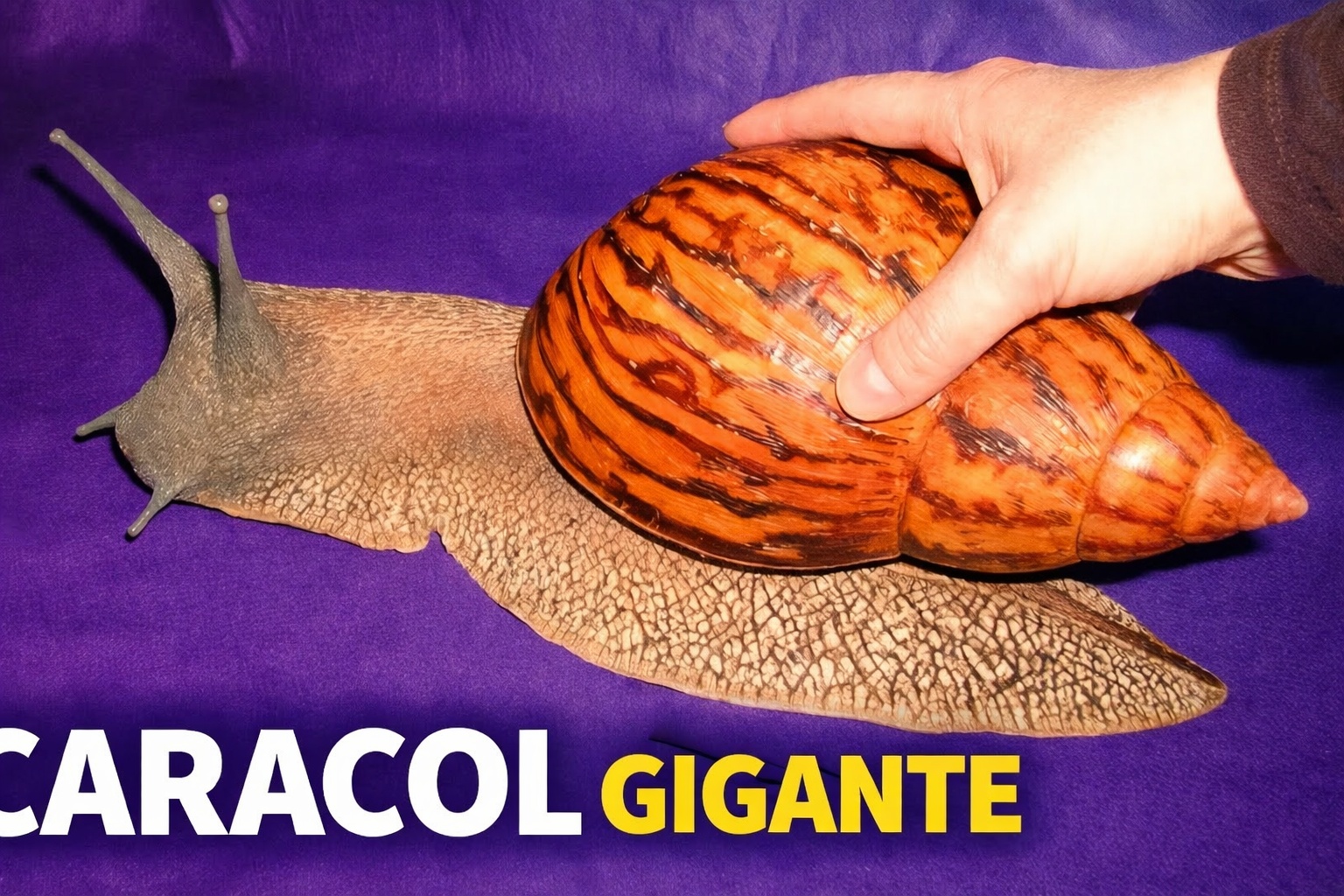
Capable of Producing Up to 1,200 Eggs Per Year, Surviving Months Without Water and Transmitting Dangerous Parasites, the Giant African Snail Has Become One of the World’s Worst Biological Pests.
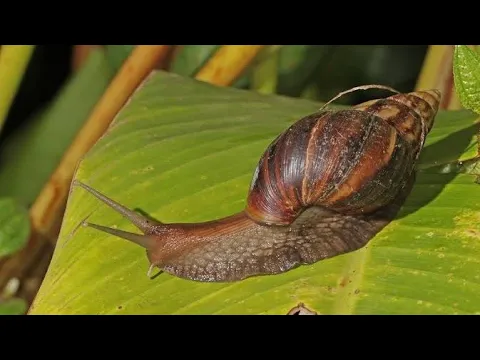
The Giant African Snail, scientifically known as Achatina fulica, is a classic example of how an apparently harmless species can become an ecological, agricultural, and sanitary problem of global proportions. Originally from East Africa, this land mollusk was taken to other continents throughout the 20th century for commercial, food, and even ornamental purposes. The result was one of the largest biological disasters ever recorded involving terrestrial invertebrates.
Today, the snail is present in much of Asia, Pacific Islands, the Caribbean, South America, and Central America, as well as various regions of Brazil. In virtually all of these locations, it spread faster than governments could react, creating dense populations in urban areas, fields, gardens, forests, and riverbanks.
Explosive Reproduction: Thousands of Descendants from a Few Individuals
The main factor behind the population explosion of the Giant African Snail is its extreme reproductive capacity. Each individual is hermaphrodite, which means that any encounter between two snails can result in reproduction.
-
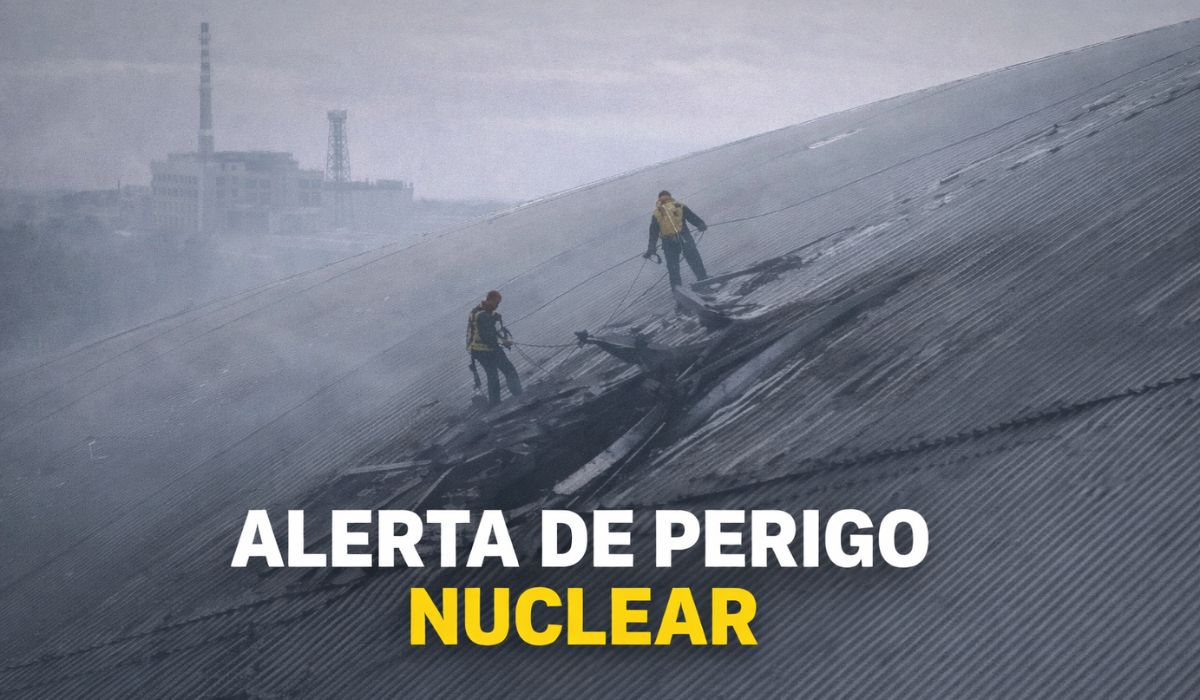
The gigantic steel shell built to contain Chernobyl for a century has been pierced by a drone, exposing a critical system and creating a hole that could cost over 500 million euros to repair.
-
Brazilian Navy reaches a new level by taking over an airport with a 1,600-meter runway used by 1,800 military personnel and autonomous attack drone testing.

-
The Himalayas continue to grow to this day, with tectonic plates advancing 5 cm per year, mountains rising up to 10 mm annually, and the 2015 earthquake that killed 9,000 people may have increased the risk of an even larger seismic mega-event.

-
At an altitude of 400 km by astronauts from the International Space Station, Paris transforms at night into a golden mesh so precise that it reveals the outline of the Seine River, avenues, and entire neighborhoods like a luminous map drawn over the Earth.


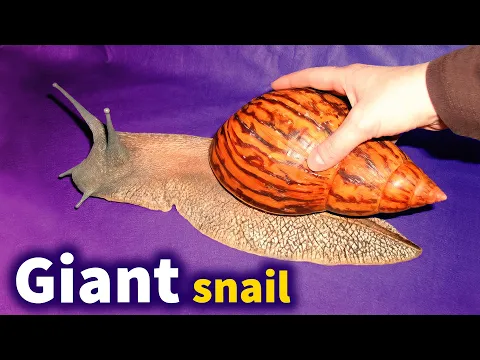

In favorable conditions, a single specimen can produce between 100 and 400 eggs per clutch, with several clutches throughout the year, easily exceeding 1,000 to 1,200 eggs annually per individual.
The eggs are buried in the soil, difficult to detect and highly resistant. In warm and humid environments, the survival rate of the hatchlings is high, allowing an infestation to establish quickly even from a few introduced animals.
This dynamic causes population growth to be exponential, surpassing any attempts at large-scale manual or chemical control.
Extreme Survival: Months Without Water, Buried in the Soil
Another critical point is the physiological resistance of the Giant African Snail. In periods of drought, cold, or food scarcity, it enters a state of dormancy known as estivation.
The animal buries itself deep in the soil and seals its shell opening with a calcified layer, drastically reducing its metabolism.
In this state, it can survive for several months without water or food, waiting for more favorable conditions to resume activity. This characteristic makes seasonal control ineffective, as even after long periods of drought, populations reemerge with full force as soon as moisture returns.
Agricultural Impact: Entire Crops at Risk
The Giant African Snail is extremely generalist in its feeding. It consumes leaves, stems, roots, fruits, and even newly planted seedlings from dozens of agricultural crops. Vegetables, fruits, grains, and ornamental plants are among the most frequent targets.
In rural areas, severe infestations have already caused significant productivity losses, increased control costs, and abandonment of agricultural areas. In urban environments, the problem manifests in home gardens, yards, and public green spaces, creating constant conflicts between residents and health authorities.
A Silent Risk to Human Health
In addition to the environmental and economic impact, the Giant African Snail poses a direct risk to public health. It can act as an intermediate host for dangerous parasites, including the nematode Angiostrongylus cantonensis, which causes eosinophilic meningitis in humans.
Direct contact with the animal, its mucus, or contaminated surfaces can transmit these parasites, especially in regions where there is inadequate management or insufficient information for the population.
Human cases have already been documented in different countries, elevating the status of the snail from an environmental pest to a health threat.
Why Control Is So Difficult
Eliminating the Giant African Snail is extremely complex. The use of chemical pesticides presents environmental risks and is not always effective, as the animals hide in the soil. Manual collection requires continuous effort and community coordination.
Natural predators, when artificially introduced, often create new ecological imbalances.
For this reason, many countries no longer speak of total eradication but rather of permanent control, accepting that the animal has come to stay in various regions of the planet.
A Global Alert About Invasive Species
The advance of the Giant African Snail is frequently cited by scientists as an emblematic example of the risks associated with the irresponsible introduction of exotic species.
A single management mistake, decades ago, was enough to create a problem that today costs millions in control, threatens entire ecosystems, and directly affects human health.
Silent, resilient, and extremely prolific, this mollusk shows that not every great threat comes with fangs, claws, or teeth. Sometimes, it comes carrying a shell… and more than a thousand eggs buried in the soil.








-

-

2 pessoas reagiram a isso.