





 Portuguese
  English
  Spanish
  3 min of reading


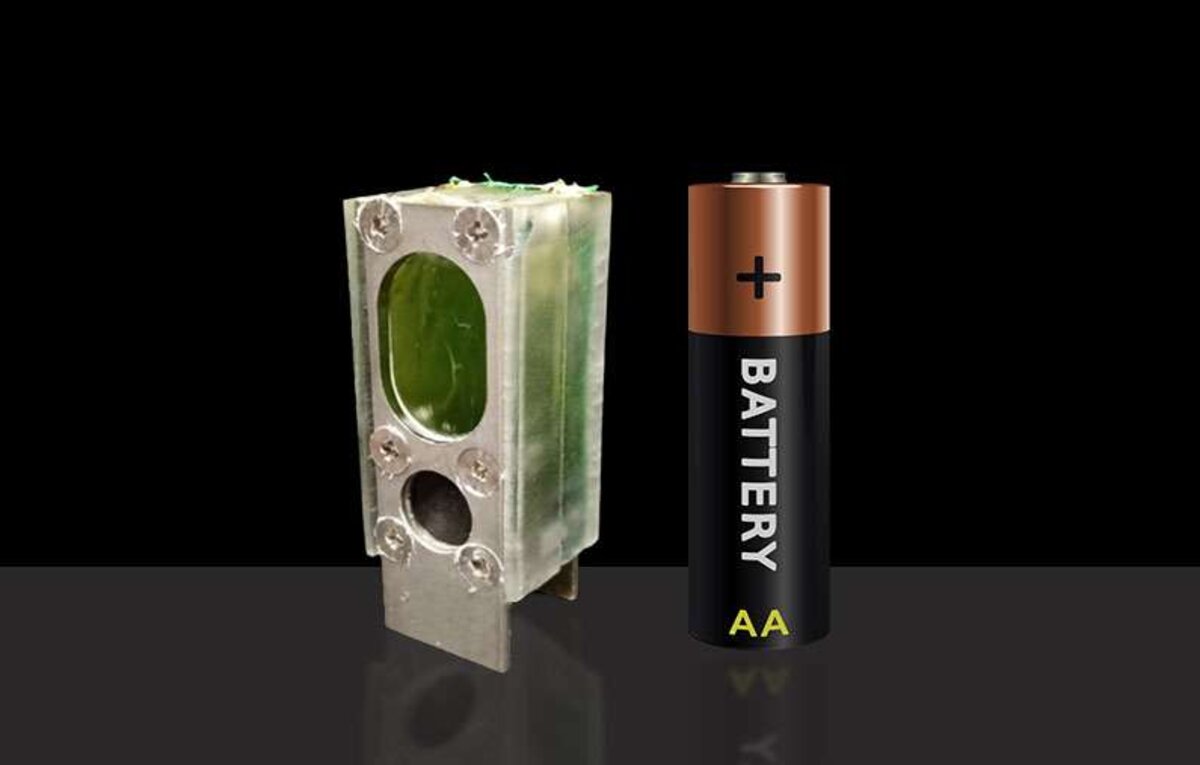
An Innovation And Research Initiative At Bristol University Verified The Feasibility Of Using Sodium And Seaweed As Substitutes For Lithium. The Long-Term Effects On Batteries Ensure Greater Sustainability, Efficiency And Environmental Commitment.
For this Monday, (01/23), a research group from the University of Bristol, in England, is aiming for innovation and research in battery usage. An initiative from the institution verified the feasibility of using sodium as a viable substitute for lithium in the long term. This substance is the most attractive for low-cost energy storage with reduced environmental impact in the international market today. In addition to this compound, the new project also utilizes seaweed.
University Of Bristol Research Initiative Points To Sodium As A Good Substitute For Lithium
Currently, a large portion of batteries used in various everyday electronics, such as cell phones and televisions, are composed of lithium ions.
This is the most used substance in battery production due to its high energy storage potential for charging devices.
-
Artemis II photographs the Moon and shows an area never seen by human eyes: part of the Orientale Basin appears in the image, while Orion approaches the flyby this Monday (6) after passing the halfway point.

-
The global fuel crisis is doing what years of environmental campaigning could not convince consumers to switch from gasoline cars to electric ones, and in Thailand, reservations are skyrocketing with over a million people at the Auto Show.

-
Ukrainian refugees in Germany are assembling war drones in a factory near Munich to send back to their own country, aiming to produce 10,000 units by the end of 2026, and some have already returned to the front lines hundreds of times.

-
Cardboard drone created in Japan reaches 120 km/h, has up to 80 km of range, low-cost design can be assembled in a few minutes and stands out for its simplicity and mass production.

Despite this energy benefit, the use of this material has been strongly criticized in various areas of the international market.
In addition to being a non-renewable product that will become increasingly scarce over the long term, the conditions for lithium production are adverse to the environment.
Another major factor currently criticized is that lithium extraction, among other rare materials, often occurs under inhumane working conditions in countries like Argentina, Bolivia, Chile, among others.
Thus, a research and innovation group from the University of Bristol has gotten to work searching for substitutes for this substance in battery production.
It was found that sodium could be a good long-term alternative in battery production since, besides being as efficient as lithium, it allows for a minimization of environmental impacts.
As the researchers explain, “sodium is the most attractive alternative to lithium as an anode material for low-cost energy storage systems.”
However, not everything is perfect, and the scientists encountered a problem: the uncontrolled growth of solid sodium debris.
It was observed that this could penetrate the membrane separating the two electrodes, leading to contact between them and consequent short-circuiting.
Fortunately, this is a problem that the research group is already addressing.
University Of Bristol Research Group Uses Seaweed To Solve Problems In Sodium Battery Production
The problem of solid sodium debris growth in lithium replacement for battery production is already being solved at the University of Bristol.
The solution found by the research group involves separating the positive and negative ends within the battery, allowing for safe charge transfer.
Thus, nano-materials derived from seaweed cellulose are being used, which makes this process more efficient.
The seaweed separators prevent the penetration of solid sodium crystals while also contributing to the efficiency of the batteries and their energy storage capacity.
Tests by the research team at the University of Bristol show even greater efficiency in sodium batteries compared to those produced with lithium.
They manage to maintain energy density even after 1000 usage cycles, ensuring good durability and long-term efficiency.
Now, the team at the University of Bristol will continue testing for the research project, aiming for the effective replacement of lithium with sodium in batteries.








Seja o primeiro a reagir!