





 Portuguese
  English
  Spanish
  6 min of reading
  0 comments


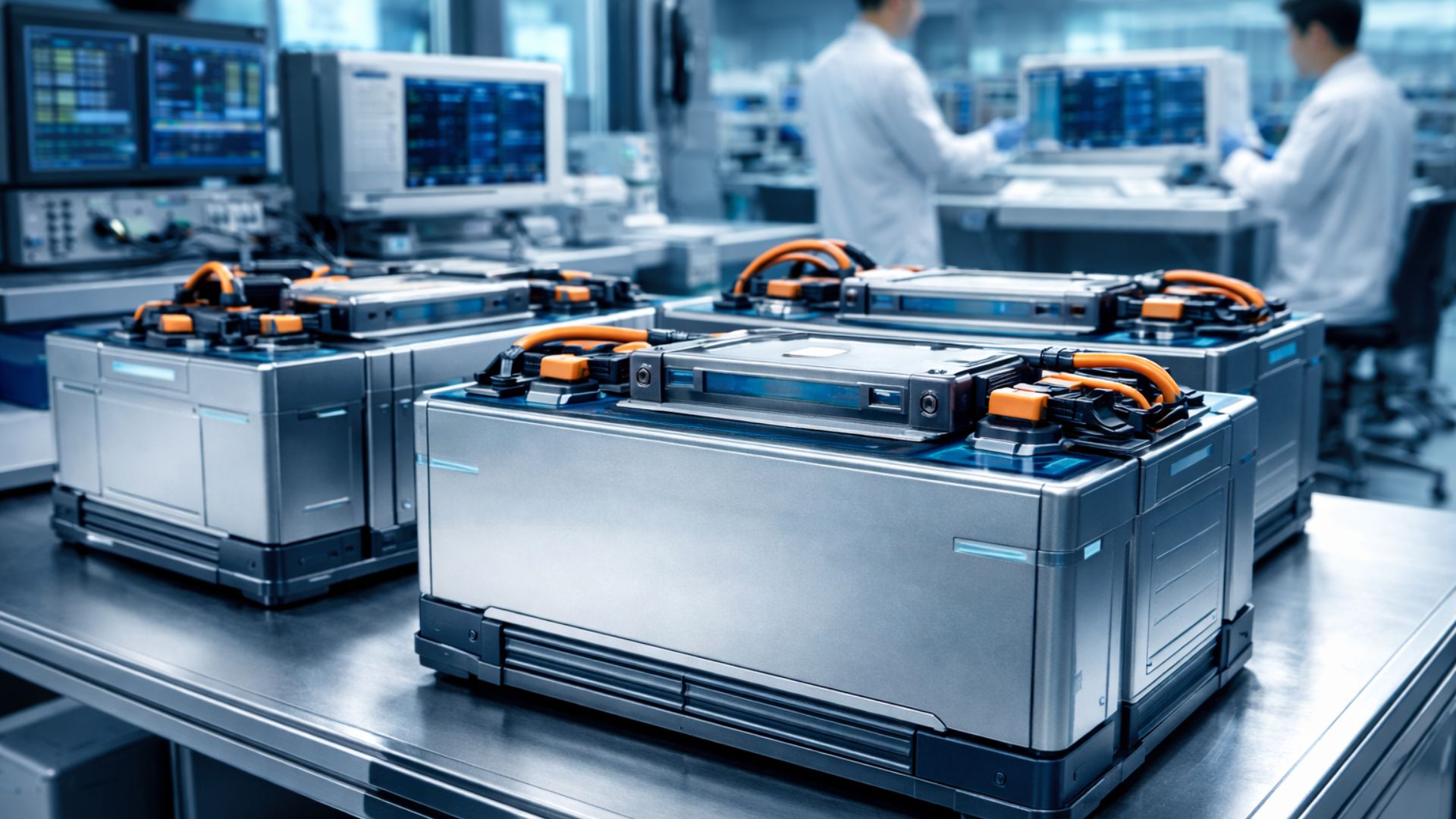
Understand how sodium batteries are rapidly advancing, reducing costs, and gaining ground against lithium costs, boosting energy storage and making electric vehicles more accessible and sustainable.
Sodium batteries are beginning to move out of the experimental field and enter a decisive phase for the global energy market: cost competitiveness. According to Cars New China and industry projections, the expectation that they could reach parity with lithium by 2027 changes the electrification landscape, especially in sectors where price, durability, and stability are key factors.
Today, lithium still dominates, but the signs of change are clear. While the cost of sodium batteries decreases with the advancement of industrial scale, lithium faces structural pressures related to supply and supply chains. This movement creates a convergence trend that could redefine the balance between technologies in the coming years.
More than a technical dispute, this is a strategic transformation. The entry of sodium as a viable alternative expands options, reduces risks, and could accelerate the adoption of more accessible energy solutions in different markets.
-
The messaging app that came pre-installed on every Samsung Galaxy phone is nearing its end, and the company itself is already advising millions of users to switch to Google’s app.

-
No more damp clothes with a musty smell: the electric clothesline that works in any weather is replacing the traditional clothesline in thousands of homes and promises to eliminate one of the biggest annoyances of household routines.

-
China is expanding autonomous delivery vehicles in over 100 cities and is already making more than 1 million monthly deliveries with technology that reduces logistics costs by up to 50%.

-
Scientists enter a narrow, flooded cave 500 meters deep and find giant dinosaur footprints on the ceiling measuring up to 1.25 meters, preserved in such a rare way that a new type of trace had to be created.

Sodium batteries reduce cost and narrow the gap with lithium
The main turning point is cost. Currently, sodium batteries operate between 0.5 and 0.7 yuan per Wh, while lithium ranges from 0.3 to 0.5 yuan per Wh. This difference still favors lithium, but it has been consistently decreasing.
The advancement of large-scale production plays a central role in this decline. As more companies invest in the technology, costs tend to fall, making sodium batteries increasingly competitive. At the same time, lithium faces challenges related to mining, logistics, and price volatility.
This scenario points to a possible cost equality by 2027, a milestone that could unlock large-scale adoption and alter the dynamics of the energy sector.
Truck tests reveal real gains in efficiency and range
The advancements are not limited to projections. Practical tests have already shown relevant results, especially in heavy transport. Trucks equipped with sodium batteries exhibited about 15% lower energy consumption per kilometer.
Additionally, the tests indicated up to 20% more range compared to equivalent lithium-powered vehicles. This gain is directly linked to the greater depth of discharge, allowing more energy to be used without compromising battery integrity.
Among the main benefits observed in the tests are:
- Reduction in energy consumption per kilometer
- Increased operational range
- Better utilization of the battery’s total capacity
- Greater efficiency in intensive use cycles
These results show that sodium batteries can already deliver competitive performance in real applications, especially in industrial contexts.
Thermal performance strengthens the advantage of sodium batteries in extreme scenarios
One of the most relevant differentiators of sodium batteries is their performance in extreme temperatures. The tested cells operated in a range from -40 °C to 60 °C, maintaining over 90% capacity even at -20 °C.
This behavior is particularly important in applications that require reliability in adverse environments. In comparison, lithium batteries tend to suffer more significant losses at very low temperatures.
Furthermore, this thermal stability reduces the need for complex temperature control systems, which can positively impact the total cost of operation.

High lifespan strengthens commercial use on a large scale
Durability is another strong point of sodium batteries. Currently, the technology exceeds 8,000 recharge cycles, a level considered competitive for commercial applications.
Some initiatives in the sector are already working with even more advanced targets, reaching up to 10,000 cycles. This number is particularly relevant for continuous operations, such as public transport and energy storage.
In practice, this means that the cost over the lifespan can be reduced, even if the initial investment is still slightly higher than that of lithium.
Among the direct impacts of this durability, the following can be highlighted:
- Less need for battery replacement
- Reduction of operational costs over time
- Greater predictability in industrial applications
- Better return on investment in energy projects

Where sodium batteries gain ground before the passenger market
Despite advancements, sodium batteries do not yet dominate the passenger vehicle segment. This is because lithium continues to offer higher energy density, an important factor for range in smaller cars.
On the other hand, there are sectors where this limitation is not decisive. Applications such as trucks, buses, and energy storage systems prioritize cost, robustness, and durability.
In these cases, sodium batteries emerge as an efficient and economically viable solution. This movement indicates a trend of technological specialization, where different chemistries coexist to meet specific demands.

Technical evolution brings sodium batteries closer to lithium performance
The evolution of sodium batteries is also occurring in the technical field. New generations are already projecting energy densities above 180 Wh/kg, approaching established technologies such as LFP batteries.
Other solutions have already shown results around 175 Wh/kg, demonstrating that the advancement is consistent and ongoing. This progress reduces one of the main limitations of the technology and expands its application potential.
By combining improvements in density, cost, and durability, sodium batteries cease to be a secondary alternative and begin to compete for real space with lithium.
Global strategy seeks to reduce dependence on lithium
The growth of sodium batteries is also set within a global strategic context. Countries like China have encouraged the development of multiple chemistries to reduce dependence on critical raw materials.
Lithium, while efficient, presents challenges related to geographical concentration and supply chains. In contrast, sodium is abundant and widely distributed, which reduces risks and increases energy security.
This diversification strengthens the sector and creates a more resilient environment for the advancement of electrification on a global scale.
Impacts on the cost of electrification and expansion of clean energy
The possible cost parity between sodium and lithium batteries by 2027 could have direct impacts on electrification. With more accessible solutions, the trend is towards the expansion of electric vehicle use and storage systems.
This also favors the integration of renewable sources, such as solar and wind energy, which rely on efficient storage to ensure stability.
Among the main expected effects are:
- Reduction in the final price of electric vehicles
- Increased access to clean energy
- Greater viability of storage projects
- Expansion of electrification in emerging markets
This set of factors reinforces the role of sodium batteries as a strategic element in the energy transition.
Prospects for Brazil with sodium and lithium batteries
In Brazil, the impacts are expected to occur gradually. Initially, adoption is likely to concentrate on industrial applications and heavy transport, where total cost and durability are more relevant.
As technology matures, sodium batteries may also gain ground in other areas, including large-scale energy storage and, in the future, passenger vehicles.
Moreover, the presence of alternatives to lithium may bring indirect benefits, such as greater price stability and reduced dependence on imports.
A new balance between sodium batteries and costs in the global market
The advancement of sodium batteries indicates a structural change in the energy sector. Instead of a single dominant technology, the market is moving towards a more diversified and strategic model.
The relationship between sodium batteries and costs will begin to define industrial decisions, investments, and energy policies. Each technology is likely to occupy a specific space, according to its characteristics and advantages.
If cost parity is confirmed by 2027, sodium will cease to be a promise and become a concrete alternative. This does not eliminate lithium but broadens the range of available solutions.
For consumers, companies, and governments, the outcome is clear: more options, greater efficiency, and a more solid path for the advancement of global electrification.






Seja o primeiro a reagir!