





 Portuguese
  English
  Spanish
  4 min of reading
  0 comments


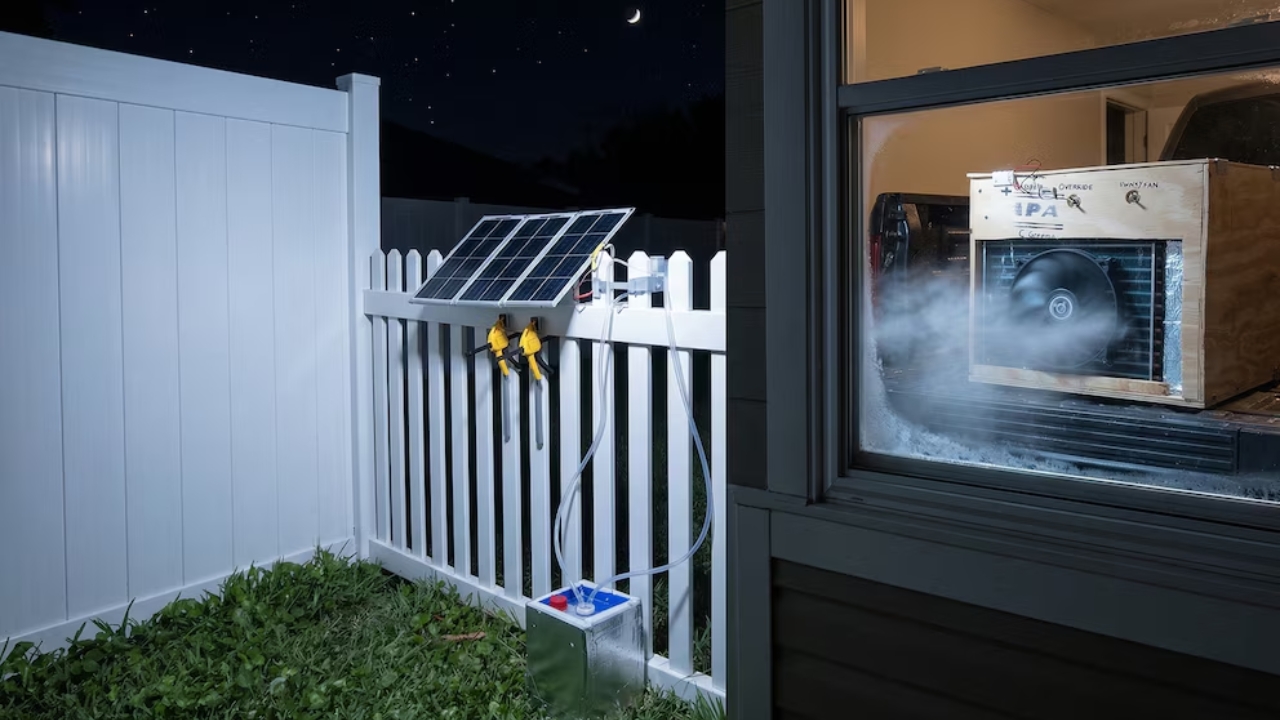
With 700 W of cooling, a home system created in Florida uses solar panels to turn water into thermal storage and keep small spaces cool after sunset
The heat of the day has become fuel for the cold of the night. In Florida, a homemade system has started using solar energy to freeze water and store this thermal reserve to cool small environments after sunset.
The proposal stands out for combining low cost, simplicity, and reduced dependence on the electrical grid. In practice, the equipment serves compact rooms, cabins, vans, and technical spaces with a solution that takes advantage of peak sunlight to deliver comfort hours later.
How the cold is stored for night use
The heart of the project lies in a block of ice that functions as a thermal battery. During the day, the energy captured by the solar panels powers the process of freezing water, creating a cold reserve that can last for hours and, in some scenarios, even days.
-
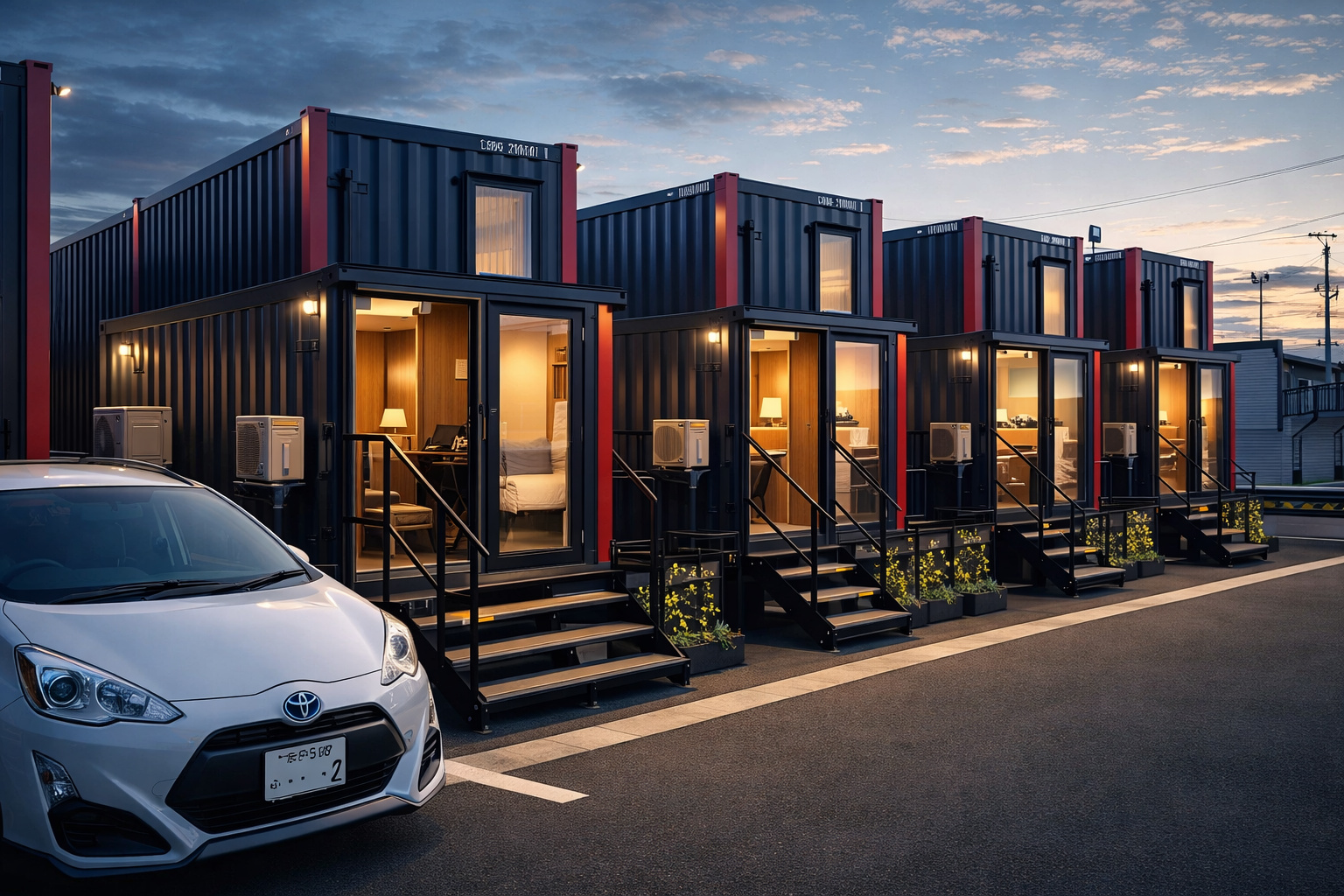
For less than R$ 200, container hotels become the solution for those traveling by car, with affordable prices, 24-hour accessible beverage machines, air conditioning, television, a full bathroom, and high-quality beds.
-
It looks like a movie scene: “Forgotten” Brazilian city surprises with a waterfront of nearly 11 km, tranquil beaches, and a GDP that exceeds R$ 6 billion; meet Navegantes, in Santa Catarina.

-
Milei’s government launches surprise police operations on the streets of Argentina to hunt undocumented immigrants, but the government’s own data reveals that only 4% were irregular. Critics say it is a copy of Trump’s policy without real necessity.

-
Indonesia is the largest producer of tropical seaweed in the world, and this market is already worth billions of dollars, but 90% of the production goes directly to China as raw material. Now the country wants to change the game and process everything on its own.

This storage occurs because water can retain a lot of energy when it changes from a liquid to a solid state. With efficient insulation, cold loss is kept low, which helps maintain performance even after solar generation decreases.
System uses 2 panels and small battery to freeze water

The structure was assembled with 2 solar panels of 100 W, a 35 Ah battery, and a small compressor with refrigerant R600. The system removes heat from a reservoir containing about 7.5 liters of water installed in an insulated box with foam and fiberglass.
Once the ice forms, a pump circulates a mixture of water and glycol inside the frozen block. This cold is directed to a radiator with a fan, which pushes the cooled air into the environment without requiring significant additional consumption.
Tests in vehicles under extreme heat showed practical results
Tests conducted in vehicles during the Florida summer indicated that the equipment can significantly cool the cabin for several hours. The performance was close to that of a small window air conditioner, but without direct electrical consumption at the point of use.
According to Interesting Engineering, a portal specialized in innovation and engineering, the method demonstrated the ability to maintain cooling even under severe heat conditions, reinforcing the potential of the solution for compact and off-grid uses.
Ice can store energy on a much larger scale

In terms of capacity, thermal storage is even more impressive. A 1 cubic meter ice can store about 93 kWh of cooling energy, a volume comparable to that of large batteries, but at a lower cost and without wear from charge and discharge cycles.
This is one of the strongest advantages of the system. Water does not lose its phase change potential, allowing the process to be repeated many times without the typical degradation of chemical technologies.
Technology can move from small environments to homes
The prototype was designed for small rooms, cabins, and vans, but the logic can be scaled up. By increasing the volume of water and the number of panels, the same idea can serve larger spaces, provided the property has adequate thermal insulation.
The expectation is that a more robust version can help cool a small residence. This opens up possibilities to reduce peak consumption, relieve the grid, and expand the use of renewable energy in very hot regions.
Technical limits still impact the expansion of the system
Despite its appeal, the solution does not eliminate challenges. The total weight of the system reduces portability, the power still falls short of conventional split systems, and the circuit with refrigerant requires secure assembly and technical attention.
Another important point is the humidity in the air. Part of the energy needs to be used first to condense this vapor before the temperature drops more noticeably, which can delay the initial cooling of the environment.
The advancement of this proposal shows how solar energy and thermal storage can combine simply to meet the rising demand for cooling. In hot locations, this represents more autonomy and less pressure on electrical consumption.
Even without solely replacing traditional systems, the project reinforces an important perspective. When cold is stored and released at the right time, climate control reaches a new level, and the energy bill enters a different logic.








Seja o primeiro a reagir!