Portuguese
 Spanish


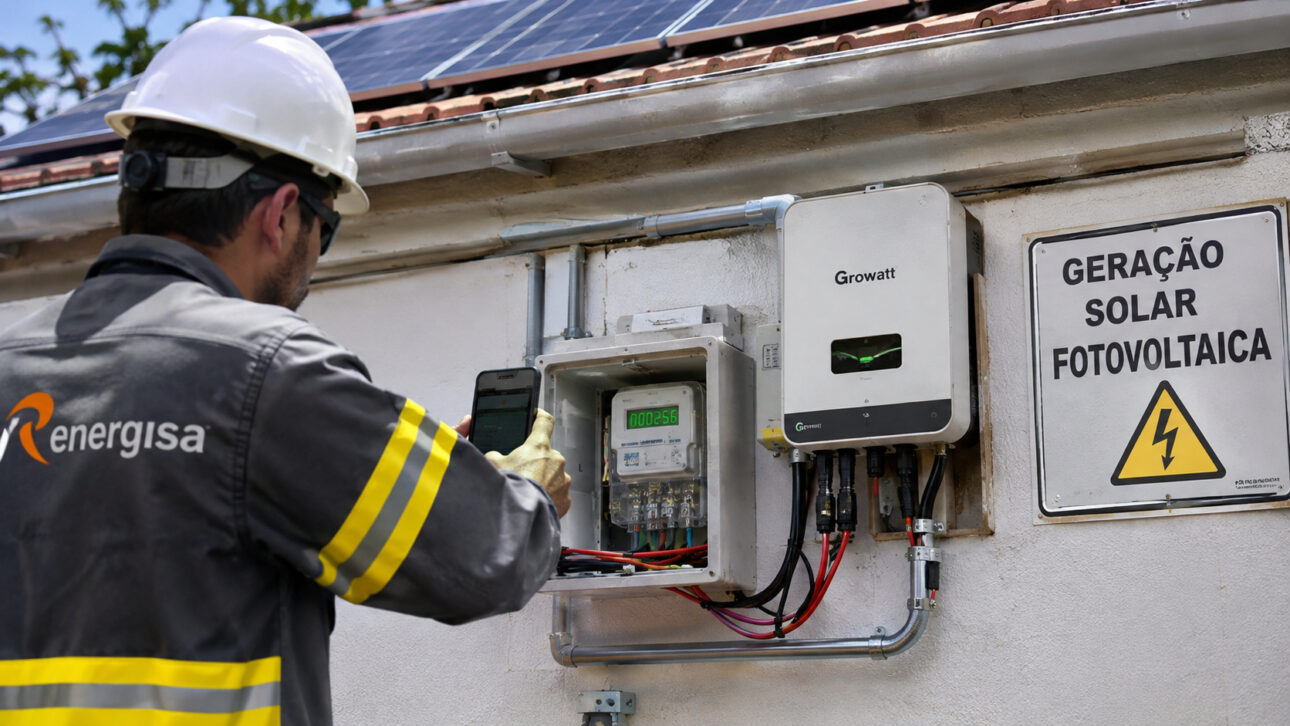

Irregular expansions of photovoltaic systems are raising concerns among utilities, which already use artificial intelligence and satellite imagery to identify suspicious installations. Brazil’s electricity regulator is discussing changes to inspection rules.
Installing rooftop solar panels to lower the electricity bill has become increasingly common in Brazil. But the market’s growth has brought a problem that concerns electric utilities: consumers are increasing their systems’ generating capacity without notifying the utilities.
Known in Brazil’s power sector as “solar power theft”, the practice could cost between R$3.3 billion and R$4 billion a year. The estimate comes from the Brazilian Association of Electric Power Distributors (Abradee), which calculates that the potential impact could add 1.1% to 1.3% to electricity rates.
The issue was highlighted in a report published by Extra on Wednesday, November 25, 2026. The article details how utilities are addressing the irregularities and which technologies they have begun using to identify suspicious installations.
-
Brazil’s power demand sets a record at 108.7 GW at 10:47 a.m. Tuesday, Nov. 24, 2026, topping the previous day’s 106.6 GW, as rooftop solar and small plants supplied 31% of demand

-
Workers lower steel rings for new turbines at Foz do Areia, boosting capacity by 860 MW as Copel invests R$1.3 billion for 2030 expansion

-
Spanish companies dominate Brazil’s $1.6 billion power transmission auction, winning 7 of 8 projects
-
202-Meter Dam in Santa Catarina Impresses with Its Size and Generates Energy Equivalent to About One-Fourth of the State’s Consumption


Unlike conventional electricity theft, solar power theft can occur at properties with photovoltaic systems that were originally approved. The violation occurs when the owner modifies the installation, increasing its generating capacity without following the procedures required by the utility.
The cost of these changes can show up on the electricity bills of consumers who have never installed a single solar panel at home. The scale of that impact, however, remains disputed among power-sector representatives.
How solar power theft works and why it concerns electric utilities
Anyone planning to install a photovoltaic system connected to the power grid must provide the utility with technical information about the equipment. These details allow the utility to assess the connection conditions and the expected generating capacity for that customer account.
Once the system is approved, the owner can generate electricity for personal use and, depending on the system’s specifications, feed excess power into the grid. That energy can be converted into solar energy credits, which can offset consumption during other periods.
The problem arises when the system’s actual installed capacity differs from the capacity on record with the utility. Adding equipment without making the necessary updates to the project can change the conditions that were originally approved.
For example, a home that initially generated enough electricity to meet its own needs may produce much more after an expansion. If the change is not reported, the utility continues to work with information that no longer reflects the installation’s specifications.
That does not mean adding solar panels is prohibited. Owners can expand their systems as long as they comply with the technical and regulatory requirements that apply to the change.
Utilities are concerned specifically about expansions carried out outside these procedures. The Brazilian National Electric Energy Agency (Aneel), the country’s electricity regulator, provides guidance on rules for distributed microgeneration and minigeneration.

Solar power capacity grew more than 70-fold in eight years, changing how Brazilians use electricity
The emergence of solar power theft has accompanied a rapid transformation in Brazil’s energy market. In 2018, installed distributed generation capacity stood at about 0.74 gigawatts (GW). By 2026, it had reached about 55 GW, according to figures cited in an Extra report.
Lower costs for photovoltaic equipment and the potential savings on electricity bills have encouraged the installation of systems in homes, rural properties, commercial establishments, and industrial facilities.
As a result, consumers who once relied entirely on electricity supplied by utilities began producing some of the power they use. In many cases, they also started feeding electricity into the grid during hours of peak sunlight.
This shift has changed the dynamics of infrastructure originally built to distribute electricity generated at large power plants.
Today, a home may receive electricity from the utility at night and send excess power back to the grid during the day. In neighborhoods with a high concentration of solar power systems, this pattern requires special attention from distribution utilities.
Transformers, cables, and protective equipment must operate within specific technical limits. When multiple installations increase their capacity without prior notice, it becomes harder to anticipate the need for upgrades to local infrastructure.
Why solar power theft can raise electricity bills for consumers without solar panels
The potential for costs to be shifted to other consumers is among the most contentious issues in the debate over solar power theft.
In Brazil, owners of grid-connected photovoltaic systems can participate in the Electric Energy Compensation System (SCEE). The program allows excess electricity generated during one period to offset electricity consumption later.
Under Law No. 14,300, dated January 6, 2022, energy credits are valid for 60 months.
Even when a home can significantly reduce its monthly electricity expenses, the utility’s infrastructure remains available. At night or during periods of low solar generation, for example, the property may again rely on electricity supplied through the grid.
Maintaining this infrastructure involves costs that must be covered through rates and the financing mechanisms established by law.
In Abradee’s assessment, unauthorized expansions can increase costs associated with distributed generation. This is especially true when consumers receive benefits under conditions different from those for which their installations were approved.
The association estimates that the annual financial impact of solar power theft could reach R$4 billion. The figure, however, is a projection by utilities, not a loss definitively confirmed by Aneel, Brazil’s electricity regulator.

Utilities turn to artificial intelligence and satellite imagery to inspect photovoltaic systems
Inspections of photovoltaic systems now use tools that allow utilities to investigate possible irregularities without initially visiting each property.
Energisa is one company that has adopted this strategy. The group uses artificial intelligence and satellite imagery to identify installations that may differ from existing records.
Data published in the Extra report show that the company mapped approximately 11,000 suspected cases. Of nearly 8,000 cases reviewed, about 6,500 were found to involve irregularities.
CPFL has also expanded its inspection efforts. Over a 12-month period ending in June 2026, the company conducted 542 inspections and found problems in 445 of them.
The figures help explain why utilities have begun investing in technologies that can help direct field teams’ work.
Aerial images can reveal visible changes in the arrangement or number of panels installed on a property. This information can be compared with data in the utility’s records.
A photograph, however, does not necessarily show the equipment’s capacity or all the electrical characteristics of the system. Two panels that look similar may have different generation capacities.
For this reason, solar power inspections need to be accompanied by technical and documentary checks. A larger number of panels alone does not establish all the circumstances of a possible irregularity.

Brazil’s grid operator identified a gap of up to 14.6 GW, but experts remain divided over the amount of irregular generation
The difficulty of determining the true scale of solar power theft became clear in assessments conducted throughout 2026.
In April, an assessment by the Brazilian National Electric System Operator (ONS) indicated that there could be an additional 11.8 GW to 14.6 GW of unobserved generation capacity.
That range stands out when compared with the approximately 55 GW of distributed generation installed in Brazil.
However, data submitted by utilities identified about 88 megawatts (MW) of irregular capacity. The gap between the figures is substantial and calls for careful interpretation.
The ONS itself emphasized that the estimated additional capacity is a technical hypothesis. Therefore, the entire gap cannot automatically be attributed to the existence of irregular photovoltaic installations.
The assessments also differ in scope and methodology. One seeks to explain differences observed in the behavior of the electric grid, while the other compiles information on irregularities identified by utilities.
There is still no proven equivalence between all the generation unobserved by the operator and the capacity installed irregularly across the country.
This distinction is also important when evaluating the financial estimates presented by utilities.
Solar power theft adds to debate over billions of dollars in subsidies for distributed generation
The crackdown on irregularities is unfolding amid another debate dividing Brazil’s power sector: how to fund subsidies for distributed generation.
In recent years, favorable electricity rates have helped make photovoltaic systems an economically attractive investment. Families and businesses have found ways to reduce electricity costs and recoup the money spent on equipment.
As the market has grown, however, questions have mounted over how the costs associated with these benefits are distributed.
On November 10, 2026, a Reuters report presented findings from a study commissioned by utilities. The study estimated that subsidies and other costs related to distributed generation would exceed R$20 billion that year.
That amount should not be confused with the R$4 billion that Abradee attributed to possible irregularities.
Legally granted incentives for consumers are part of a policy designed to encourage investment in renewable generation. Solar power theft, by contrast, involves changes made outside the authorized conditions.
Conflating these two situations could lead to the mistaken conclusion that all consumers benefiting from distributed generation are acting illegally.
Brazil’s solar energy law phases in changes to charges through 2029
Brazilian law already provides for a transition in the tariff terms that apply to certain distributed microgeneration and minigeneration systems.
The solar energy law preserved specific terms through 2045 for consumer units that meet the requirements set out in Article 26.
For installations subject to the general transition rule, certain tariff components related to the use of distribution infrastructure have been phased in.
In 2026, the prescribed percentage is 60% of the components covered by Article 27 of the law. The share rises to 75% in 2027 and reaches 90% in 2028.
Starting in 2029, the regime established by Article 17 of the law will apply.
These percentages do not represent a charge on all the electricity produced by solar panels. They apply to specific tariff components, depending on the eligibility terms for each consumer unit.
For those planning to expand an existing installation, understanding the distributed generation rules is especially important.
The connection date, project characteristics and nature of the change can affect the applicable tariff treatment.
Surplus solar generation also challenges the operation of Brazil’s large power plants
Beyond the financial consequences, the growth of distributed generation has created challenges for electricity production planning.
Photovoltaic systems generate most of their electricity during the day, especially when sunlight is strongest. At those times, thousands of homes and businesses can simultaneously reduce the amount of electricity they draw from the grid.
This pattern requires adjustments to output from large power plants connected to Brazil’s National Interconnected System (SIN).
Under certain circumstances, the system operator must restrict generation from power facilities to preserve the balance between supply and demand. In the industry, this procedure is known as curtailment.

When some photovoltaic capacity is not properly reflected in records, forecasts of electricity consumption and generation can become less accurate.
This does not mean, however, that solar power theft is responsible for all the production cuts faced by large renewable power plants.
Transmission-line constraints, regional consumption patterns and operational limitations also influence these decisions.
The challenge is to gain a more accurate understanding of the country’s installed capacity so that planning can keep pace with the rapid expansion of photovoltaic systems.
Solar industry representatives support inspections but warn against generalizations
Utilities’ concerns about unauthorized installations face resistance when the debate expands to the entire distributed generation market.
Bárbara Rubim, chair of the board of the Brazilian Photovoltaic Solar Energy Association (Absolar), supported penalties for violations but warned of the risk of damaging the sector’s reputation.
Her position highlights an important distinction between cracking down on irregular practices and questioning the legitimacy of benefits granted to consumers who comply with the law.
There are also cases in which discrepancies in registration records or administrative difficulties need to be clarified before an installation is classified as fraudulent.
In this context, transparent inspection criteria help protect both the electric grid and consumers who have invested in accordance with established rules.
Individual assessments of installations are particularly important because photovoltaic systems can have different configurations, connection dates and rate conditions.
Aneel considers new rules to combat solar power theft in Brazil
Brazil’s National Electric Energy Agency (Aneel), the country’s electricity regulator, is working to improve procedures for inspecting distributed microgeneration and minigeneration.
The discussion includes input received during a public consultation and measures intended to improve the detection of irregularities. The expectation announced in November 2026 is that the matter will be submitted to the agency’s board in the coming weeks.
Until a final decision is made, the new proposals under review should not be treated as approved requirements.
Consumers who make unauthorized changes, however, may already face administrative and financial consequences, depending on the circumstances identified and the applicable rules.
Possible consequences include a billing review, suspension of credit netting and a requirement to bring installations into compliance.
Owners planning to increase the capacity of their photovoltaic systems can avoid future problems by consulting the utility and a qualified professional in advance.
The regulatory debate is gaining importance in a country that has multiplied its distributed generation capacity in just a few years. As new consumers invest in solar power, utilities are seeking to identify installations operating outside their authorized conditions.
On the other side are Brazilians who rely entirely on electricity supplied by utilities and may end up shouldering some of the costs estimated by Abradee.
Is it fair for consumers without solar panels to bear some of the costs caused by solar power theft, or should those expenses be charged exclusively to those responsible for the violations?