





 Portuguese
  English
  Spanish
  8 min of reading
  0 comments


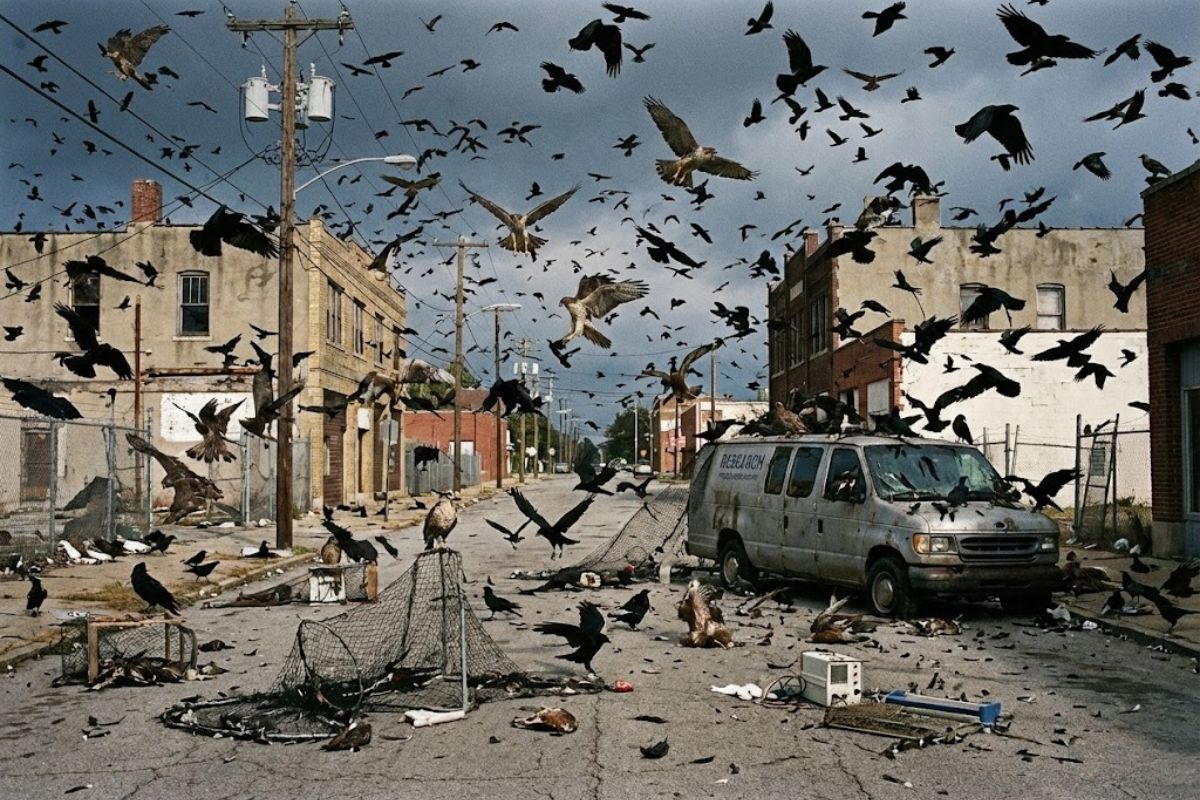
An Empty Trap In Scotland, A Man Attacked In India, And Airports On Hold Reveal Why Crows Learn Fast, Remember Faces For Years, And Warn Their Flock. The Idea Of Releasing Predators To Control Crows Brought Human, Ecological, And Political Risk And Also Uncovered The Strength Of Memory That Crosses Generations.
Crows Have Become A Problem That Seems Impossible To “Turn Off” With Simple Solutions: They Attack People, Invade Cities, Forage Through Trash, And When They Feel Threatened, Turn A Face Into A Target And Make The Flock Act As A Unit.
The Most Disturbing Thing Is That The Attempt To Solve The Chaos With Force, Including The Idea Of Releasing Predators, Hits A Detail That Changes Everything: Crows Recognize, Remember And Teach Who Represents Danger, And This Information Continues To Circulate For Years, Reaching New Individuals.
The Trap In Scotland That Lit The Wick Of The Wrong Solution

In The Scottish Highlands, A Gamekeeper Went To Check A Crow Trap Near A Trail. Through Binoculars, He Saw Seven Crows Trapped In A Wire Cage. He Planned To Kill Six And Leave One As Bait, But Had To Rush Home After A Phone Call From His Wife.
-
The coldest seawater ever recorded in Earth’s history was hidden under extreme ice 717 million years ago and reached an impressive -15°C.

-
China has launched the world’s first floating artificial island, a scientific structure designed to face open seas, test equipment weighing hundreds of tons, and reach depths of 10,000 meters.

-
China accelerates global science and may surpass the United States in 2 years with increased public investment, continuous growth, and direct impact on the global technological competition.

-
Scientific studies indicate that drought may be strengthening a much greater silent threat: more resistant superbugs.


When He Returned 40 Minutes Later, The Scene Looked Impossible: There Was No Movement At All. The Cage Was Empty, With Only Feathers And Seven Pairs Of Feet Left.
It Was Not A Tourist. The Culprit Was Inside: A Golden Eagle, Called In Europe “King Of The Sky,” That Had Entered Through The Roof Opening And, In Just Over Half An Hour, Killed And Ate All The Crows.
The Predator Did Not Fly Because It Could Not Get Out And Was So Stuffed That It Could Hardly Lift Off When Released.
From There, A Tempting Idea Begins To Grow In The Mind Of Anyone Desperate With Crows: If The Common Methods Fail, Why Not Use A Predator To Do The Job “Naturally”?
India, Attacks And Airports: When Crows Turn Into A War Routine

The Story Takes On A Different Scale In Northern India, In The Village Of Sumela, Near The City Of Shafuri. There Lives Shiva Kawat, A Man Who Has Started To Look Up At The Sky Whenever He Leaves His House, Not Out Of Devotion, But For Survival: Crows Dive At Him.
Sometimes It’s One Bird, Sometimes A Whole Flock. Claws, Beaks, Fury. The Locals Even Treat It As Entertainment, Waiting For The Next Attack.
It All Started When Kawat Tried To Save A Chick Trapped In A Barbed Wire Fence. The Chick Died In His Hands, And In The Logic Of The Crows, The Conclusion Was Direct: Kawat Became A “Killer”.
Since Then, He Carries A Stick To Scare Them Away, Trying To Only Frighten, But The Effectiveness Is Minimal Because, For These Birds, Pain Is Not The Central Point. The Point Is Memory.
On Another Front, Crows Also Managed To Disrupt Operations At The Pune Airport: In One Incident, The Presence Of The Birds Forced Controllers To Redirect A Flight 10 Minutes Before Landing; Another Flight Was Delayed For 6 Hours While The Crew Waited For The Runway To Be Cleared.
Why Crows Multiply Near People And Pose A Health Risk
Domestic Crows Are Described As Pests Far Beyond India, Listed Among Highly Harmful Invasive Species Because They Easily Live In Cities And Suburbs And Reproduce At An Impressive Rate.
Open Dumps, Food Waste, And Any Urban Food Source Become A Magnet. And The Diet Is Broad: Grains, Processed Meat, Birds, Lambs, Goats, Market Scraps, And Trash Everywhere.
This Link With Waste Creates An Additional Problem. In An Investigation With Meat And Blood Bait, 100 Domestic Crows Were Captured And Humanely Euthanized, And Their Guts Examined.
The Alarming Result Was Finding Types Of Antibiotic-Resistant Salmonella, In Addition To The Risk Of Transmission Of Chlamydia, Colibacillosis, Avian Tuberculosis, And More Than A Dozen Human Diseases.
The Critical Point Is Proximity: They Are Birds That Interact Directly With People.
Crops, Tourism, And The African Coast: When The Problem Crosses Continents
Besides Attacks And Dirt, Crows Cause Serious Damage To Crops. They Peck Grains, Unearth Seeds, And Ruin Fruits At All Stages, From Planting To Harvesting.
The Narrative Itself Cites Studies Indicating That Crows Are Among The Three Species That Most Harm Crops In Maturation And That Birds Can Cut Productivity By Over 55% Under Certain Conditions, A High Number When The Impact Is Regional.
In Himachal Pradesh, Grapes Suffer Especially: Crows Eat The Berries And Lower The Quality, Also Affecting Wine And The Economic Chain Around It.
The Expansion Also Appears Outside Asia. Domestic Crows Were Brought To Zanzibar With The Justification Of Helping To Clean Food Waste, But More Than A Century Later, They Have Started To Spread Chaos In Regions Like Kenya: Killing Small Native Birds, Spreading Diseases, Destroying Crops, And Tormenting Tourists, Especially At Beach Parties And Street Cafes.
In January 2024, More Than 12,000 Crows Were Counted In Just One Coastal City In Kenya, Watamu.
During This Same Period, Authorities Set A Goal To Kill At Least One Million Crows And Prevent Them From Advancing To Tourist Areas And The Interior, Including The Capital Nairobi. The Strategy Mentioned Includes A Poison Tested In 2022, When About 2,000 Crows Died.
The Product Is Described As “Safe” In The Sense That It Completely Decomposes In The Bird’s Body Before Death, Which Occurs In Up To 80 Hours, Reducing Risk For Scavengers That Feed On The Carcass. The Name Mentioned For Record Is Starside, Used Against Birds Considered Harmful.
Intelligence And Memory Of Crows: The Detail That Makes Any “War” More Difficult
The Biggest Obstacle To “Solving” Crows By Force Is That They Learn From Encounters And Adjust Their Strategy.
You Can Decimate Part Of The Population, But The Effect May Be Creating An “Elite” Of Survivors: Experienced Birds That Understand Traps, Disperse, And Reposition The Problem In Nearby Areas.
There Are Clear Examples Of Applied Intelligence. In Davis, California, Researchers Observed Crows Choosing Different Heights To Drop Nuts, Varying According To The Risk Of Theft And The Type Of Nut, With A Preference For Dropping On Asphalt To Break More Easily.
And, In The World Of Corvids, There Is The Case Of The Clark’s Nutcracker, Which Hides More Than 30,000 Seeds In The Fall And Can Find Them Again In The Winter, Up To 9 Months Later, Using Land References.
This Ability Is Directly Connected To The Most Disturbing Point: Crows Recognize Faces And Hold Grudges For A Long Time.
The Case Of Shiva Kawat Exemplifies The Social Mechanism: The Crows Did Not Attack Just Anyone; They Targeted A Specific Target. And Studies Reported In Seattle And At The University Of Washington Reinforce The Pattern: Crows Can Recognize Human Faces That Have Harmed Them And Recruit Other Crows To Punish The Person.
In A Cited Experiment, One Encounter With Someone Wearing A Mask Who Captured And Tagged The Birds Was Enough For The Crows To “Blacklist” That Figure And Continue Reacting As A Threat Five Years Later. One Encounter Can Last A Generation Of Behavior.
Releasing Predators To Control Crows: The Idea That Seems Perfect And Goes Out Of Control
In Light Of This, The Idea Of Releasing Predators Gains Strength: If Crows Multiply And Adapt, Bring In A “Greater” Force.
The Marshall Eagle, Described As The Largest Eagle In Africa, With A Wingspan Greater Than 6 Feet And Claws The Size Of A Human Hand, Capable Of Taking Down Various Prey And Seeing For Miles.
In Theory, The Simple Presence Of A Predator Can Trigger Antipredator Behavior, Reducing Feeding And Reproduction Of Crows Due To Stress And Vigilance.
However, The Cost And Risk Shift To A New Level. Crows Live Where People Live, So Releasing Predators Would Require Operating Near Urban Areas.
And The Marshall Eagle Does Not Only Hunt Crows: There Are Reports Of Attacks On Large Birds, Small Antelopes, Monkeys, Goats, And Domestic Lambs.
It Can Also Attack Other Predators And Urban Animals Of The Right Size, Such As Dogs And Cats. The Message Is Clear: Any Living Creature Of The Right Size Becomes A Risk.
There Is Also Human Risk. Although It Is Said That There Is No Evidence Of Eagles Like These Killing Adults Under Normal Conditions, A Concrete Case: In 2019, In The Somali Region Of Ethiopia, Near Gashamo, A Marshall Eagle Attacked Children; One Died And Two Were Seriously Injured.
There Are Also Cited Visual Records: In 2008, A Marshall Eagle Attacking A Lion Cub, And A Similar Incident Mentioned In 2023. The Message Is Simple: Replacing The Crow Problem With A Powerful Predator Can Create An Even More Dangerous Problem.
To Make Matters Worse, Crows Are Not Passive. They Defend Territory And Attack Larger Birds In Groups, Diving, Screaming, And Pecking, Forming A “Whirlwind” Of Wings And Claws.
In Other Words, The Attempt At Control Can Turn Into A Constant, Unpredictable Conflict Near People.
The Solution That Avoids The Worst: Trained Birds And Targeted Patrols
The Described Alternative Is Much More Surgical: Trained Birds, Not Loose Birds. In Portland, Professional Falconers And Specially Trained Birds Patrol The City To Scare Crows Away From Dumps And Critical Areas.
The Service Is Used From October To April, When Crows Form Large Roosts. At One Point, The Cited Volume Reaches 15,000 Birds In One Place.
The Practical Effect Is: Crows Learn Which Areas Are Dangerous And Do Not Return, Migrating To Green Zones And Parks Outside The Center.
This Logic Also Aligns With An Existing Initiative In India: In The State Of Telangana, The Police Use Trained Birds Of Prey To Capture And Bring Down Drones.
The Special Unit Called Garuda Was Created To Protect VIPs And Major Events From Aerial Threats. The Training Took More Than 3 Years, And Today Five Eagles Serve In The Unit.
It Is Described As The First Unit Of Its Kind In India And The Second In The World, After A Similar Program In The Netherlands. If The Country Already Masters Training, The Proposal Is To Direct That Capability Towards Patrol And Deterrence Of Crows, Without “Planting” A New Wild Predator In The Backyards Of Cities.
What Crows Are Teaching About Control And Coexistence
In The End, The Story Is Not Just About Pests And Predators. It Is About An Opponent With Intelligence, Memory, And Social Organization.
Crows Do Not Forget, Do Not Act Alone, And Do Not Stop At The First Fright.
And When A Strategy Tries To Win Through Raw Force, It Can End Up Giving Them Another Reason To Learn, Adapt, And Transmit The Alert To The Flock And To Future Generations.
The Harshest Lesson Is That Controlling Crows Requires Decisions That Respect The Reality Of Behavior: Targeted Deterrence, Repeated Intervention, And Focus On Reducing Attractants Like Trash And Waste. Otherwise, The “Perfect Solution” Becomes Just The Beginning Of A Bigger Crisis.
What Solution Do You Think Is More Sensible To Deal With Crows: Releasing Predators Or Investing In Targeted Control With Trained Birds And Urban Waste Management?









-

-

-

3 pessoas reagiram a isso.