





 Portuguese
  English
  Spanish
  4 min of reading
  2 comments





The Brazilian Government Is Betting on Forest Concessions to Restore Biomes and Generate Carbon Credits, Promising Billion-Dollar Profits. However, Logistical and Legal Challenges Threaten the Success of the Model. The Safety of the Areas and the Sustainability of the Project Are Some of the Biggest Concerns.
Brazil is about to implement a proposal that promises to revolutionize the use of deforested forests.
The federal government and the state of Pará are finalizing a plan that could bring billion-dollar profits for companies while seeking to restore part of the destroyed biome.
Although the idea seems innovative, it comes with logistical challenges and risks related to safety and sustainability.
-
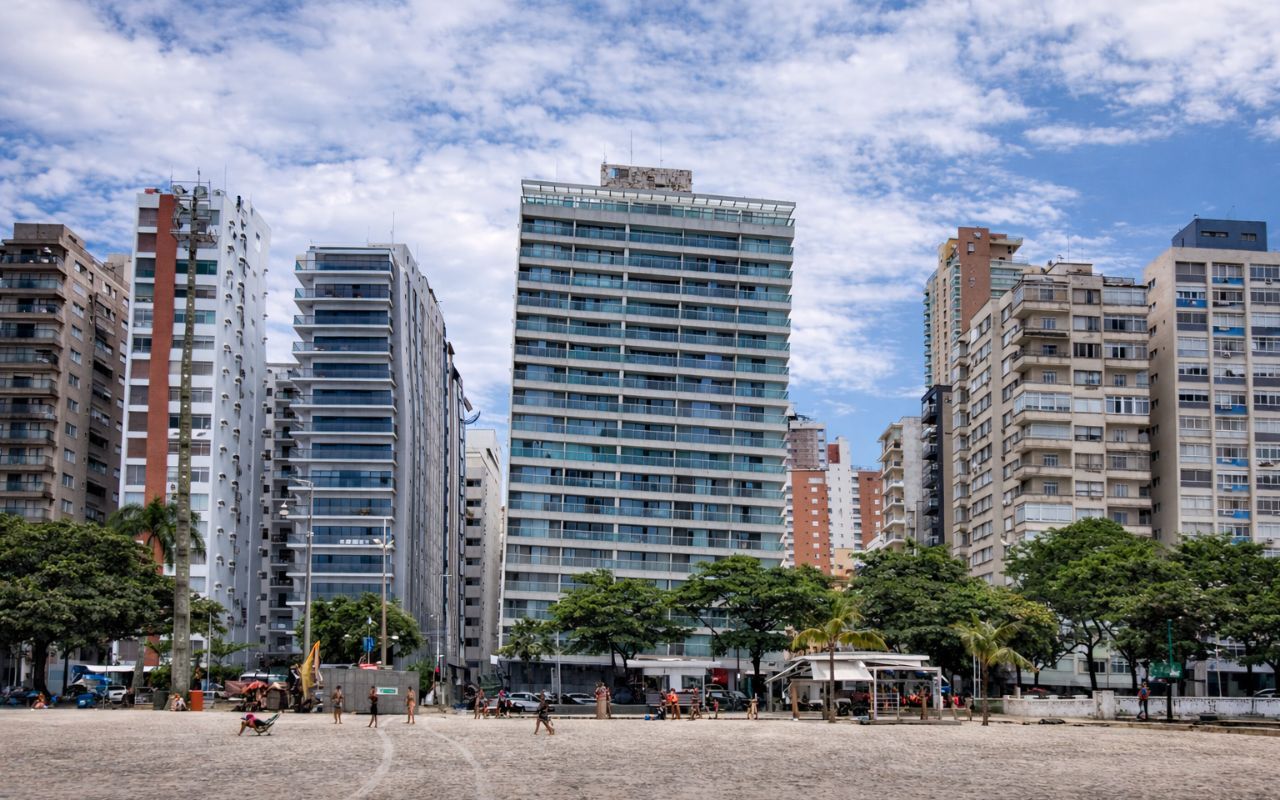
The Brazilian city has 319 crooked buildings built on sandy soil without proper deep foundations, houses the largest beach garden in the world, with over 5 km, and is still considered the birthplace of surfing — meet Santos, in São Paulo.
-
New Zealand builds a shimmering building that vibrates, featuring a 62-seat cinema, moving sculptures, and an environment where sound, light, and energy are felt in the body.

-
BRICS is building its own payment system that could be operational by 2030, and experts say it could increase trade between the countries by up to 10% per year and add 3% to the GDP of each member of the bloc.

-
Two colored cubes of 2.5 m transform a public bathroom into a selfie spot in Western Australia, costing up to 75% less than traditional construction and helping to reduce vandalism in public spaces.


Understand the Forest Concession Project
According to information published by Folha de S. Paulo, the government plans to grant deforested public areas to the private sector with the aim of restoring forests and generating carbon credits.
These credits, equivalent to one ton of carbon absorbed or not emitted, are primarily sold to large corporations looking to offset their emissions, such as technology companies and energy industries.
The project provides for companies interested in operating in these areas to invest in the restoration of native vegetation and, in return, profit from the commercialization of the generated carbon credits.
To make the model more attractive, part of the revenue obtained will be passed on to the federal and state governments.
Public Areas in Focus
In the state of Pará, the Triunfo do Xingu Recovery Unit (URTX), an area of 10,000 hectares, is at the center of the project.
The government has opened a deadline until March 2025 for interested companies to submit their proposals.
The bidding will reward the highest variable grant bid, that is, the one linked to the annual revenue of the winning company.
At the federal level, the government intends to grant 15,000 hectares of the Bom Futuro National Forest in Rondônia, still in the first half of 2025.
The goal is that, by the end of the year, about 350,000 hectares of public forest be handed over to the private sector.
A Risky Bet?
Despite the economic potential, the model faces resistance from companies specialized in the carbon market.
According to executives interviewed by Folha de S. Paulo, the risks associated with the concessions are high.
Many of the offered plots are located in remote areas and are frequently invaded by squatters and loggers.
Moreover, there are concerns about the ability of the governments to ensure the safety and maintenance of these regions.
Another obstacle is Brazilian legislation, which limits the duration of forest concessions to 40 years, while carbon credits generally require guarantees that the carbon will be retained in the soil for at least 100 years.
Although changes have been made to increase the legal security of contracts, investors still consider this a sensitive point.
Logistical Complexity
In addition to legal and safety challenges, logistical issues make the project even more complicated. The URTX, in Pará, for example, is located 150 kilometers from the nearest urban area.
According to experts, in case of fires or emergencies, firefighting teams could take up to 10 hours to reach the site.
There are also high costs for clearing and restoring the areas. In many cases, deforestation is recent, with large trunks still scattered across the lands, which increases operational costs for the involved companies.
Economic Potential and Revenue Models
The financial estimates of the project are robust. In Pará, the expectation is that the winning concessionaire could earn up to R$ 143 million per year starting in 2042.
In the federal model, the two lots to be negotiated could generate revenues of up to R$ 1.2 billion.
However, these projections depend on favorable economic conditions and the existence of buyers for the carbon credits.
Fabio Galindo, CEO of Future Carbon, argues that governments should reduce fixed and variable grant requirements to attract more investors.
He also suggests that the National Bank for Economic and Social Development (BNDES) offer financing lines for the winning companies and act as an intermediary in purchasing the credits.
Experience and Next Steps
According to Nelson Barbosa, planning director at BNDES, the bank is modeling the federal bidding notice and should send the final proposal to the Federal Court of Accounts (TCU) in February 2025.
Upon approval, the government will be able to start publishing the bidding notice and formalizing the concessions.
Renato Rosenberg, director of the Brazilian Forest Service, stated that the carbon pricing process has been one of the biggest challenges of the project.
“Although this is the first bidding notice of this type, we have already gained experience to expand the model to other areas of the Amazon,” he said.
Innovative Approach
The concession of deforested forests for restoration represents an innovative approach, but it relies on solid public policies, legal security, and financial support to be successful.
If well implemented, the model can contribute to environmental recovery and generate significant profits.
However, the associated risks show that there is still a long way to go for the initiative to consolidate.
Do you believe that this concession model can really protect our forests, or is it just an economic strategy with little environmental impact? Share your opinion in the comments!




Péssima ideia, entregar terras para empresas estrangeiras ganhar mais dinheiro, porque não colocam brasileiros para trabalhar lá, plantando floresta e pagam a eles um salário para fazer isso. Os incompetentes entregam tudo que não conseguem cuidar. Entregaram ferrovias, estradas, e querem entregar portos e florestas. Bando de **** e incompetentes. Não conseguem cuidar do que estás em pé e querem entregar terras destruídas. Me poupe de tanta incompetência. Políticos **** e incompetentes. É certo que estes políticos que estão inventando isso, receberam em suas casas malas cheias de dinheiro das empresas. Políticos, parem de vender seu país.
Excelente 👍🏽 ideia desde que a área a ser recuperada possa vir acompanhada de uma área equivalente com floresta intacta onde à concessionária possa usufruir dessa floresta no período da concessão