





 Portuguese
  English
  Spanish
  6 min of reading
  0 comments



The Earth recorded at the beginning of 2026 an unusual sequence of fireballs with sonic explosions, thousands of witnesses, and larger-than-normal meteors, raising questions among scientists about a possible change in the type of space debris crossing the atmosphere.
The Earth entered 2026 under an unusual sequence of impacts from large, bright meteors, with reports of fireballs in various regions and signs that something has changed in the type of space debris hitting the atmosphere.
In March, one of these episodes released fragments over northern Houston, following the disintegration of a space rock weighing about a ton at nearly 50 kilometers altitude, in a sonic explosion equivalent to 26 tons of TNT.
One of the fragments, described as dark and irregular, pierced the roof of a house and even ricocheted inside a room.
-
A hot air bubble coming from Argentina expands over Brazil, causing thermometers to exceed 38 degrees with a thermal sensation of 40 degrees in late March, affecting 6 states at once.

-
The radish leaf that almost everyone throws away has more polyphenols, flavonoids, and fiber than the consumed root, and a 2025 study showed that the leaf contains compounds that protect the intestine, combat inflammation, and may inhibit the growth of cancer cells.

-
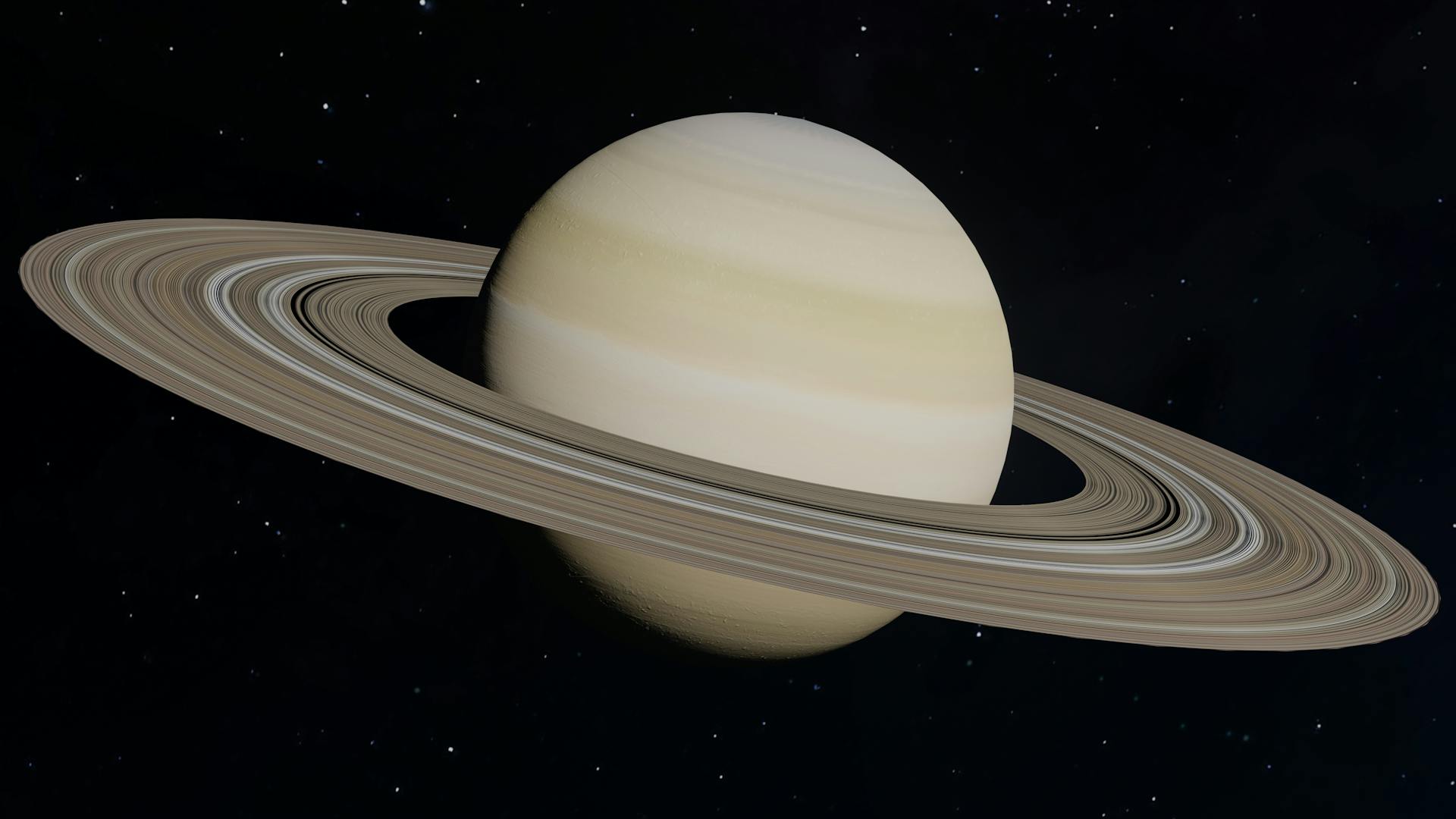
A planet that seemed to defy the laws of physics has intrigued scientists for decades, until the James Webb revealed what is really affecting Saturn’s rotation.
-
For the first time in history, the Brazilian Air Force conducted a highly complex inspection on the C-99 jet independently, without relying on foreign companies, marking a new level of logistical autonomy and operational sovereignty.


The episode would be extraordinary in itself, but it occurred amid an unusual concentration of similar events observed in the first three months of the year in areas ranging from California to Germany.
The American Meteor Society recorded, during this period, a significant wave of large, bright meteors known as fireballs.
Although the Earth collects tons of space dust daily, this material is usually tiny and incinerates without significant effects in the upper atmosphere, making the current moment different due to the size of the rocks involved.
Mike Hankey, the researcher responsible for the meteorite recording tools of the organization, analyzed data since 2011 and concluded that the current meteor season stands out clearly. In a recent report, he wrote that, after years of stable baseline activity, something seems to have changed and that the signal remains consistent across various metrics.
Increase in larger rocks changed the pattern over the Earth
In absolute numbers, the picture does not suggest a sharp jump in the total occurrences compared to previous years. In the first quarter of 2026, 2,046 fireball events were recorded, a number just slightly above the 2,037 counted in the same period of 2022.
The perceived difference lies in the physical size of the objects and the effects generated by them upon entering the Earth’s atmosphere. Events that would normally be seen by few people have started to gather a much larger volume of testimonies, indicating that these rocks are penetrating deeper and producing more intense and visible phenomena.
In March 2026 alone, five different fireballs generated over 200 eyewitness reports each. This represents more mass sightings in a single March than the sum of all Marches in the previous fifteen years.
On March 8, for example, a spectacular daytime bolide slowly disintegrated over Western Europe.
No fewer than 3,229 people reported seeing it after the passage of an extremely bright fireball that crossed the sky from southwest to northeast and was observed in Belgium, France, Germany, Luxembourg, and the Netherlands.
The flash remained visible for about six seconds and left a trail before fragmentation. Nine days later, on March 17, a 7-ton asteroid measuring 1.8 meters skimmed over Ohio and Pennsylvania, with such intense brightness that NOAA’s GOES satellite recorded the flash from space.
Audible booms and mass reports draw attention
The observed change is not attributed solely to more people looking at the sky. For Hankey, there has been a change in the type of debris encountered by the Earth, with direct reflections on the number of witnesses, the depth of atmospheric penetration, and the frequency of audible booms.
In the report, he pointed out that nearly half of all events in March 2026 with 10 or more reports were seen by 50 or more people. He also highlighted that occurrences that would normally attract 25 to 49 witnesses have started to gather 50, 100, or even more than 200, indicating a general shift in distribution to higher levels.
These more robust rocks can penetrate deeper layers of the Earth’s atmosphere. As a result, they break the sound barrier and produce pressure waves capable of making windows vibrate, amplifying the impact of the episodes even when they do not reach the ground.
Hankey told AccuWeather that in 2026, both the rate and the absolute number of large events would be high. According to him, 30 large fireballs with audible booms in just one quarter equate, on average, to a sonic explosion every three days.
Suspicious radiants indicate change in the environment near Earth
To try to discover where these rocks come from, astronomers calculate the radiant of each meteor, which is the apparent point in the sky from which the fireball seems to originate. Mapping the most recent trajectories revealed two clusters considered suspicious by researchers.
The most prominent sporadic source identified was that of the Anthelion, a region of space located directly opposite the Sun. Objects coming from this direction reach the Earth from behind as they dive deeper into the inner solar system.
This area has always generated some fireballs, but at the beginning of 2026, activity there doubled. Almost ten large events emerged from a single region of 1,000 square degrees within the Anthelion zone, including a huge fireball observed on March 9 by 282 people along the east coast of the United States.
Astronomers also noted an abnormal increase in meteors coming from high-declination radiants. This means the arrival of rocks in steep orbits, almost vertical to the horizontal plane of the solar system, reinforcing the impression that the Earth is crossing an altered region.
The hypothesis of a new predictable meteor shower, like the Perseids, is considered unlikely. The current pattern is too broad to correspond to the narrow, dusty trail of a single comet, appearing more like an unusual swelling of the general background noise of the solar system.
Recovered meteorites dismiss anomalous origin hypothesis
In light of incandescent objects exploding over populated areas and producing sonic booms, speculation arose about a possible non-natural origin. Hankey dismissed this possibility and told AccuWeather that all fireballs with sufficient trajectory data in the AMS database are consistent with objects in heliocentric orbits, crossing the Earth’s orbit while orbiting the Sun.
In addition to trajectory calculations, there are physical fragments recovered that reinforce this conclusion. Researchers located surviving parts of the fireball observed in Germany and the daytime meteor that passed over Ohio, and both materials belong to rare types of meteorites known as achondrites.
The German rock was classified as a diogenite, while the one from Ohio was identified as an eucrite. Hankey explained that the specimens recovered at both locations are achondritic eucrites with mineral compositions formed over billions of years in differentiated asteroids, clearly placing them among rocks of the inner solar system.
These fragments would have been forged over 4.5 billion years ago in the crust of massive, differentiated asteroids like Vesta, one of the largest bodies in the asteroid belt. Still, despite belonging to the same broader family of meteorites, the orbital trajectories of the rocks from Germany and Ohio were separated by an angle of 98.2 degrees.
They hit the Earth just nine days apart, but came from completely distinct parts of the sky. This detail reinforces the assessment that the phenomenon is not linked to a single simple source and requires more detailed monitoring to be understood.
Monitoring is still limited in the face of the new sequence
One of the factors that may help explain the increase in witnesses is the use of AI chatbots, as a person could immediately ask where to report a fireball and be directed to the AMS. However, this effect does not explain physical changes such as sonic booms, records by satellite sensors, or fragments crossing roofs.
The scenario exposes a fragility in astronomical monitoring and planetary defense. When the 7-ton asteroid exploded over Ohio, the only all-sky camera affiliated with the AMS in the state was out of operation, leaving scientists primarily dependent on eyewitness reports collected through crowdsourcing.
To better understand the environment near Earth, astronomers advocate for the expansion of automated camera networks capable of covering the entire sky and independently calculating the mass, speed, and orbit of a rock at the moment it hits the atmosphere. They also advocate for the systematic cross-referencing of fireball records with existing tools, such as Doppler weather radars and infrasound networks.
The laboratory analysis of the newly recovered meteorites is also seen as crucial. By measuring the exposure of these rocks to cosmic rays, scientists can estimate how long they have spent wandering through space before hitting the Earth and check if the fragments from Ohio and Germany share the same exposure age.
If this occurs, one possibility is that a large parent asteroid recently fragmented, launching a shower of debris toward the planet. For now, the assessment is that the Earth is crossing a transformed region, with larger, noisier, and more frequent rocks, while the exact origin of this increase still relies on continuous monitoring and additional analyses.








Seja o primeiro a reagir!