Portuguese
 Spanish


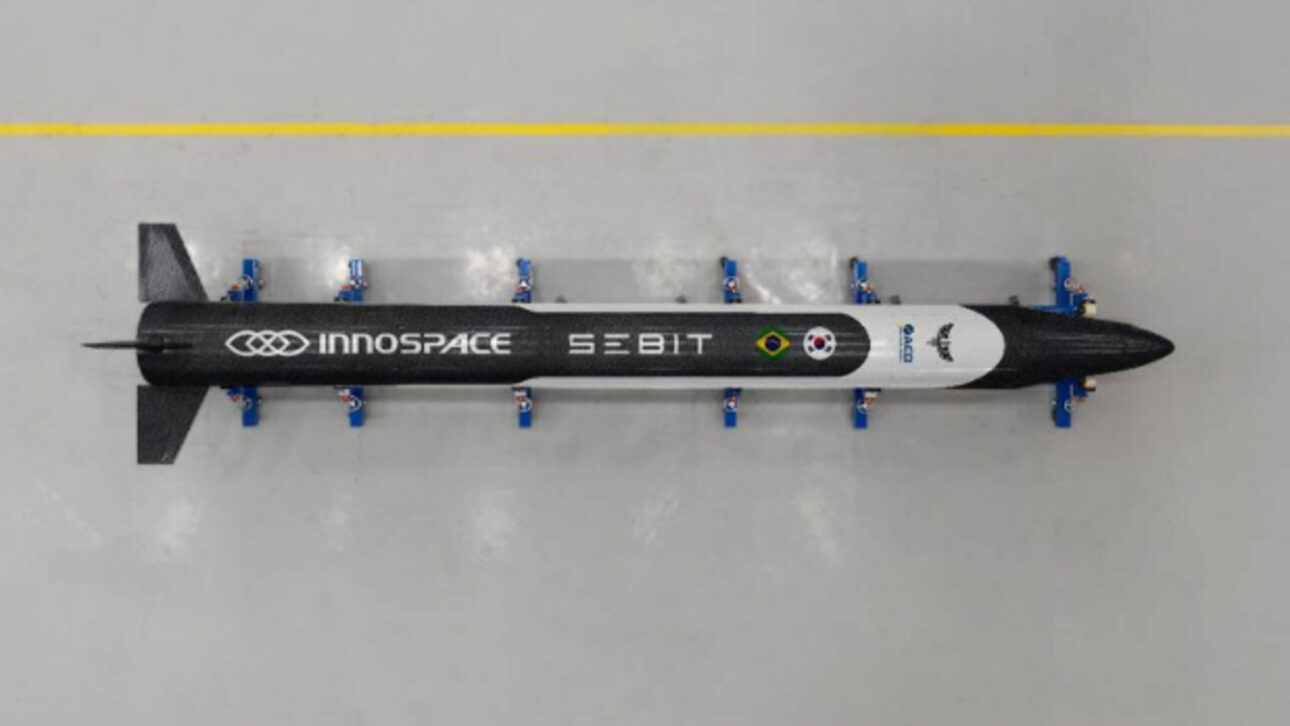

After a failed attempt in August, the SEBIT rocket is set for another test in Alcântara as five Brazilian companies work on a R$189 million project to put small satellites into orbit
South Korea’s SEBIT rocket is set to be tested again this Sunday (29) at the Alcântara Launch Center in Maranhão, months after its first attempt ended with the vehicle destroyed during ascent. The new operation comes as Brazil invests R$189 million in developing a domestic launch vehicle designed to carry small satellites into space.

New test follows South Korean rocket’s breakup during ascent
Sunday’s operation, called Supersonic Rider 2, involves South Korean company Innospace, the Brazilian Air Force (FAB), the Brazilian Space Agency (AEB) and state-owned company ALADA.
The South Korean rocket was scheduled to lift off at 2:30 p.m. in Alcântara. However, so far, official news outlets have not confirmed that the launch has been completed.
-

-
-
-


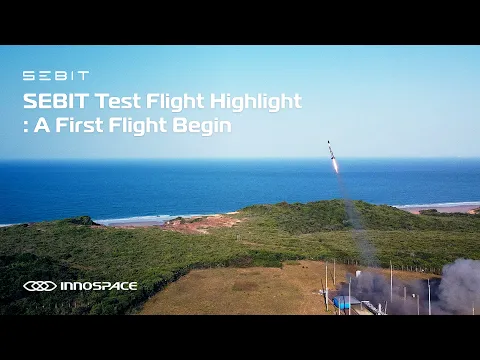
The new flight is intended to test improvements made after the first launch on August 19, 2026. The rocket lifted off normally that day but encountered stability and guidance problems along its flight path.
The technical report by CENIPA, Brazil’s Aeronautical Accident Investigation and Prevention Center, said the flight termination system was activated about 36 seconds after liftoff.
The procedure broke up the vehicle, and its debris fell into the sea about four kilometers from the launch area.

SEBIT rocket gets engine and flight control upgrades
SEBIT is 8.7 meters long and 70 centimeters in diameter. It uses a hybrid engine with thrust in the four-ton class.
This type of rocket is used to carry equipment and experiments to high altitudes, reaching approximately 100 kilometers.
For the new attempt, Innospace modified key components of the vehicle. The engine was upgraded from the three-ton to the four-ton thrust class, while changes to the control system were intended to improve stability and guidance during flight.
Unlike an orbital rocket, SEBIT was not designed to put satellites into orbit around Earth. Its purpose is to conduct suborbital flights, enabling scientific research and technology testing under conditions found at high altitudes.

Why did the company choose Maranhão to launch the rocket?
Alcântara’s location is one of its main advantages for space operations. The municipality lies just over two degrees south of the Equator, a geographic position that offers advantages for certain types of launches.
Earth’s rotation provides natural velocity that rockets can use. Depending on the direction and intended orbit, this can reduce the energy needed to reach space.
In addition, the area’s proximity to the Atlantic Ocean makes it possible to use flight paths over the sea, an important feature for operational safety.
Brazil invests R$189 million in rocket capable of carrying satellites
As South Korean technology undergoes new tests on Brazilian soil, the country is working to develop the Brazilian Microlauncher (MLBR).
On November 28, Brazil’s Ministry of Science, Technology and Innovation released updates on the project, which is being developed by five Brazilian companies with support from Finep, Brazil’s innovation funding agency, and the National Fund for Scientific and Technological Development.
The planned investment is R$189 million. The proposal is to build a rocket about 12 meters long, capable of carrying up to 40 kilograms of payload to a low orbit about 450 kilometers above Earth.
The planned capacity is eight times greater than the five kilograms initially required by the funding notice. The ministry said the electronic systems have already passed qualification tests, while structural modules underwent vibration testing at Brazil’s National Institute for Space Research (INPE) in October.
The projects differ in their objectives: while SEBIT tests foreign technology in Alcântara, MLBR aims to develop Brazil’s domestic capability to place small satellites into orbit.
With its own launch vehicle, Brazil could expand its autonomy in carrying out space missions, including projects to monitor the Amazon, track wildfires, observe the coastline and provide communications in remote regions.