Portuguese
 Spanish


From the pre-salt to the stove: who the five gas pipeline operators are, how the ANP sets pipeline tariffs, and how much the cost weighs on industry and households, with the revision taking effect in 2027
Imagine a glass factory in the interior of São Paulo state, a ceramic kiln in Santa Catarina, or an apartment stove in Rio. They all use the same natural gas, which travels hundreds of miles through buried pipelines before reaching them. The system that makes this journey possible, and charges for it, is natural gas transportation, the subject of this article.
The short answer: In Brazil, natural gas travels long distances through about 9,400 miles of transmission pipelines, operated by five pipeline companies: TAG, NTS, TBG, TSB, and GOM. They are regulated by the ANP, Brazil’s oil and gas regulator, which sets how much each company can earn and approves its tariffs. The tariff is paid by whoever books space in the pipeline, including distributors, gas marketers, power plants, and large industrial users. The cost is built into the final price, including the gas used at home.
Why focus on this now? The ANP is in the final stages of reviewing transportation tariffs for 2026–2030, a billion-real dispute with pipeline companies that will determine how much this part of the journey costs starting in 2027. We at CPG are following each stage, and this article is a guide to understanding them.
-

-

-
-
How does natural gas get from the well to the end user?
The journey has four stages, each with different owners and rules:
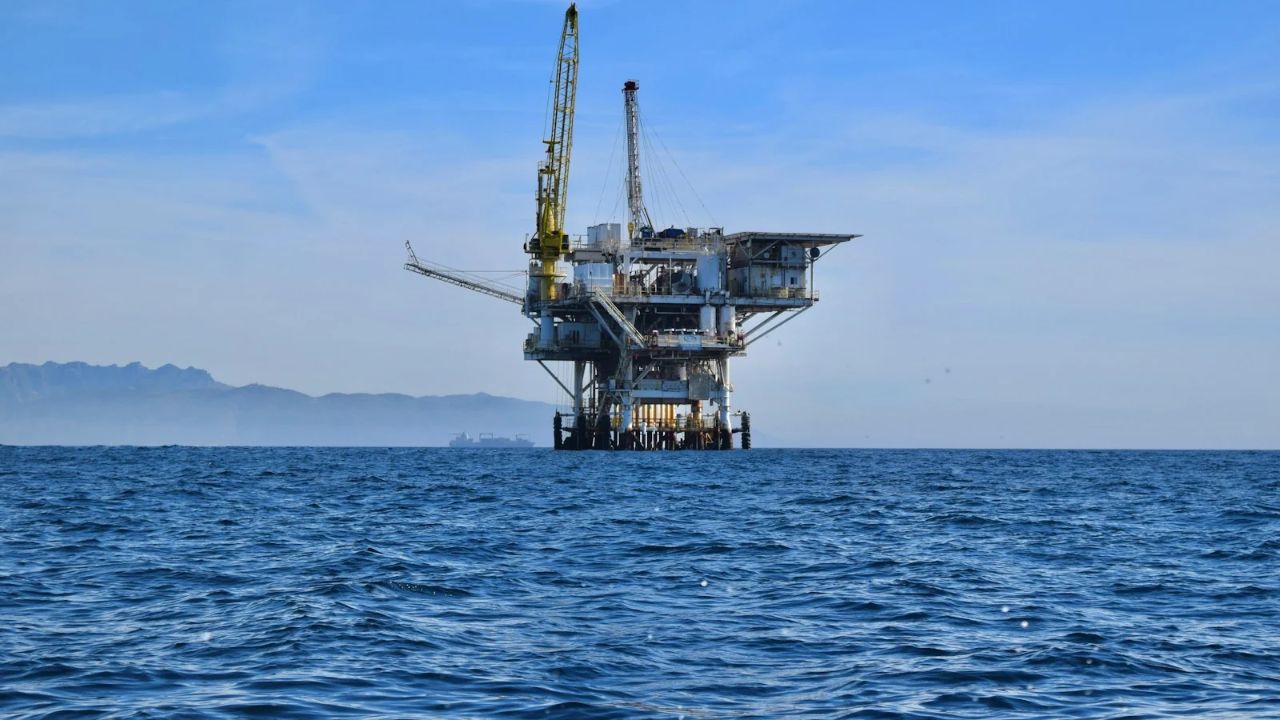
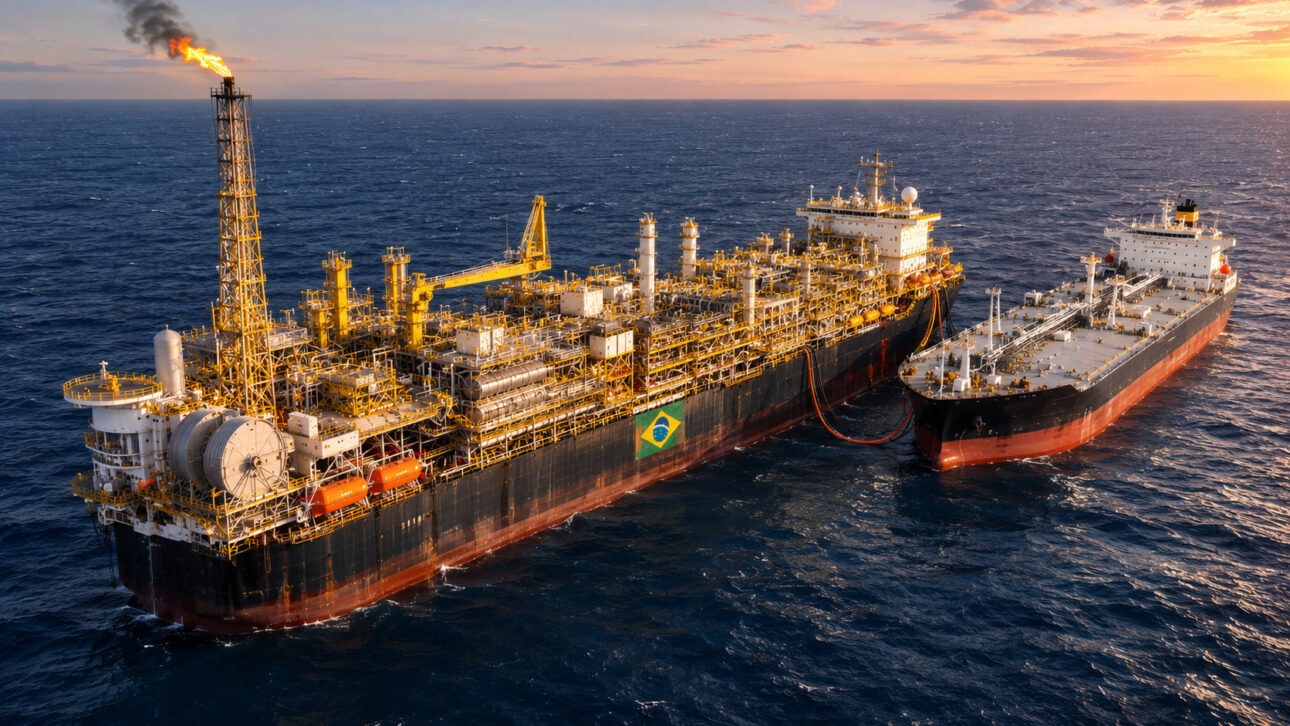
- Gathering: Gas leaves the production field, often offshore in the pre-salt, and travels through subsea pipelines to shore. The country has about 46,000 miles of distribution network, also according to IBP.
- Processing: At a natural gas processing plant (UPGN), the gas is “cleaned”: water, impurities, and heavier components such as LPG, the fuel used in gas cylinders, are removed.
- Transportation: Once it meets specifications, the gas enters large pipelines that cross state lines. This is where pipeline companies operate, and where the tariff under review applies.
- Distribution: Near cities, gas enters the local distribution company’s network, run by companies such as Comgás, Naturgy, Gasmig, and SCGás, which delivers it to industry, compressed natural gas (CNG) stations, businesses, and homes. The distribution network totals about 46,000 miles.
In practice, transportation is the gas system’s “interstate highway”; distribution is each state’s “street network.”
What is a natural gas transmission pipeline, and how is it different from distribution?
A pipeline is a steel tube, usually buried, that carries gas under high pressure. A transmission pipeline is a large-diameter, long-distance line connecting gas sources, including fields, processing plants, imported gas terminals, and the pipeline from Bolivia, to delivery points for distributors and large consumers.
The difference also comes down to who has jurisdiction:
- Transportation is a federal activity regulated by the ANP.
- Piped gas distribution is a local service under state jurisdiction, as provided for in Article 25, Section 2 of Brazil’s Constitution. Each state has its own concessionaire and regulatory agency, which sets distribution tariffs.
That is why different parts of a gas bill are decided in different places, as explained below.
How many miles of pipelines does Brazil have?
Brazil has about 9,400 miles of transmission pipelines, or 9,420 km, according to a survey IBP presented to the Chamber of Deputies in 2025. EPE has previously used the comparison that the United States has about 485,000 miles of pipelines and Argentina about 30,000 km.
In other words, for a country the size of Brazil, the network is small and concentrated along the coast, from Ceará to Rio Grande do Sul, with a “spine” extending into Mato Grosso do Sul from Bolivia. Much of the Center-West and North has no transmission pipelines. We have already explained here at CPG how this network is laid out and what precautions it requires.
Who are Brazil’s natural gas pipeline companies?

Until a few years ago, virtually the entire network belonged to Petrobras. After the state-owned company sold NTS (2017) and TAG (2019), transportation passed to private groups. There are now five pipeline companies, the same ones involved in the ANP’s tariff review, according to technical notes from Brazil’s oil and gas regulator:
- TAG (Transportadora Associada de Gás): operates the network linking the North, Northeast and Southeast, including the former Northeast Network and Gasene, according to the ANP.
- NTS (Nova Transportadora do Sudeste): pipelines in Rio de Janeiro, Minas Gerais and São Paulo, including the former Southeast Network.
- TBG (Transportadora Brasileira Gasoduto Bolívia-Brasil): operates the Brazilian section of Gasbol, a 2,593-kilometer pipeline from Corumbá, in Mato Grosso do Sul, to Canoas, in Rio Grande do Sul, crossing five states, according to the ANP. This is the route through which gas reaches Santa Catarina.
- TSB (Transportadora Sul-Brasileira de Gás): operates sections in Rio Grande do Sul, in Uruguaiana and between Canoas and Triunfo.
- GOM (GasOcidente do Mato Grosso): operates a pipeline that carries gas from Bolivia to Cuiabá, in Mato Grosso.
TAG and NTS own Petrobras’s former contracts, covering the Northeast and Southeast networks, and that is precisely where the current dispute is centered.


What changed under the New Gas Law?
The foundation is Law No. 14,134, dated April 8, 2021, known as the New Gas Law. Its provisions affecting natural gas transportation include:
- Authorization, not a concession: a pipeline company can build, expand and operate transmission pipelines with authorization from the ANP, Brazil’s oil and gas regulator (Article 4).
- Independence: a pipeline company cannot be controlled by, or affiliated with, a company that produces, imports or sells gas (Article 5). The idea is to prevent the owner of the pipeline from favoring a seller.
- Entry and exit: network users contract separately for entry capacity, where gas enters, and exit capacity, where it leaves (Article 13). It is like paying a toll at the entrance and exit of a highway, without having to contract for the entire route.
- Third-party access: any market participant can use transmission pipelines under ANP rules (Article 18). In practice, Petrobras was previously the only user.
- Regulated revenue and tariffs: the ANP sets the maximum revenue for each pipeline company and approves its tariffs, always after a public consultation (Article 9).
The law’s stated goal, according to the ANP, is to attract investment, bring more sellers into the market and lower prices for end users.
Who sets the transportation tariff, and who pays it?
Since no one is going to build a second pipeline alongside the first to compete, transportation is what economists call a natural monopoly. That is why the ANP regulates the service and its price.
Here is how it works:
- The ANP calculates how much each pipeline company can earn per year: its Maximum Allowed Revenue (RMP).
- That revenue is divided by the capacity the market is expected to book. The result is the tariff.
- The tariff is paid by shippers, the parties that book space in the pipeline: distributors, gas marketers, power plants and free consumers, or large industrial users that buy gas directly.
- Distributors pass this cost on through the tariffs they charge industries, businesses, gas stations and households.
In other words, you do not get a bill from TAG or NTS, but transportation is included in the price of the gas you use.
How much does transportation add to the price of gas?
A study by FGV CERI, the Center for Regulation and Infrastructure Studies at Fundação Getulio Vargas, published in December 2025 using tariffs from October of that year, broke down the final price of gas in Brazil. The national averages in the study were:
- For industry: the commodity, or gas itself, accounts for about 52% of the price; taxes, 22%; distribution, 15%; and transportation, about 11%.
- For households: distribution accounts for about 52%; taxes, 22%; the commodity, 21%; and transportation, about 5%.
In practice, this means transportation is a significant share of costs for industry, which buys large volumes of gas and pays little for distribution per cubic meter. That is why industrial associations are closely following the review. For household bills, distribution carries more weight, so even a large cut in transportation costs would likely have only a small effect on the final price.
What are RAB, MPR, rate of return, and RCM?
These acronyms appear in every story about the tariff review. In plain English:
- Regulatory Asset Base (RAB): the value of pipeline assets that Brazil’s oil and gas regulator, the ANP, recognizes as investment not yet paid for by users. It is not the company’s market value.
- Rate of return: how much the pipeline company can earn on this asset base. For 2026–2030, the ANP set it at 7.63% a year, above inflation.
- Maximum Permitted Revenue (MPR): the sum of the return on the RAB, depreciation, and operating costs. The transportation tariff is set based on this amount.
- Recovered Capital Method (RCM): the method the ANP chose to calculate how much of the older pipelines had already been paid for over the course of contracts with Petrobras.
Think of a financed apartment. Once the payments have paid off the property, it makes no sense to keep charging interest on it. That was the ANP’s reasoning: in the agency’s view, the assets covered by the older contracts for the Southeast Network (NTS) and Northeast Network (TAG) have already recovered their investment and should not generate a new return. The pipeline companies disagree, saying the rule undermines the terms agreed when they bought the pipelines.
Why is the transportation tariff under review now?
Because the major legacy transportation contracts inherited from Petrobras ended in December 2025. From then on, the network moves fully to the New Gas Law model, with tariffs set by the ANP. The 2026–2030 review was divided into three phases:
- Rate of return — set at 7.63% a year in real terms.
- Regulatory Asset Base — approved on October 2, 2026 (Board Decision No. 733/2026). At that point, the bases for the Southeast and Northeast networks were set at zero, while TBG had the largest base, at R$ 2.649 billion. We detail the figures for each pipeline company here.
- Revenue and tariffs — under public consultation (Public Consultation No. 25/2026) until December 2, 2026, so the new tariffs can take effect under 2027 contracts.
Along the way, the ANP suspended the third phase for 15 days to allow Petrobras and NTS to negotiate. The talks ended without an agreement, and the agency resumed the review on November 12. TAG also submitted its own tariff proposal to the agency.
On November 18, the ANP board denied the pipeline companies’ association (ATGás) request to review the method and rejected TAG’s and NTS’s requests to suspend the October decision. The merits of the two companies’ individual appeals were still to be reviewed.
Can natural gas be transported without a pipeline?
Yes, but on a smaller scale. The alternatives are:
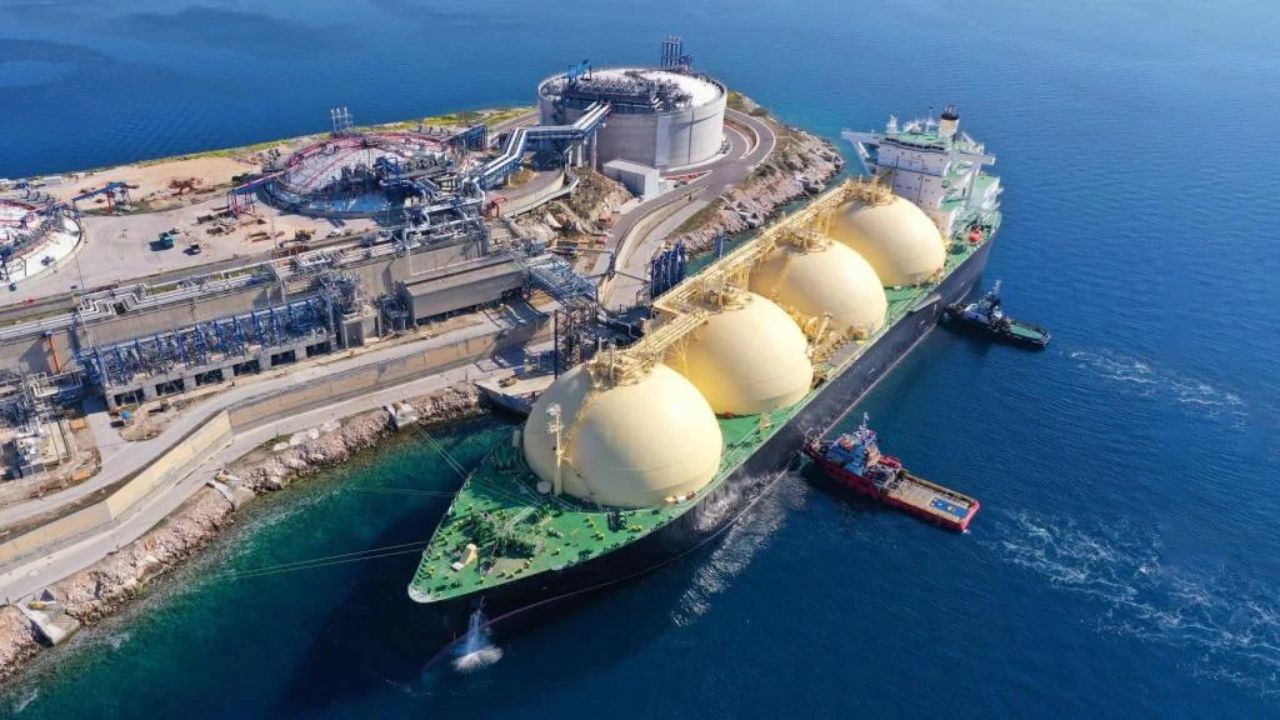
- LNG (liquefied natural gas): the gas is cooled to about −160 °C, liquefied, and shipped. It reaches coastal regasification terminals, where it is converted back into gas and enters the network.
- CNG (compressed natural gas): the gas is compressed and transported by truck in what is known as a “virtual pipeline,” used to serve cities and industries far from the network.
These modes complement pipelines, but for large volumes and long distances over land, pipelines remain the cheapest option.
What to watch for next
- Through Dec. 2, 2026: End of the public consultation on revenues and tariffs for the five pipeline companies.
- December 2026: ANP board decision on revenues and tariffs, and rulings on appeals filed by TAG and NTS.
- January 2027: New tariffs expected to take effect under capacity contracts.
- Possible legal action: NTS has already indicated it may challenge the decision on the asset base in court if there is no review or agreement.