





 Portuguese
  English
  Spanish
  7 min of reading
  33 comments


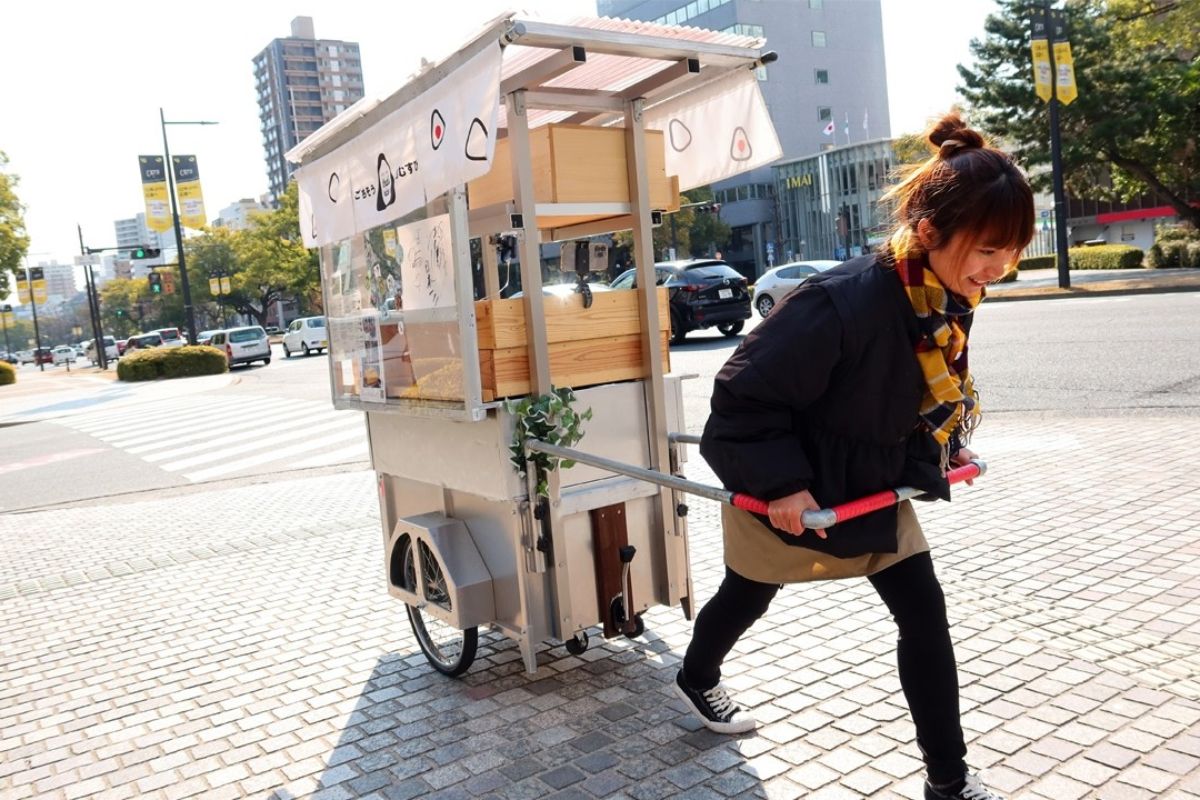


Alone and Without a Fixed Store, the Young Woman Prepares Onigiri (Japanese Rice Balls) Since Dawn, Carries Ingredients in the Nearly Century-Old Cart, and Changes Locations to Comply with Local Regulations. Without Preservatives, She Sells Quickly, Attracts the Curious, Retains Locals, and Turns Daily Lines into Capital to Open a Store in the Future.
To the eyes of those crossing the sidewalk, it looks like just another food cart. But when the young woman arrives with nearly 100 kg of structure and opens the curtain, the rhythm of the street changes. In Hiroshima, located in Japan, her onigiri (rice balls) don’t become a topic because “it’s cute.” It becomes a topic because it’s always sold out.
What intrigues people is not just the rice ball itself. It’s the sum of small choices, repeated every day, that turns a simple product into an urban event: waking up before dawn, preparing ingredients, pushing the cart, changing locations, serving non-stop, and closing when the last wrap disappears, even if there’s still afternoon ahead.
The Dawn That Decides the Rest of the Day

The routine starts around 3 a.m., when many people are still asleep and the city seems suspended. The young woman is already up, organizing what will go into the cart and what needs to be ready before leaving.
-
These living root bridges and ladders are over 700 years old and help indigenous people survive in one of the rainiest regions in the world.

-
From sertanejo star to international investor: Ana Castela invests millions in a mansion in the USA, creates a themed accommodation in Orlando, and shows that the “boiadeira” also wants to grow away from the stage.

-
The 10 most stunning motorhomes in the world: a $3 million trailer with a rooftop nightclub and garage for a Ferrari, “palaces on wheels” with Italian marble, private cinema, and five-star hotel luxury for billionaires.

-
Trump wanted to spend $400 million on the White House, but the courts prohibited the million-dollar construction.


It’s a type of work that no one sees, but that determines whether she will sell calmly or race against the clock.
This preparation is not just cooking. It’s planning what can withstand the street, what needs to be assembled quickly, and what loses quality if it waits too long. Since the onigiri is sensitive to time and the heat of hands, the process demands constant attention. There’s no “I’ll check later” when the product depends on freshness and timing.
A Nearly 100 kg Cart That Becomes a Character of the City

Pushing a heavy cart may seem like a detail, but it’s part of the show and the real cost of this operation. The cart is not only transportation; it’s the “kitchen,” the stock, the showcase, and the point of sale.
The young woman talks about the weight naturally when she’s on flat ground but admits that the climbs are brutal. The journey takes a toll on the body even before the first customer arrives.
There’s also the story of its construction: the cart took more than a year to be ready, with money and time invested little by little.
She explains that many people imagine it’s something “super expensive,” when in practice, it’s a cheaper path than opening a physical store at first. But “cheaper” does not mean easy: all profits go back into the operation, for improvements, adjustments, and the bigger goal of opening a real store.
The Menu That Seems Simple and the Work That Isn’t

Onigiri is shaped rice, but it’s not just that. The filling, seasoning, and attention to texture make the rice ball “walk” between the common and the memorable. To stand out from the convenience options, the young woman decided that she needed an identity.
Not necessarily “stuff it with ingredients,” but create combinations with personality and repeatability.
An example is the use of dried fish: she doesn’t just throw it into the rice. She fries it, seasons it with salt and pepper, and finishes with sesame oil for aroma. This type of preparation creates a contrast that appears in the first bite and explains why so many people come back. The flavor becomes a signature, and a signature, on the street, is what separates curiosity from habit.
Selling While Walking: The Invisible Rule That Shapes Everything
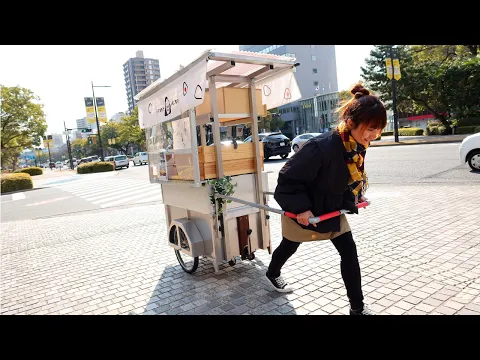

The dynamics of the location are also not “free.” The young woman works as a mobile supplier and needs to operate within what is allowed. Staying parked all the time in the same spot or in front of another store can be a problem.
In motion, with stops between displacements, the scenario changes. It’s a logistics that becomes a strategy: moving around helps to comply with rules and, at the same time, expands the reach.
This explains why the cart appears as “rumor” and “luck” to many. Some customers say they only buy when they see it because they can’t find it all the time. Some people pass by on their way to work and only cross paths with the cart on certain days.
And there are those who come on purpose because they heard about it and decided to check it out. When the product is limited and the location is mobile, the street turns into a network of improbable encounters.
Lines, “Sold Out” and the Psychological Effect of the Rare
The daily “sold out” is not just a result of demand. It also creates a sense of event: if it’s always sold out, it’s worth arriving early; if it’s worth arriving early, lines form; if there are lines, more people notice and come closer. The young woman doesn’t need to shout promotions. The scene does the marketing by itself. Social proof happens on the sidewalk, in real time.
At the same time, this scarcity has a practical side. Without preservatives, the onigiri needs to be consumed sooner or later. She makes this clear to those who buy, without drama and without speeches.
It’s a simple rule that creates trust: the product has a short shelf life because it is meant to be fresh, not to last hours like an industrialized item.
Hiroshima as a Community and as an Informal “Investor”
One detail stands out in everyday life: the type of support that appears spontaneously. The young woman says that sometimes people offer small gifts or something warm to drink when they see that her hands are cold.
Other times, someone decides to buy an item at the convenience store just to help, as if it were a collective care.
This creates a bond that goes beyond the purchase. The customer doesn’t feel like they just “paid and left.” They feel like they participated in a local story. And the seller, in turn, doesn’t treat herself like a celebrity. She reacts with gratitude and with a clear goal: to open a store and give back in some way. The city becomes part of the project, and the project becomes part of the city.
From Cart to Company: Ambition Without Fantasy
The image may seem romantic to outsiders, but what emerges here is hard work and ambition grounded in reality.
The young woman says that she likes being alone, although sometimes it weighs on her. She also makes it clear that she doesn’t want her journey to stop at the “cart owner” level. She sees herself as someone who wants to grow, learn, and achieve more success.
This mentality explains why she talks about creating variety, moving around more, attracting new customers while keeping the regulars. She even mentions that customers suggested she write a book and she has been secretly writing.
Not out of vanity, but as a record of what happens in the daily life of a mobile business, with encounters that don’t repeat. This is real entrepreneurship, made of routine, risk, and small daily decisions.
What This Story Reveals About Street Food Today
In the end, the onigiri craze in Hiroshima says less about “fashion” and more about how street food works when it finds the right balance between tradition and organization.
Onigiri (Japanese rice balls) is a popular food, but what turns the cart into an urban legend is the combination of three factors: rigorous preparation, product with identity, and consistent human presence.
The young woman doesn’t sell a grand promise. She sells something simple, with standards, in a challenging environment. And that is rare. When the street recognizes standards, it rewards them with lines, returns, and conversations. The product becomes a topic because it sustains the expectation, not because it tries to shock.
When the “Who, Where, and Why” Become Part of the Flavor
Who is this seller? She is a young woman who decided to focus on work and dedicate her life to her cart, built with effort and patience.
Where does this happen? In the streets of Hiroshima, with stops, movements, and appearances that catch the city by surprise. Why? Because there is a bigger plan: to learn from the street, save money, open a store, and grow without skipping steps.
And the “how much” appears as the street allows: purchases summed in yen, repeated orders, two onigiris here, one more there, until the last wrap is gone.
The number is not the star. The star is the daily repetition of the same ritual, which makes the cart recognized even when it changes locations.
Amid all the fast food and similar offerings, the story of this cart reminds us of a simple thing: there is still space for the artisanal when it is supported by a method.
The young woman is not “making a charm” to go viral. She is building a path, day by day, with a product that depends on discipline and a routine that almost no one can maintain.
Now I want to hear from you for real: Have you ever stood in line for street food and thought it was worth every minute? And if a cart like this appeared in your city, would you chase it down by rumor or only buy if you crossed it by chance on the way?








Matéria super interessante! que incentiva, e nos faz pensar no nosso cotidiano… Uma jovem determinada e esforçada o que hoje em dia é muito raro encontrar em um jovem. Os japoneses são exemplos vivos de esforço e determinação. Me impressionou também o modo e a educação como os japoneses se tratam com dignidade e respeito coisa aqui no Brasil está ficando cada vez mais raro.
Parabéns pela matéria.
Estou orando por esta jovem. Que Deus a abençoe e faça com que ela consiga, o quanto antes, abrir a loja que ela tanto almeja. Seja feliz e bem aventurada eternamente, senhorita.
Sim,já fiquei numa fila só para comprar um **** quente, isso foi antes de fali perder um apartamento uma lanchonete no centro de São Paulo e um filho, fiquei no chão larguei tudo e foi para casa do meu pai no nordeste lá eu reorganizei as ideias e voltei para recomeçar tudo, hoje tendo uma filha e já aposentei graças a Deus!