Portuguese
  Spanish


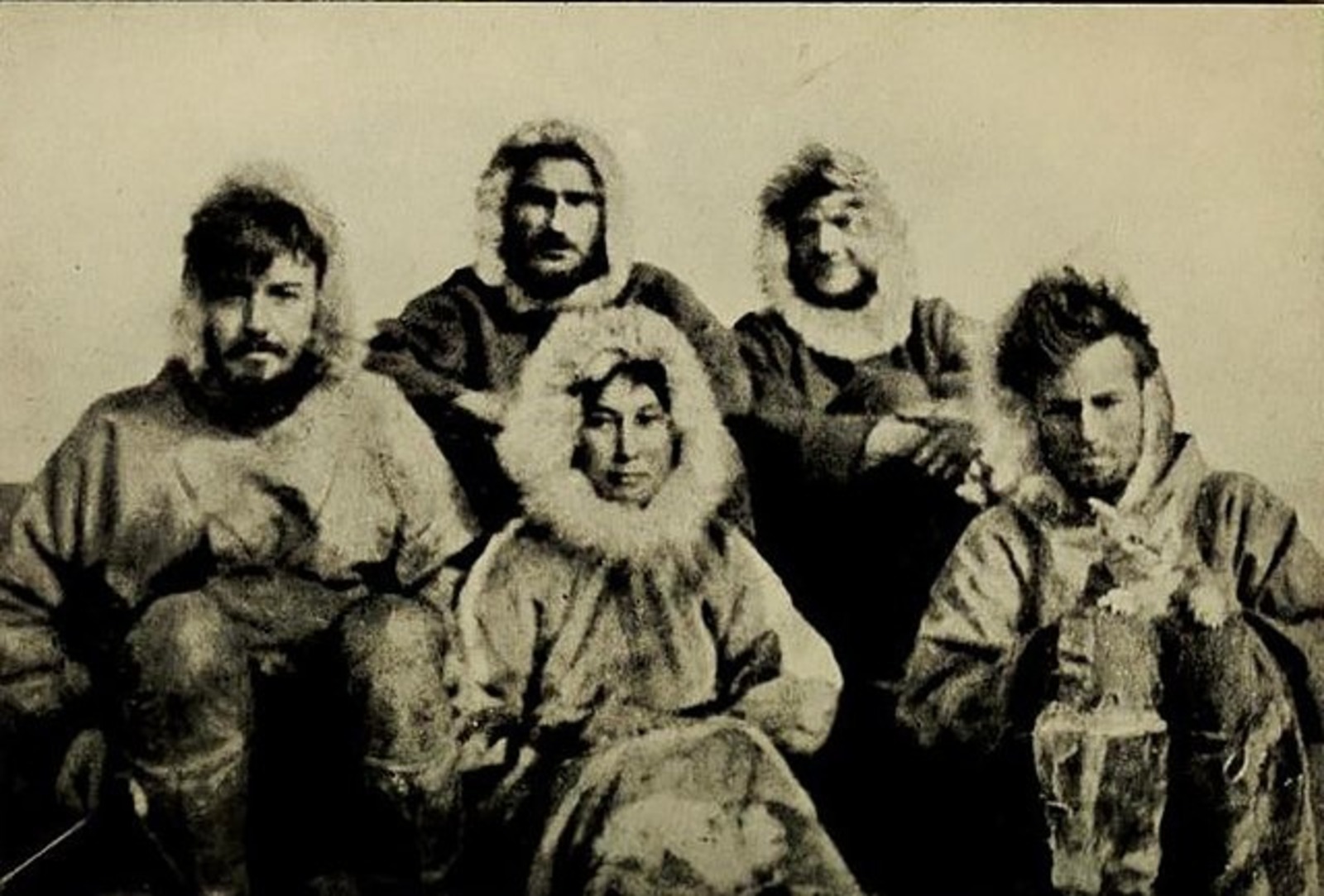


Ada Blackjack’s Trajectory Reveals How a Woman Without Experience in Exploration Faced Extreme Risks on Wrangel Island and Turned Isolation and Loss into a Lasting Historical Legacy
Ada Blackjack became known for being the protagonist of one of the most striking survival narratives of the last century. Between 1921 and 1923, she became the only survivor of an expedition that failed on the remote Wrangel Island, an isolated territory north of Siberia.
The mission fell apart due to inadequate planning, and the group faced extreme temperatures, food shortages, and successive desperate decisions.
The experience ended with Ada alone for nearly two months, fighting daily against the cold, hunger, and the gradual loss of her companions until she became a symbol of quiet strength.
-
Man Buys Metal Detector for Recovery Walks, Discovers 27.2 kg Gold Nugget in Brazil

-
Brazilian Mayor Uses Humorous Sign to Raise Awareness About Littering, Goes Viral on Social Media

-
Award-Winning Japanese Restaurant Reveals It Has Preserved Part of the Same Frying Oil for 66 Years

-
American Youth Transforms from Severe Obesity to U.S. Air Force Enlistment, Losing 90 Kilograms in Two Years




Initial Errors Put the Team at Risk
The expedition had been financed by Vilhjálmur Stefánsson and commanded by Allan Crawford. The team included explorers Lorne Knight, Frederick Maurer, and Milton Galle, in addition to a small cat named Victoria.
The plan was to claim Wrangel Island for Canada. However, they only brought six months’ worth of supplies for a mission slated to last two years, so the safety margin was minimal.
The vessel used was inadequate and had failures from the beginning. Additionally, many food supplies were spoiled, compromising the team’s nutrition.
The dogs purchased in Nome were also considered weak, worsening the transport capacity in adverse conditions.
Ada, who had no experience as a hunter, joined the mission because she needed the pay to help her son Bennet, who was in an orphanage due to tuberculosis.
This detail underscores how her choice was motivated by necessity rather than a desire for adventure.


The Mission Rapidly Deteriorates
The situation worsened quickly in the first winter. A rescue ship tried to reach the island but turned back before completing the journey, leaving the group trapped for another year.
In early 1923, Knight fell severely ill with scurvy, a condition that required constant care.
Crawford, Maurer, and Galle decided to leave in search of help because they believed this was their only chance to save the mission. They set out but were never seen again.
The responsibility for Knight fell entirely on Ada, who began to care for him while maintaining traps, hunting foxes, and learning to handle the rifle, as she needed to ensure daily food.
She even managed to build an improvised canoe from seal skin to try to expand her area of movement.
In June 1923, Knight died, leaving Ada alone on the island, with only the cat Victoria for company. For weeks, she watched the horizon in hopes of signs from her companions or a potential rescue.
The Rescue That Ended Months of Fear
Help arrived on August 20, 1923, when the ship Donaldson, commanded by Harold Noice, finally managed to reach Wrangel Island. Ada had survived eight months on the island, with two of those months completely alone.
Upon returning, she used the payment she received to take Bennet out of the orphanage and bring him to Seattle for treatment, seeking to ensure better care as that was her priority.
Discreet, she avoided the fame that arose after the episode and rarely spoke about her experience. She visited Knight’s family in Oregon to return his Bible, but they insisted that Ada keep the item.
According to grandson Michael Johnson, she kept the Bible until the end of her life, demonstrating a deep emotional bond.
Life Before and After the Expedition
Ada was born in 1898 in Spruce Creek, near the Klokerblok River. At the age of eight, her mother decided to send her to a missionary school in Nome, where she learned to read and write.
She married at 16 to Jack Blackjack and had three children, but only Bennet survived childhood. Without money after the divorce, she decided to place him in the orphanage to ensure medical treatment, a choice that ultimately led to her participation in the expedition.
After returning, she faced accusations published by Noice in 1924, which suggested negligence in Knight’s death.
The explorer later backtracked, but the situation led Ada to seek the press to present her version.
She began a series of reports, but halted the process due to emotional exhaustion. She had another son, Billy, and lived in cities such as Seattle, Spokane, Juneau, Kodiak, and Anchorage.
Legacy and Late Recognition of Ada Blackjack
Ada died in 1983, at the age of 85, at the Pioneer Home in Palmer, Alaska. She was buried next to Bennet. Later that year, after a petition, the Alaska Legislature recognized her as one of the most heroic women in the state.
On October 21, 2025, her trajectory received renewed attention when she was inducted into the Alaska Women’s Hall of Fame.
At the ceremony, great-granddaughter Saresa Whitwer stated that, despite so many challenges, Ada maintained a deep love for her family.
Grandson Johnson summarized her strength with the phrase that, according to him, guided his grandmother throughout her life: “As long as I’m alive, I will keep going.”
With information from Nomenugget and Wikipedia.