





 Portuguese
  English
  Spanish
  4 min of reading
  2 comments


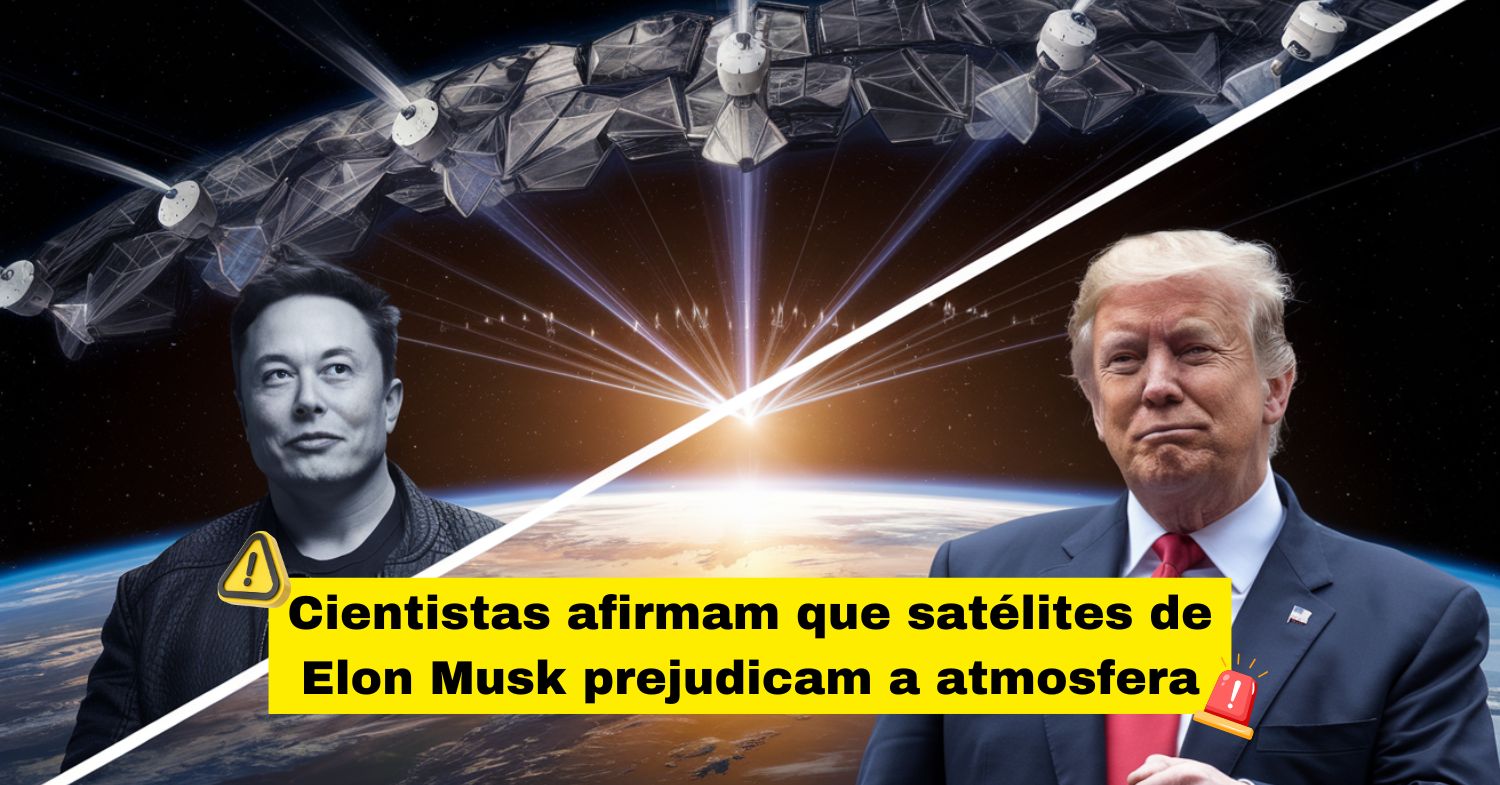


While Elon Musk Advances With Thousands of Starlink Satellites, Scientists Warn About Environmental Risks and the Lack of Regulation Under the Trump Administration.
SpaceX, led by Elon Musk, is revolutionizing the space industry with its megaconstellations of Starlink satellites, which promise to bring internet to every corner of the planet. However, as Starlink rapidly expands, scientists and regulators are warning about potential environmental impacts. Against the backdrop of the Trump administration’s policies, the lack of adequate environmental reviews raises questions about the damage that thousands of satellites may cause to the ozone layer and the Earth’s atmosphere. Could the quest for global connectivity come at a high cost to the atmosphere?
The Growth of Satellites in Earth’s Orbit
The space race has never been more intense. In 2010, there were about 1,000 satellites in orbit; today, that number exceeds 10,000. Most of them come from companies like SpaceX, Amazon, and OneWeb. Among these giants, SpaceX’s Starlink dominates the scene, representing over half of the currently active satellites.
And the growth does not stop: SpaceX has already applied to launch an additional 30,000 Starlink satellites, part of Elon Musk’s ambitious plan to provide high-speed internet anywhere in the world. Projections indicate that by 2030, around 58,000 new satellites could be orbiting Earth. But this technological advancement raises an important question: what does all this mean for the atmosphere?
-
Something is happening around the Earth: Inside the huge explosion of fireballs in 2026

-
A hot air bubble coming from Argentina expands over Brazil, causing thermometers to exceed 38 degrees with a thermal sensation of 40 degrees in late March, affecting 6 states at once.

-
The radish leaf that almost everyone throws away has more polyphenols, flavonoids, and fiber than the consumed root, and a 2025 study showed that the leaf contains compounds that protect the intestine, combat inflammation, and may inhibit the growth of cancer cells.

-
A planet that seemed to defy the laws of physics has intrigued scientists for decades, until the James Webb revealed what is really affecting Saturn’s rotation.

Launching and Operating Starlink Satellites May Cause Damage to the Ozone Layer
Recent research suggests that the launching and operation of megaconstellations like Starlink may cause significant damage to the ozone layer. With each rocket launch, pollutants such as carbon dioxide and black carbon are emitted, which can trigger harmful chemical reactions to the Earth’s natural protection against solar radiation.
Additionally, the “re-entry” of satellites into the atmosphere at the end of their lifespan releases aluminum oxides, substances that can remain in the atmosphere for decades and cause considerable destruction to the ozone layer.
A study published in Geophysical Research Letters points out that if current megaconstellation plans are realized, aluminum oxide levels could increase 21 times compared to those in 2022. This scenario could have impacts that we still do not fully understand, as scientists like Nilton Renno indicate.
Elon Musk, the Trump Administration, and Environmental Regulation
Elon Musk, known for his disruptive approach, is not a fan of regulations. He has publicly criticized rules that affect his companies, and with the support of the Trump administration, he may gain even more leeway to move forward with his plans.
Recently, Musk was pointed to lead a new Government Efficiency Department, promising to cut what he calls “waste and unnecessary regulation.” However, this vision clashes with the concerns of many scientists, who are calling for greater oversight of satellite launches and their potential environmental impacts.
In October, more than 100 scientists signed a letter requesting that the Federal Communications Commission (FCC) suspend new megaconstellation launches until environmental reviews are conducted. The letter points out that excluding satellites from these analyses “defies common sense,” given the large number of launches anticipated.
The FCC, in turn, signaled that it will review its satellite exclusion rules from the National Environmental Policy Act (NEPA). If they find that megaconstellations significantly affect the environment, environmental reviews may become mandatory.
Global Connection or High Environmental Cost?
Elon Musk’s promise with the Starlink satellites is tempting: connecting billions of people to the internet, including remote and underserved communities. However, the environmental costs of this technological revolution remain an unknown.
Studies suggest that about 10% of aerosol particles in the stratosphere already contain metals from satellites. This number could jump to 50% in the coming decades, with impacts that we cannot yet predict.
Experts like Michelle Hanlon, director of the Air and Space Law Center at the University of Mississippi, believe that more studies are needed before halting launches. However, scientists like Joseph Wang warn that policy and technological decisions must be based on accurate forecasts of environmental impacts.
The Future of Space Exploration and the Atmosphere
The expansion of megaconstellations, led by SpaceX and Starlink, represents a significant advance for global connectivity. But it also raises an urgent question: how to balance technological progress with environmental sustainability?
As discussions about regulation continue, one thing is certain: the actions of companies like SpaceX, supported by figures like Elon Musk and the Trump administration, will have a lasting impact on both global connectivity and the health of the planet.
The modern space race may just be beginning, but the challenges it brings are already significant enough to make us question: are we ready to pay the price of this progress?







Notícia tendenciosa de cunho ideológico. O governo Trump nem começou e ela já faz acusações ao Trump. A moça nem comentou sobre o acordo assinado por Lula e a “Starlink” chinesa, que teoricamente também vai expor a himanidade ao suposto estrago ou perigo iminente causado por tal tecnologia.
Ah, o artigo é tendencioso? É como dizer que Elon Musk é tendencioso a fazer satélites. Isso é um golpe baixo, mesmo!