





 Portuguese
  English
  Spanish
  6 min of reading
  2 comments




NASA Is Concerned About SpaceX’s Rapid Growth, Which Has Become Its Biggest Competitor in the Space Sector. Understand How Elon Musk’s Company Is Challenging the American Space Agency and the Impact of This Competition on the Future of Space Exploration!
The advancement of space exploration continues to be one of the most fascinating and relevant themes of our time, reflecting humanity’s effort to surpass its limitations and explore the unknown. NASA and SpaceX are dominating the landscape.
SpaceX, led by Elon Musk, is at the forefront of this new space era, and the successful return of the booster stage from the fifth test flight of Starship, carried out in October 2024, served as a powerful reminder of the capability of the United States to carry out high-complexity space missions.
This achievement highlighted not only American technological precision but also the crucial role of SpaceX in the future of space exploration, challenging NASA’s traditional leadership. In a lengthy article, The Economist discussed the success of Elon Musk’s company and the mistakes made by NASA in recent years.
-
In Mexico, a 3,000-year-old Maya site with the dimensions of an entire city may have been built as a colossal map of the cosmos, created to represent the order of the universe and reveal how this people organized space, time, and rituals.

-
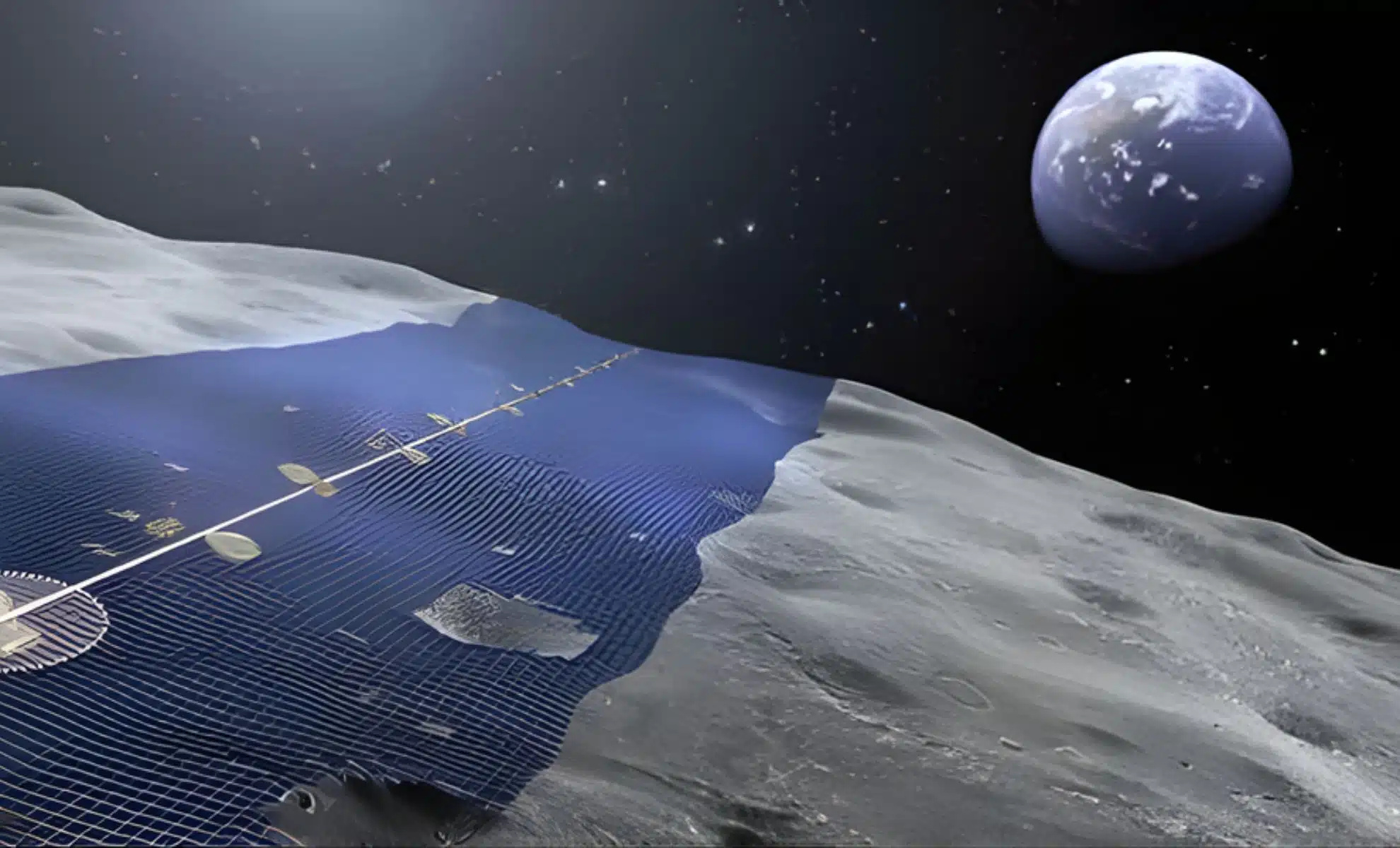
Japan wants to build a solar ring of 10,900 kilometers on the Moon to continuously send energy to Earth.
-
Weighing almost 1 ton, with temperatures of up to 3,000°C, the ability to launch 10,000 fragments within a radius of 1 km, capable of penetrating concrete and melting steel, Turkey’s terrifying bomb emerges as one of the most destructive non-nuclear weapons ever presented.

-
After a submarine disappeared beneath the “Doomsday Glacier,” scientists announce a new monstrous machine capable of operating at 3,000 meters depth to return to the heart of the ice and investigate a threat that could raise sea levels worldwide.


The Evolution of the Space Race
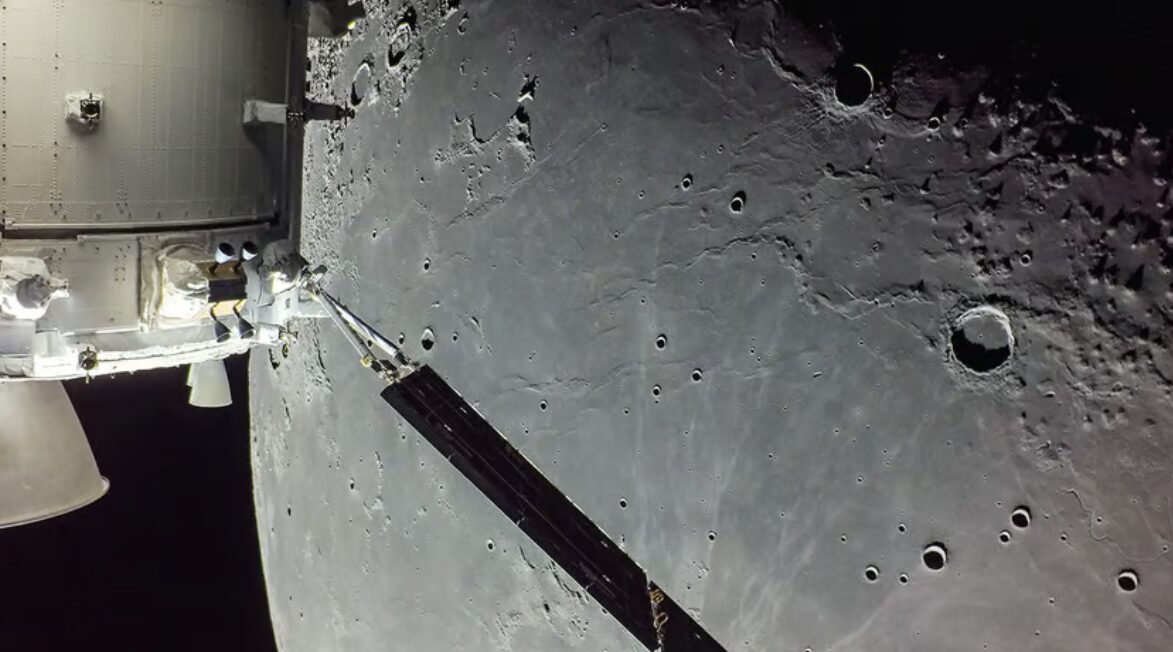
The modern space race has its roots in a period of intense competition between global superpowers. In the early 1960s, the United States was still trailing behind the Soviet Union in the development of space technology.
The Soviet Union had already achieved impressive feats, such as launching the first artificial satellite, Sputnik, and sending the first human into space, Yuri Gagarin.
In response to this growing Soviet supremacy, American President John F. Kennedy, in a famous speech to Congress in May 1961, set a bold goal: to put a man on the Moon by the end of the decade. At that moment, the United States had yet to place an astronaut in orbit, making the lunar goal a monumental challenge.
However, the American government and its advisors were aware that the technology needed to take humans to the Moon was of a completely different order than that required just to orbit the Earth.

The Soviet Union, despite its initial advantage, would have more difficulty competing in this new phase of space exploration. And so it was. The United States, through NASA, rapidly developed the Saturn V rocket, the most powerful ever built, and the Apollo spacecraft, which in 1969 took astronaut Neil Armstrong to become the first human to step on the Moon.
This milestone represented the United States’ victory in the space race but also signaled the beginning of a new era of exploration.
From then on, NASA continued to advance its capabilities, sending probes to distant planets, orbiting telescopes like Hubble, and building the International Space Station (ISS) in partnership with other countries.
The Current Era: SpaceX and the Resurgence of Lunar Exploration
Fast forward to the present, space exploration has regained prominence with new ambitious projects, and once again the focus is on the Moon. The difference now is that the United States has not one but two rockets more powerful than the Saturn V.
The first is the Space Launch System (SLS), developed by NASA to drive crewed space missions in the Artemis program. The second is Starship, a next-generation reusable rocket developed by SpaceX, which promises to transform how we send humans and cargo into space.
Despite seeming that taking Americans back to the Moon should be a relatively simple task with such capabilities, the Artemis program has faced a series of delays.
NASA has yet to conduct a crewed flight within this program, and the expectation that the Artemis III mission will take a woman to the lunar south pole in 2026 is already viewed with skepticism by many experts. Some internal documents from the agency itself suggest that a more realistic date would be 2028, while others observers speak of an even more distant deadline.
However, the space race is not just about technical and logistical challenges. There is a clear geopolitical competition at play. China, which has been rapidly advancing in its space program, plans to send its own astronauts to the Moon by 2030.
For many Americans, the idea that China could reach the Moon before the United States returns to it provokes reactions of concern, suggesting a repeat of the 1960s space race but with the reverse outcome.
Although NASA downplays the idea of direct competition, stating that “we have already beaten China to the Moon,” the symbolism of seeing a red flag with five stars planted on the lunar surface without the presence of the stars and stripes alongside would not go unnoticed in the global scenario.
The Role of SpaceX and the Transformation of the Sector
In this context, SpaceX emerges as a central piece in the new phase of American space exploration. Founded by Elon Musk, the company has radically changed the space landscape by introducing technologies that had never been considered viable, such as rocket reusability.
Additionally, SpaceX developed the Falcon 9 rocket, which is already widely used to launch commercial cargo and crews to the International Space Station, and the Dragon capsule, a key component for astronaut transportation.
The success of SpaceX is not only a result of technological innovation but also of a significant shift in NASA’s partnership model with the private sector.
For many years, NASA followed a model where it specified exactly what it wanted and paid private industry to build these technologies, with guaranteed profits for the contracted companies.
However, the agency has adopted a more competitive model where it informs companies what needs to be done and allows them to propose their own solutions and budgets. It was in this new scenario that SpaceX thrived.
This partnership with the private sector resulted in significant savings for NASA. An internal study revealed that if the agency had developed the ISS refueling capability on its own, it would have cost 4 billion dollars.
SpaceX, however, delivered this capability for just 300 million. Nonetheless, this success also highlighted the lack of competition in the sector. Boeing, for example, which was supposed to compete with SpaceX in providing crewed capsules, embarrassingly failed, and rockets from other suppliers were discontinued.
Artemis and the Dependency on SpaceX
The Artemis program, which aims to take Americans back to the Moon, exemplifies this dependency on SpaceX. The Artemis III mission intends to utilize the Orion capsule, developed by Lockheed Martin, and the SLS rocket. However, both the capsule and the rocket have limitations.
The Orion capsule, for example, is larger than Apollo, which complicates its placement in a low orbit around the Moon, as was done in previous programs. Instead, Orion will have to orbit the Moon in a “quasi-rectilinear halo orbit,” a much more elongated route that requires more energy to descend and return to the surface.
This issue forces NASA to rely on SpaceX’s landing system, a modified version of Starship, to transport astronauts from lunar orbit to its surface.
The plan involves multiple launches to supply an orbital ship before the journey to the Moon, which, while ambitious, is technically challenging. Even so, SpaceX has already proven its ability to overcome significant technical obstacles, and many believe the company will be able to deliver on its promises.
NASA and SpaceX — A Future on Mars and Beyond
As NASA and SpaceX collaborate to take humans back to the Moon, Elon Musk continues to aim for even more ambitious objectives. His ultimate goal is to colonize Mars, and Starship will play a key role in this mission.
The adapted version of Starship for Mars will be capable of landing vertically and withstanding the extreme conditions of the red planet, something that no other space agency or private company has considered until now.
Thus, as SpaceX develops its lunar version of Starship for the Artemis program, the company is also advancing its capabilities for interplanetary travel. Musk has already stated that he plans to send uncrewed missions to Mars in the coming years, and eventually crewed missions as well.
Space exploration has entered a new phase marked by collaboration between the public and private sectors, geopolitical competition, and a renewed spirit of technological innovation. As NASA faces challenges with the Artemis program, SpaceX is rapidly moving forward, driven by Elon Musk’s bold vision.
The return of the United States to the Moon seems to be just the beginning of a much longer journey, with the colonization of Mars on the horizon.








Tem que plantar amendoim
Simplesmente fantástico!!!