





 Portuguese
  English
  Spanish
  4 min of reading
  0 comments



SpaceX Prioritizes City on the Moon Before Mars, in the United States, to Accelerate Testing, Infrastructure, and Human Presence Outside Earth.
SpaceX has repositioned its space strategy and placed the Moon ahead of Mars as a short-term priority. The shift alters the understanding of a project that has for years been presented to the public as a direct race to the red planet.
In practice, this means that Elon Musk’s company is now focusing more attention on a future lunar city, while the ambition to send people and permanent structures to Mars is set for a later stage. The immediate effect of this move appears on the calendar, in the technical pressure on the Starship, and in the weight that the Moon again gains on the space chessboard.
Mars Remains in the Plan, but No Longer as the Immediate Step
For a long time, the colonization of Mars was treated as SpaceX’s most emblematic mission. The red planet served as a symbol of the company’s ultimate goal and also as the main showcase for the long-term vision advocated by Musk.
-
Attracting around 250,000 people a year, a lighthouse 200 meters from the sea, on a 60-meter high cliff, on the North Sea coast in Denmark, becomes one of the most impressive examples of how nature can threaten historical buildings.

-
The narrowest house in the world is only 63 centimeters wide, but inside it can accommodate a bathroom, kitchen, bedroom, office, and even two staircases.

-
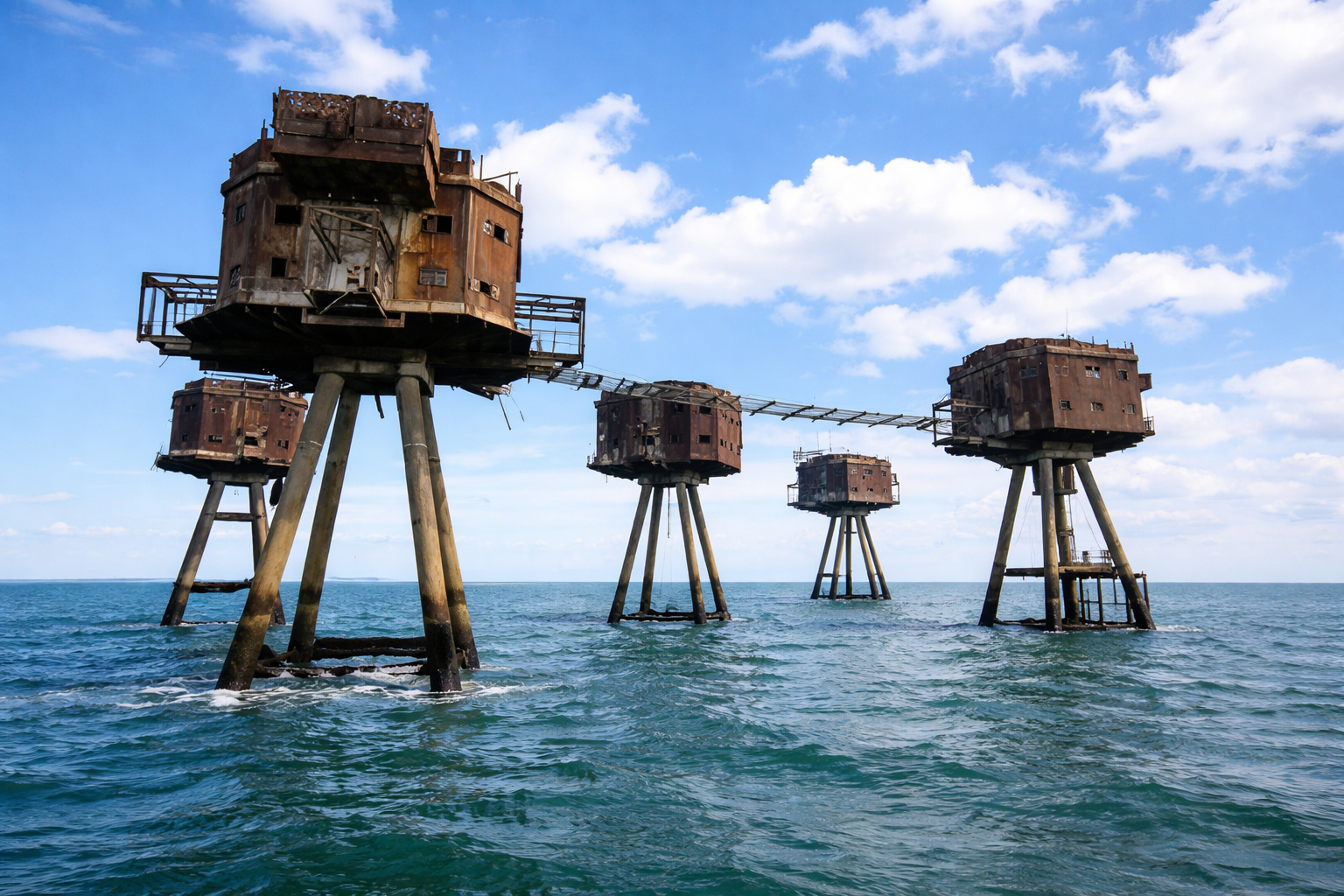
In the middle of the sea, these enormous concrete and steel structures, built by the British Navy to protect strategic maritime routes, look like they came straight out of a Star Wars movie.
-
For years, no one could cross a neighborhood in Tokyo because of the tracks, but an impressive solution changed mobility and completely transformed the local routine.


Now, the scenario has changed. Mars has not been removed from the plan, but it has lost its position as the most urgent priority. The focus shifts to the construction of a lunar city, seen as a faster path to consolidating human presence outside Earth.
The Moon Gains Strength as the Most Viable Route
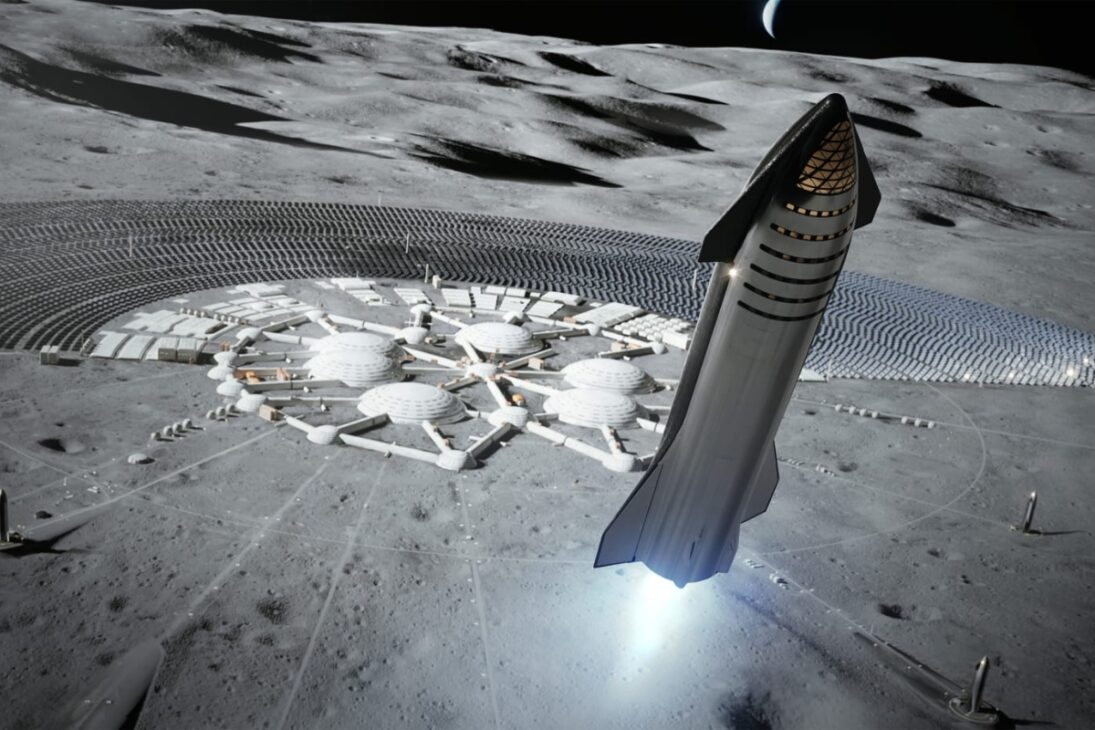
The change in direction is related to practical factors. The Moon is much closer to Earth, requires less extreme logistics, and allows for testing systems of energy, transportation, life support, and continuous operation in a hostile, yet more accessible environment than Mars.
This transforms lunar territory into a validation platform. Instead of trying to leap directly into a more complex Mars mission, SpaceX seems to bet on an intermediate step with a higher chance of visible results in less time. For the company, this choice reduces pressure on deadlines and improves the strategic reading of the next space cycle.
Starship Now Supports the New Space Calendar
At the center of this change is the Starship, the spacecraft that encapsulates the company’s lunar and Martian ambitions. It is this system that will need to demonstrate more reliable operational capacity to sustain frequent missions, heavy cargo transport, and future permanent structures outside Earth.
According to Reuters, a global news agency, Elon Musk stated in February 2026 that the priority has now become a city that can grow on its own on the Moon, while the idea of a city on Mars remains a later goal. This statement solidified the perception that there has been a clear reorganization of priorities.
The 2025 Timeline Loses Strength Amid the New Priority
In March 2025, Musk was still publicly discussing the possibility of sending an unmanned mission to Mars by the end of 2026. At that time, the discourse indicated that the Martian window remained the central axis of the company’s plan.
With the lunar priority now more evident, this timeline loses strength. The shift shows that the more aggressive deadlines for Mars have been subordinated to a more immediate agenda, linked to the Moon, the maturation of the Starship, and the need to prove results in less distant stages.
U.S. Lunar Program Increases Pressure on the Company
Another important point is the weight of the U.S. lunar program. SpaceX occupies a strategic position in this front, especially since NASA relies on the Starship as part of its architecture for future lunar missions.
This increases the pressure for the company to deliver functional solutions first in the lunar environment. The Moon is no longer just a symbolic step but also represents contracts, institutional timelines, international visibility, and influence over the direction of space exploration by the United States.
Lunar City Becomes the Central Piece of the New Strategic Reading
When the company prioritizes a city on the Moon, it does not merely change the order of a technical plan. It also redefines the narrative of human presence outside Earth. Instead of presenting Mars as the next direct destination, SpaceX now treats the Moon as the space where infrastructure, permanence, and expansion can begin more concretely.
This shift carries political, technological, and symbolic weight. A growing lunar base or city reinforces presence, projects industrial capability, and places the Moon back at the center of the competition for space prominence. In the short term, this impacts the sector’s strategy and changes the reading of who will advance first.
The decision does not mean the abandonment of Mars. What it shows is a change in order, with the Moon taking on the role of operational priority while Mars remains a long-term ambition.
In the end, SpaceX keeps the Martian project alive but accepts a more gradual route. By placing the lunar city up front, the company reorganizes its timeline, repositions its presence in space, and shifts the debate to a new strategic axis that pressures the sector and alters the global perspective of the next space race.









-

Uma pessoa reagiu a isso.