





 Portuguese
  English
  Spanish
  5 min of reading
  0 comments


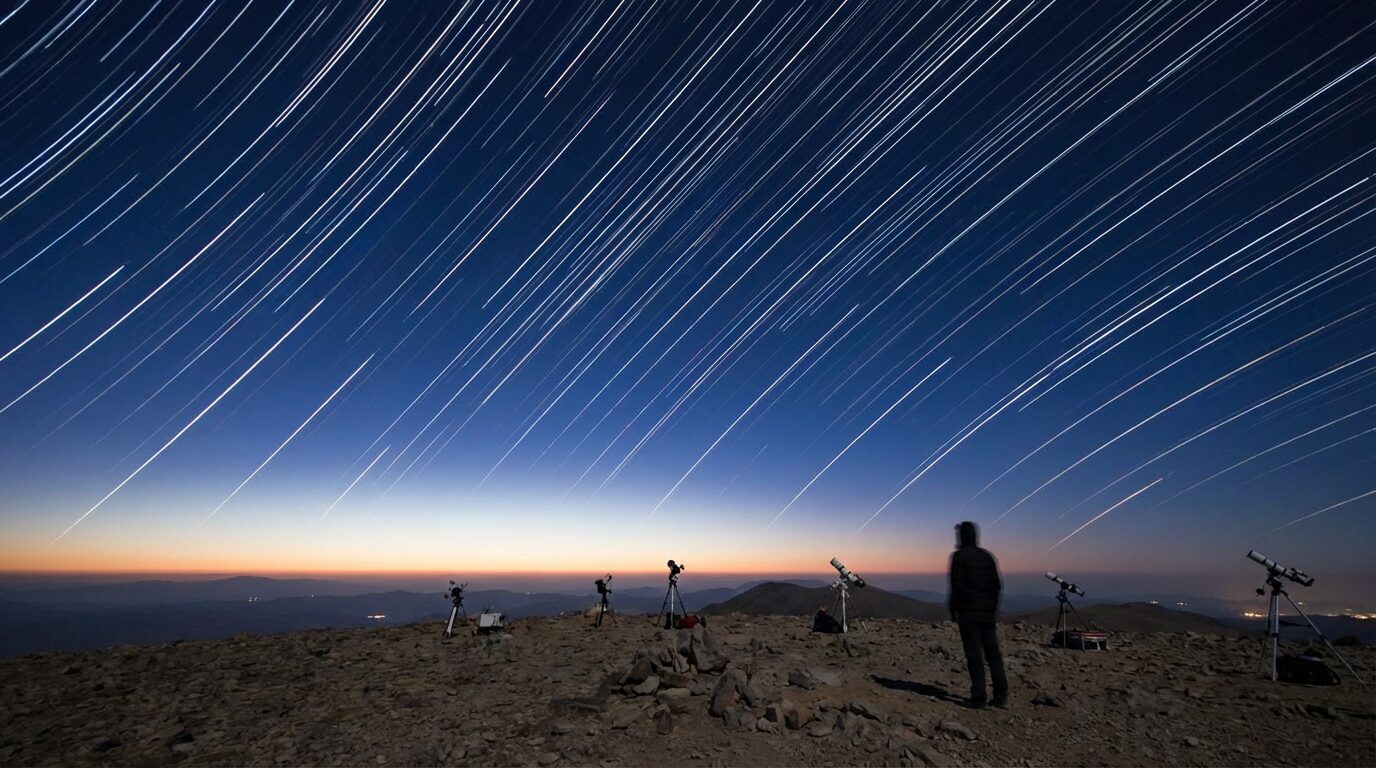
Proposals To Launch Hundreds Of Thousands Of Satellites Multiply Environmental, Scientific And Cultural Risks. The Most Ambitious, From SpaceX, Aims For Up To 1 Million Units In Low Earth Orbit. Experts Call For New Rules To Assess Brightness, Debris And Effects On The Night Sky.
On January 30, 2026, SpaceX filed with the U.S. Federal Communications Commission (FCC) a request to launch a mega-constellation of up to 1 million satellites, dedicated to powering data centers in orbit. According to the documentation cited by The Conversation, the vehicles would operate between 500 and 2,000 kilometers in altitude, with some orbits designed for near-continuous exposure to the Sun. The proposal is under public consultation at the U.S. agency.
The move comes amid a rapidly advancing race for mega-constellations. As of February 2026, there were approximately 14,000 active satellites around the planet, while another 1.23 million projects were in various stages of analysis and development, according to a survey mentioned by The Conversation. The current regulatory focus prioritizes technical criteria, such as radio frequencies and launch safety, leaving significant gaps.
These satellites have an average lifespan of about five years, which implies constant replacement and continuous fleet expansion. In practice, the operational model ensures an industrialized and permanent presence in low Earth orbit. The result, researchers warn, is a fundamental shift in the perception of the sky, with cumulative impacts that may become difficult to reverse.
-
At 73.8 meters tall, the world’s tallest teapot-shaped building has 15 floors, ensures stability, and impresses with an internal space of 28,000 cubic meters.

-
Ambev has planted over 3 million trees and restored an area equivalent to the coastline from São Paulo to Natal, and the result after 15 years of silent investment has finally appeared for all of Brazil to see.

-
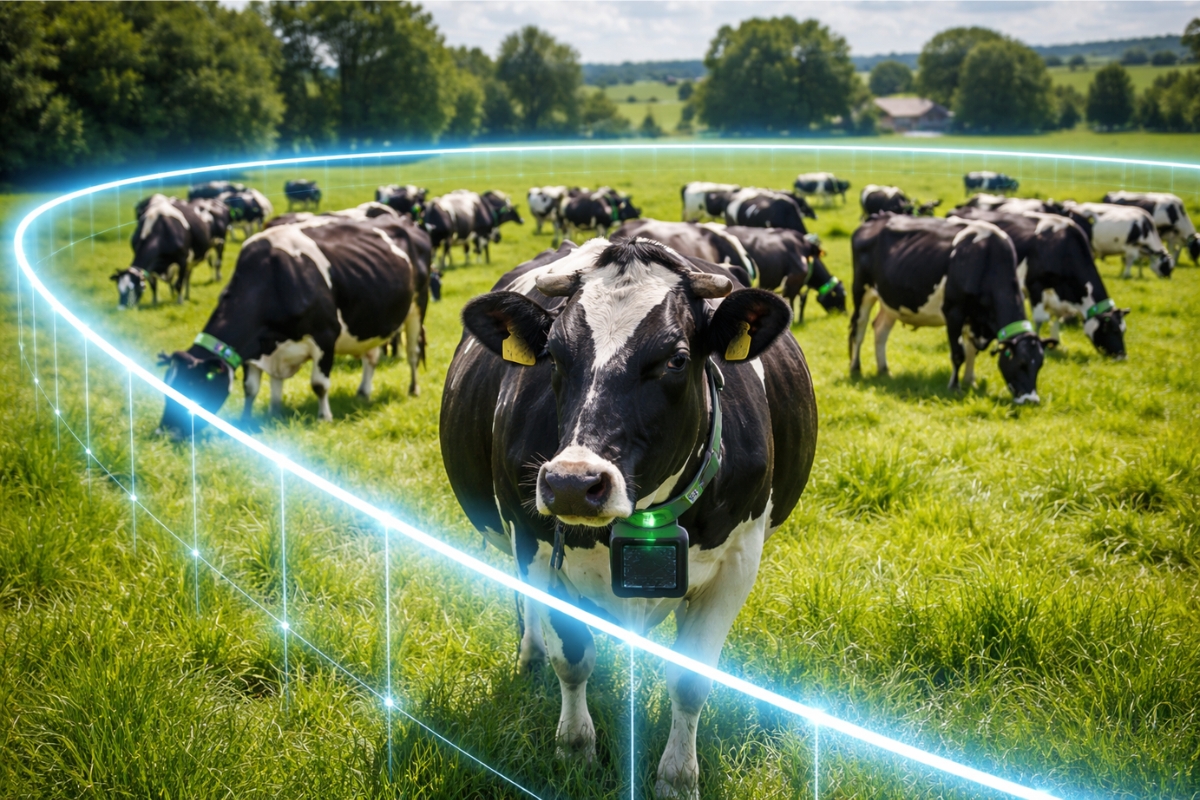
A new AI collar technology for cattle eliminates physical fences, creates virtual barriers, monitors animals 24/7, and detects changes in behavior and health.
-
For a few weeks each year, an entire country blooms with billions of tulips, creating a mosaic of colors visible from the sky, while a single garden gathers more than 7 million flowers and attracts visitors from around the world to one of the most impressive shows in Europe.


For Gregory Radisic, a researcher at the Centre for Space, Cyberspace and Data Law and lecturer at Bond University, current processes do not adequately consider the scientific, cultural and environmental effects of such a scale of launches. He and attorney Natalie Gillespie advocate for a specific assessment of the impacts on dark skies before mass authorizations.
Night Sky And Science, Growing Light Pollution Threatens Observations And Cultural References
Low Earth orbit satellites reflect sunlight for about two hours after sunset and before sunrise. Even with efforts to reduce them, truck-sized vehicles remain visible as moving dots, contributing to light pollution. In 2021, astronomers estimated that, in less than a decade, 1 in every 15 points of light in the sky could be a satellite, considering only about 65,000 units then planned.
With constellations numbering in the millions, the effect is likely to be permanent and global, affecting generations. The Conversation highlights the so-called mobile baseline syndrome, where each new generation comes to accept a more degraded sky as normal. This impacts everything from astronomical research to the education and cultural continuity of peoples who use the firmament for navigation, hunting, and spiritual traditions.
For Indigenous communities, the brightness and trails in the sky interfere with practices and oral narratives related to the stars. The change is not just aesthetic, but also epistemological, as it alters references used for centuries. This is a cultural impact that, according to experts, remains a blind spot in current regulations.
Collision And Debris Risk, Alert For The Kessler Syndrome And Lack Of Integrated Management
The multiplication of objects in low orbit increases the risk of cascade collisions, known as the Kessler syndrome. There are already about 50,000 pieces of debris ten centimeters or larger orbiting Earth, and recent data cited by The Conversation indicates that, without active diversion maneuvers, a major collision could occur every 3.8 days. This scenario increases costs, threatens services, and complicates future launches.
Industry experts also point out the lack of unified space traffic management, similar to what aviation has. Currently, operators coordinate maneuvers in a fragmented manner, raising operational risks as orbits become more congested. With mega-constellations, the logistics of avoiding collisions are likely to become even more complex and expensive.
Environment And Legal Responsibility, Reentries And Fuels Pressure The Ozone Layer And Challenge Space Law
The complete cycle of these projects also weighs on the environment. Mass launches consume fossil fuels, and the end of life often foresees the reentry and burning of satellites in the atmosphere, releasing metals into the stratosphere and potentially affecting the ozone layer, according to The Conversation. These are chemical effects still under evaluation, but with potential for cumulative damage.
Legally, international space law establishes that States — not companies — are responsible for damages caused by their space objects. Space lawyers, like Radisic, discuss whether current instruments can adequately hold private actors accountable in light of the increasing risk of damage, deaths, or permanent environmental harm. The pressure for regulatory updates grows as fast as the constellations.
What Is Missing In Regulation, Proposal For Dark Sky Impact Assessment Wants To Measure Brightness, Radio And Culture
Authorizations focus on technical parameters such as frequencies and launch safety, but do not capture effects on the dark sky, science, and culture. To close this gap, Radisic and Natalie Gillespie propose a Dark Sky Impact Assessment, which would require prior study and mitigation of brightness, radio emissions, traffic management, and pollution from reentries, with consultation to affected communities.
According to The Conversation, this tool could be adopted by national regulators like the FCC and coordinated with international bodies, creating minimum criteria before licensing mega-constellations. The idea is to align economic and connectivity benefits with clear environmental and cultural limits, preventing Earth’s orbit from becoming unsustainable.
What kind of limits should apply to mega-constellations, and who pays for the mitigation of brightness and debris, companies or States? The public consultation in the U.S. regarding SpaceX’s request places these choices at the center of the agenda. Do you see room for a global ceiling on satellites per orbit, with stricter brightness and reentry rules? Share your opinion in the comments and let us know if the benefits outweigh the irreversible change to our night sky.







-

Uma pessoa reagiu a isso.