





 Portuguese
  English
  Spanish
  5 min of reading
  0 comments


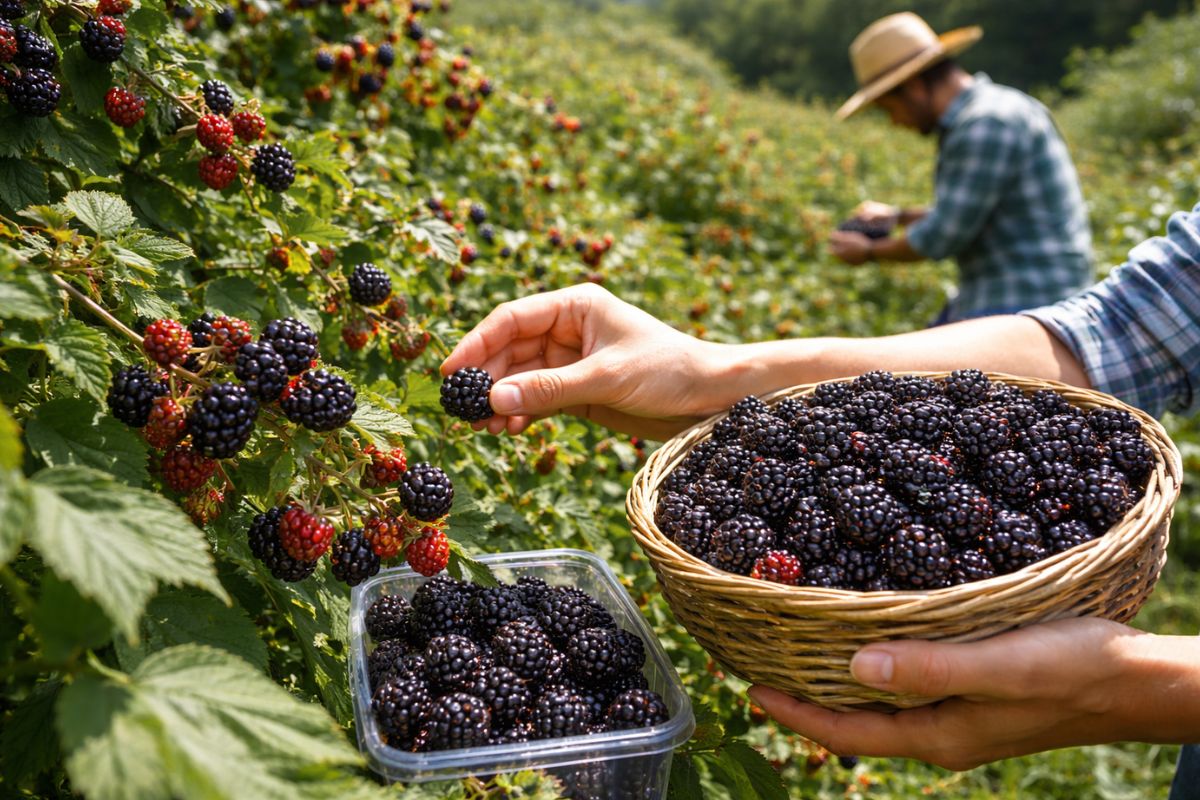
Specialists on invasive weeds urge residents of the Northwest to harvest and eat as many wild blackberries as possible to contain the Himalayan blackberry, an invasive plant that threatens native species and causes billion-dollar losses in the United States.
It sounds like a grandmother’s recipe, but it is an official recommendation from invasive species control specialists. Residents of the Northwest, in the United States, are being encouraged to collect and eat as many wild blackberries as possible as a way to combat the Himalayan blackberry, an invasive plant that threatens native species in the region and has spread so aggressively that the standard collection limit of 30% simply no longer applies. The idea is to reduce the number of seeds spread throughout nature while simultaneously raising awareness about the damage caused by exotic species.
The guidance comes from professionals like Skye Pelliccia, an education specialist with the King County Noxious Weed Control Program in Washington state, according to Yahoo. “There will never be a shortage of blackberries in the Northwest”, Pelliccia said, making it clear that the abundance of the invasive plant is so great that there is no risk of scarcity for birds and other animals that also feed on the fruit. With the arrival of spring, wild blackberries are expected to start blooming in the coming months and will be ready for harvest between late June and August.
Why wild blackberries have become an environmental problem in the United States

The Himalayan blackberry arrived in the Northwest as an introduced species and found ideal conditions to multiply uncontrollably. The problem is that invasive plants like this compete directly with native species for essential resources, including sunlight, water, and soil nutrients.
-
At 93 years old, Mr. Francisco completes a 5 km run, is cheered as he crosses the finish line, moves the city, and gives an emotional lesson in strength, discipline, and the will to live.

-
With 96 rooms, 37 bathrooms, and five kitchens, the mansion of the heir to Pernambucanas is worth R$ 50 million, featuring a pool and two terraces.
-
An old error in the property registry may force a resident to demolish the kitchen and bathroom and also incur expenses to rebuild everything.

-
A Brazilian thought he was making a good deal, but lost R$ 125,000 while trying to buy a Toyota Hilux on Facebook.


When an exotic species spreads at the speed of the Himalayan blackberry, it can harm local biodiversity and even permanently alter entire ecosystems.
The invasive variety of wild blackberries is so widespread that traditional control methods are ineffective. The invasive plant forms dense, thorny bushes that choke out native vegetation and turn previously diverse areas into involuntary monocultures.
For specialists, human consumption of the fruit is a complementary strategy that helps reduce seed dispersal. Each blackberry harvested and eaten is one less seed that could germinate and further expand the presence of this invasive plant in the territory.
The billion-dollar losses caused by invasive species in North America
The impact of invasive wild blackberries is not limited to the environment. According to the United States Department of Agriculture, a 2021 study estimated that species displacement has cost North America over 26 billion dollars annually since 2010.
These costs include damage to agriculture, spending on pest control, loss of productivity in forested areas, and degradation of ecosystems that provide valuable environmental services.
In Washington state, where the Himalayan blackberry is particularly aggressive, the numbers are equally alarming. If just 23 of the 200 known species of non-native plants and animals spread uncontrollably, the total annual impact could reach 1.3 billion dollars.
This calculation considers only a fraction of the invasive species present in the state. The real cost, when factoring in long-term ecological damage and loss of biodiversity, likely exceeds any available financial estimate. Wild blackberries represent just one piece of this much larger problem.
The trend of turning invasive species into meals and desserts
Eating invasive wild blackberries is not an isolated idea. Transforming exotic species into dinners, desserts, and other delicacies has become a growing trend in various regions of the United States.
People are consuming everything from wild fruits and weeds to blue crabs and wild boars in an effort to take local action and protect the ecosystems of their communities.
The movement has gained momentum because it offers something that few environmental campaigns can: an immediate and tasty reward. Harvesting wild blackberries to make jams, pies, and juices is a pleasurable activity that anyone can do without special equipment.
For invasive species control specialists, this combination of environmental benefit and personal satisfaction is what makes the strategy so effective in mobilizing communities.
When the solution to an ecological problem involves eating free fresh fruit, participation tends to be much higher than in campaigns based solely on information and alerts.
Important precautions for those who want to harvest wild blackberries in nature
Despite the encouragement from specialists, those who go to collect wild blackberries need to be properly informed and follow all rules and guidelines of the area, especially on public lands.
Not every blackberry found in nature belongs to the invasive species, and there are similar plants that may be toxic. Correct identification of the Himalayan blackberry is the first step before any harvesting.
It is also essential to respect local regulations regarding harvesting in parks and reserves. Although specialists have stated that the 30% limit does not apply to the Himalayan blackberry due to its extreme abundance, other species in the same area may be protected.
Consuming wild blackberries is a valid environmental control strategy, but it needs to be practiced with knowledge and responsibility to avoid collateral damage to the biodiversity that is intended to be protected.
What else residents can do besides eating wild blackberries
For those who are not attracted to the idea of solving environmental problems through food, specialists suggest other ways to support local biodiversity. Revitalizing the backyard with native plants is one of the most effective actions any resident can take.
Replacing traditional lawns with landscaping using natural species from the region helps create ecological corridors that benefit pollinators, birds, and small animals.
The issue of invasive wild blackberries is, at its core, a reminder of how human choices from the past create environmental problems in the present. The Himalayan blackberry was intentionally introduced to the region as an invasive plant, and now it costs billions to control.
Each bush that dominates an area and each native species that disappears due to competition is a direct consequence of this introduction. The good news is that, at least in this case, part of the solution is simple, free, and delicious.
Would you eat wild blackberries to help the environment? Do you think turning invasive species into food is a smart strategy or just a stopgap? Leave your opinion in the comments. This debate between conservation and creativity is increasingly present worldwide.






Seja o primeiro a reagir!