





 Portuguese
  English
  Spanish
  4 min of reading
  0 comments


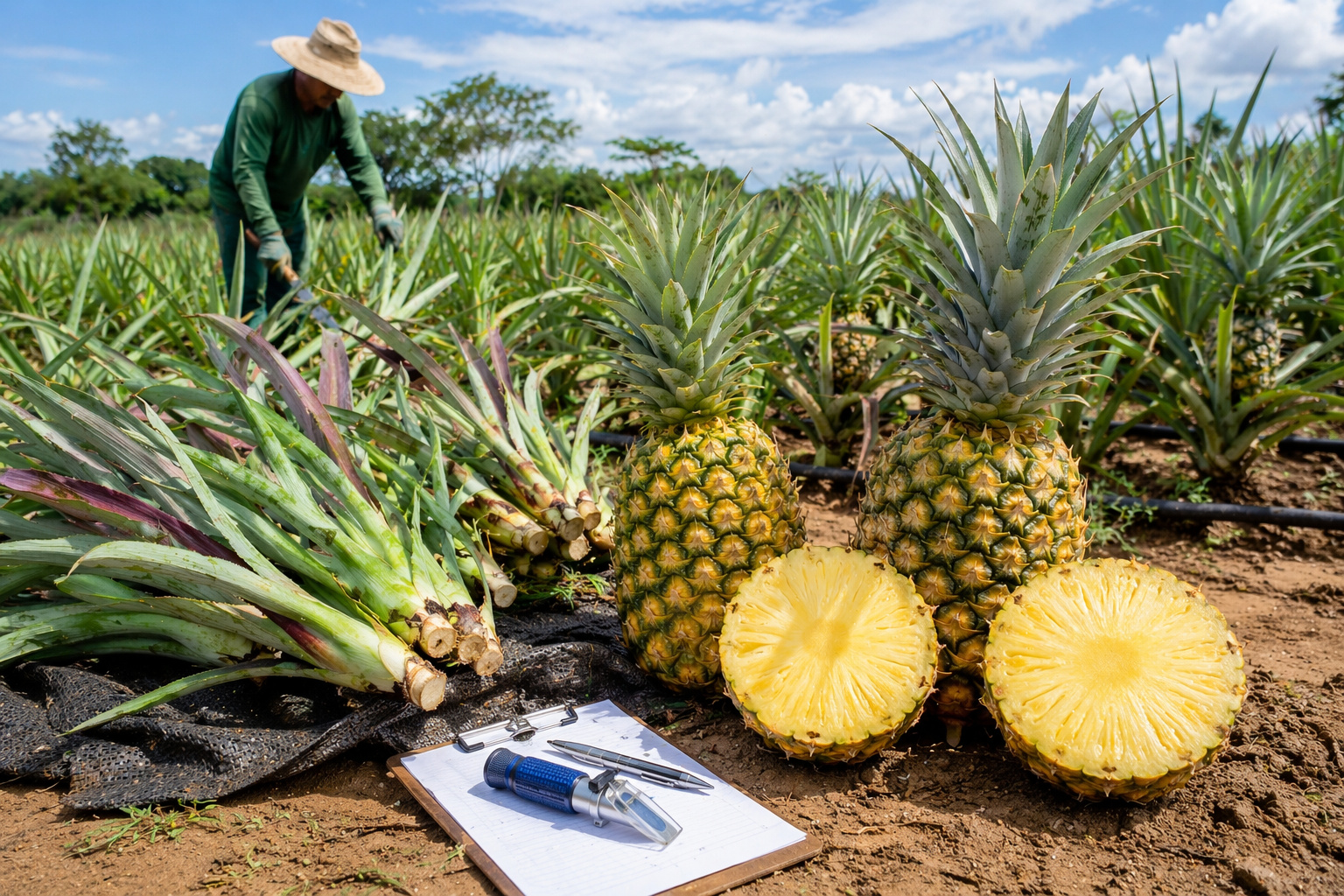
New cultivars Unemat Esmeralda and Rubi combine disease resistance, high productivity, and an ideal balance between sweetness and acidity for fresh consumption
Researchers from State University of Mato Grosso (Unemat) have developed new pineapple cultivars adapted to the cultivation conditions in the state.
The project, funded by the Foundation for Research Support of the State of Mato Grosso (Fapemat), began in 2012, with the creation of an Active Germplasm Bank (BAG) to gather and evaluate different genetic materials.
After more than a decade of studies, the work resulted, in 2024, in the launch of the cultivars Unemat Esmeralda and Unemat Rubi, developed with a focus on disease resistance, productivity, and fruit quality.
-
Extreme heat is already invading crops, reducing productivity and putting pressure on livestock, fishing, and forests worldwide, and data from the FAO shows that the increase in temperatures has shifted from being a climate risk to a direct threat to global food production.

-
BNDES releases R$ 129 million for CNH Industrial Brazil to create more modern agricultural machines, with eight projects that include harvesters, accessible tractors, and a planter capable of applying seeds, fertilizers, and inoculants all at once in the Brazilian field.

-
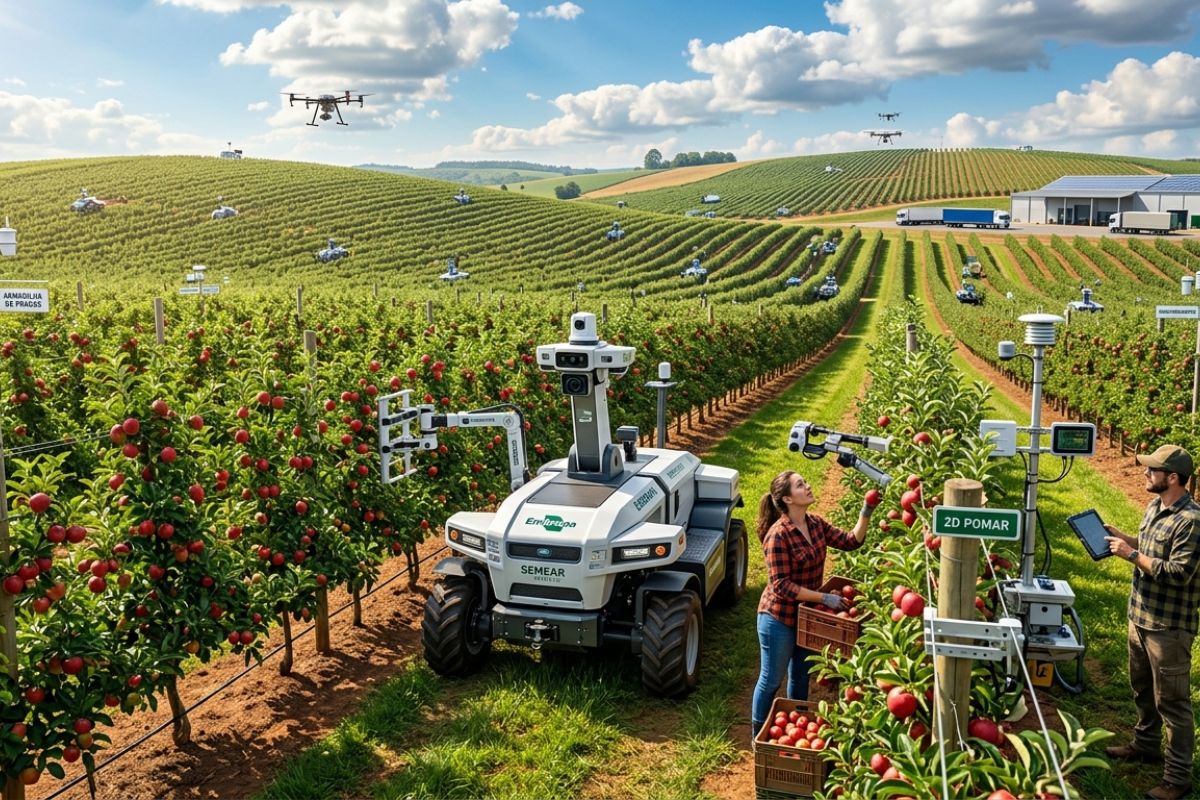
From manual harvesting to robotics: Vacaria, the apple capital, becomes an Embrapa laboratory in Semear Digital, with point-to-point mapping, pest traps, traceability, and 2D orchards to combat labor shortages.
-
In 2026, Brazilian soy becomes airplane fuel: Corsia mandates SAF, oil gains a premium of 40% to 80%, biorefineries alongside crushing plants and long-term contracts remove the producer from the commodity discount.

Technical development consolidates advances in genetic improvement
The development process was conducted based on continuous and structured scientific stages over the years.
Resistance evaluations to the fungus Fusarium guttiforme, responsible for the main disease of the crop in Brazil, were carried out.
Genetic diversity analyses, agronomic characterization, and controlled crossings also took place.
The selection of materials used statistical methods such as REML/BLUP, in addition to field tests for validation of resistance to fusariosis.
This set of stages allowed the identification and selection of the most promising genotypes for commercial use.
Resistance to fusariosis reduces losses and costs in the field
The fusariosis of the pineapple plant represents the main phytosanitary challenge of the crop in the country.
The disease can cause losses of up to 80% of production, directly affecting the profitability of producers.
Traditional cultivars, such as Pérola and Jupi, show high susceptibility to the pathogen.
In this scenario, genetic improvement consolidates as a strategy to reduce losses and decrease dependence on chemical control.
The cultivars Unemat Esmeralda and Rubi show proven resistance to Fusarium guttiforme, contributing to greater productive stability.
Agronomic characteristics ensure quality and standardization
The new cultivars present well-defined agronomic characteristics and high fruit quality standards.
The Unemat Rubi has a cylindrical shape, yellow pulp, and an average weight of 1.6 kg, with a sugar content of 13 °Brix.
Meanwhile, the Unemat Esmeralda reaches an average weight of 2.1 kg and 13.9 °Brix, indicating greater sweetness potential.
Both have a titratable acidity of 0.6% and a sugar/acidity ratio greater than 20, an essential factor for fresh consumption.
Another relevant differential is the absence of thorns on the leaves, a characteristic that facilitates management, reduces operational risks, and increases efficiency in the field.
Proper management is crucial for productive performance
The cultivation of these cultivars requires well-defined management practices to achieve productive potential.
The use of offspring-type seedlings, previously classified by size and subjected to sun curing for approximately seven days, is recommended.
Planting should be done in organized furrows or holes, ensuring uniformity in plant development.
The recommended density varies between 30,000 and 40,000 plants per hectare.
Fertilization should be guided by soil analysis, with monthly applications from the first to the ninth month.
Weed control should include manual weeding and the use of herbicides, especially in the early stages.
Irrigation should meet a demand between 60 and 150 mm per month, depending on climatic conditions.

Vegetative aspects favor management and propagation
According to Professor Doctor Willian Krause, coordinator of the research, the cultivars present an upright stature and good vegetative development.
The Unemat Esmeralda has an average height of 102 cm, while the Unemat Rubi reaches about 114.5 cm.
The reduced number of leaves helps facilitate the management of the crop.
The production of offspring-type seedlings directly influences propagation and uniformity of the crop.
The cultivars also differ in leaf coloration, being green in Esmeralda and purplish in Rubi.
Public research reinforces innovation and competitiveness in the field
The development of the cultivars Unemat Esmeralda and Rubi represents a relevant technological alternative for pineapple producers.
The combination of genetic resistance, productive standardization, and reduction of input costs strengthens the competitiveness of the crop.
The project highlights the strategic role of public research in generating and disseminating agricultural technologies in Mato Grosso.
In light of this advancement, how can these new cultivars influence the productivity and sustainability of the pineapple chain in Brazil?









Seja o primeiro a reagir!