





 Portuguese
  English
  Spanish
  3 min of reading
  0 comments



The financing of R$ 129 million approved by BNDES for CNH Industrial Brazil brings together eight research, development, and innovation projects focused on harvesters, tractors, planters, and the nationalization of components, impacting the modernization of agriculture, the industry in Piracicaba, and the generation of direct and indirect jobs
BNDES approved financing of R$ 129 million for CNH Industrial Brazil, focusing on research, development, and innovation projects aimed at creating and improving agricultural machinery in the country. The operation is part of the BNDES Mais Inovação program and concentrates efforts on equipment adapted to the conditions of the Latin American market, with priority for Brazil.
In total, the support includes eight strategic projects aimed at the development of harvesters, tractors, and input application equipment. The initiative seeks to keep pace with digitalization and precision agriculture, identified as central trends in the global agribusiness.
BNDES targets innovation in agricultural machinery
The investments supported by BNDES aim to increase operational efficiency in the field, reduce emissions, and meet regulatory requirements related to the carbon market and low environmental impact fuels. The operation was also structured to strengthen the national capital goods industry, enhance the competitiveness of agricultural production, and stimulate the supply chain.
-
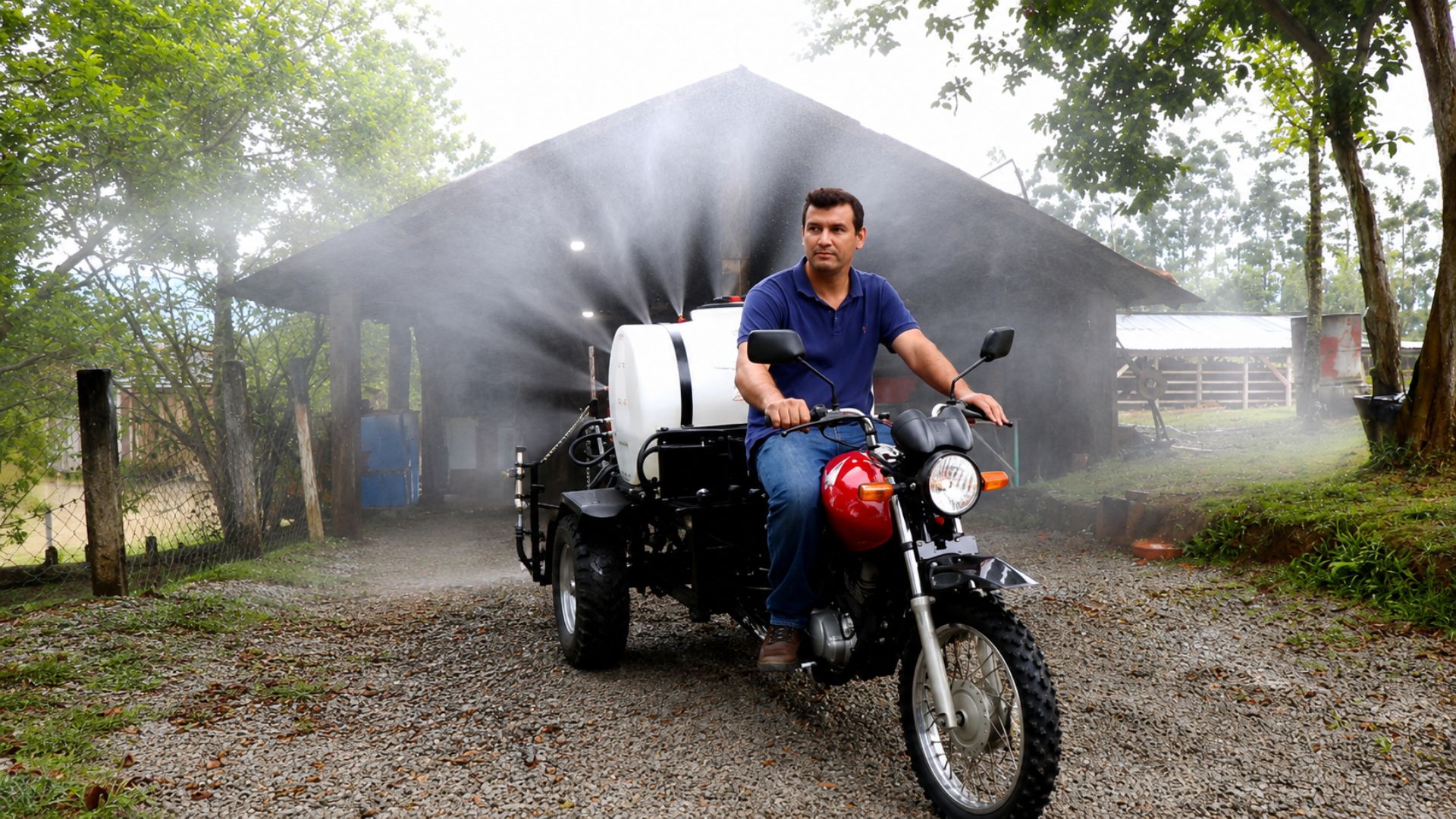
Without money for a tractor or Tobata, a farmer from Presidente Getúlio bought an old motorcycle from an auction and created an agricultural tricycle that carries up to 900 kg of fertilizer in the field; in five years, he has already sold eight to neighbors.

-
A single tank in the lake of a plant yields 90,000 kilos of tilapia every six months, and the company wants to multiply this by 500 to take Mato Grosso do Sul from 11th place to the top in the country.
-
Russia recognizes Brazil as free from foot-and-mouth disease without vaccination on June 10, 2026, strengthens Brazilian agribusiness, and paves the way for more meat, fish, nuts, and new business with a billion-dollar market.

-
Fish farming becomes the new giant of Brazilian agribusiness and transforms tilapia into the “water ox,” in a chain that already moves R$ 11 billion per year and exceeds 1 million tons produced.



Among the financed projects is the development of a planter capable of performing multiple operations in a single pass. The equipment will allow for the simultaneous application of seeds, solid fertilizers, and inoculants, with potential operational gains.
Modernization of harvesters and accessibility
Another focus of BNDES financing involves the modernization of harvesters produced by CNH Industrial Brazil. The machines are expected to receive new electronic architectures, sensors, and automation systems capable of adjusting parameters in real-time.
The changes aim to reduce losses during harvesting, increase fuel consumption efficiency, and enhance the comfort and safety of the operator. The improvements may also expand the export potential of equipment manufactured in Brazil.
The financing also includes the development of a tractor adapted for operators with reduced mobility. The project envisions an integrated lifting system and adjusted controls, in line with accessibility standards.
Jobs, Piracicaba, and strengthening the industry
Another area supported by BNDES involves the adaptation of the industrial unit in Piracicaba, São Paulo, and the nationalization of strategic components. This measure seeks to strengthen the local industry and reduce external dependence in relevant stages of production.
CNH estimates the creation of 360 direct jobs throughout the project, with half of the positions during the implementation phase and half after completion. The company also projects around 1,080 indirect jobs during the execution and operation stages.
The investments reinforce technological innovation as one of the pillars for advancing productivity in the field and adapting the sector to new environmental and market demands. Thus, BNDES expands its role in supporting the development of agricultural machinery and strengthening the national production chain.







Be the first to react!