





 Portuguese
  English
  Spanish
  4 min of reading
  10 comments





Starlink, Company Of Elon Musk, Gained 58% Of The Satellite Internet Market In Brazil, Leaving Competitors Behind. With Its Low Orbit Technology, It Offers Fast Connection.
In recent years, connectivity has become a basic necessity for millions of people around the world.
In Brazil, where many regions still suffer from limited internet access, a silent revolution has been taking place in the satellite broadband sector.
The market, previously dominated by traditional companies, has undergone a significant transformation with the rise of new technology that promises faster and more stable connections.
-
Children have been making clay pieces for 15,000 years in Southwest Asia, and fingerprints preserved on 142 ornaments helped archaeologists prove this.

-
These are the drivers who may stop paying tolls on highways in a project that promises to reduce costs for those who live from transportation in Brazil.

-
New semi-autonomous legged robot technology challenges the limitations of space exploration by operating almost without human intervention on the Moon.

-
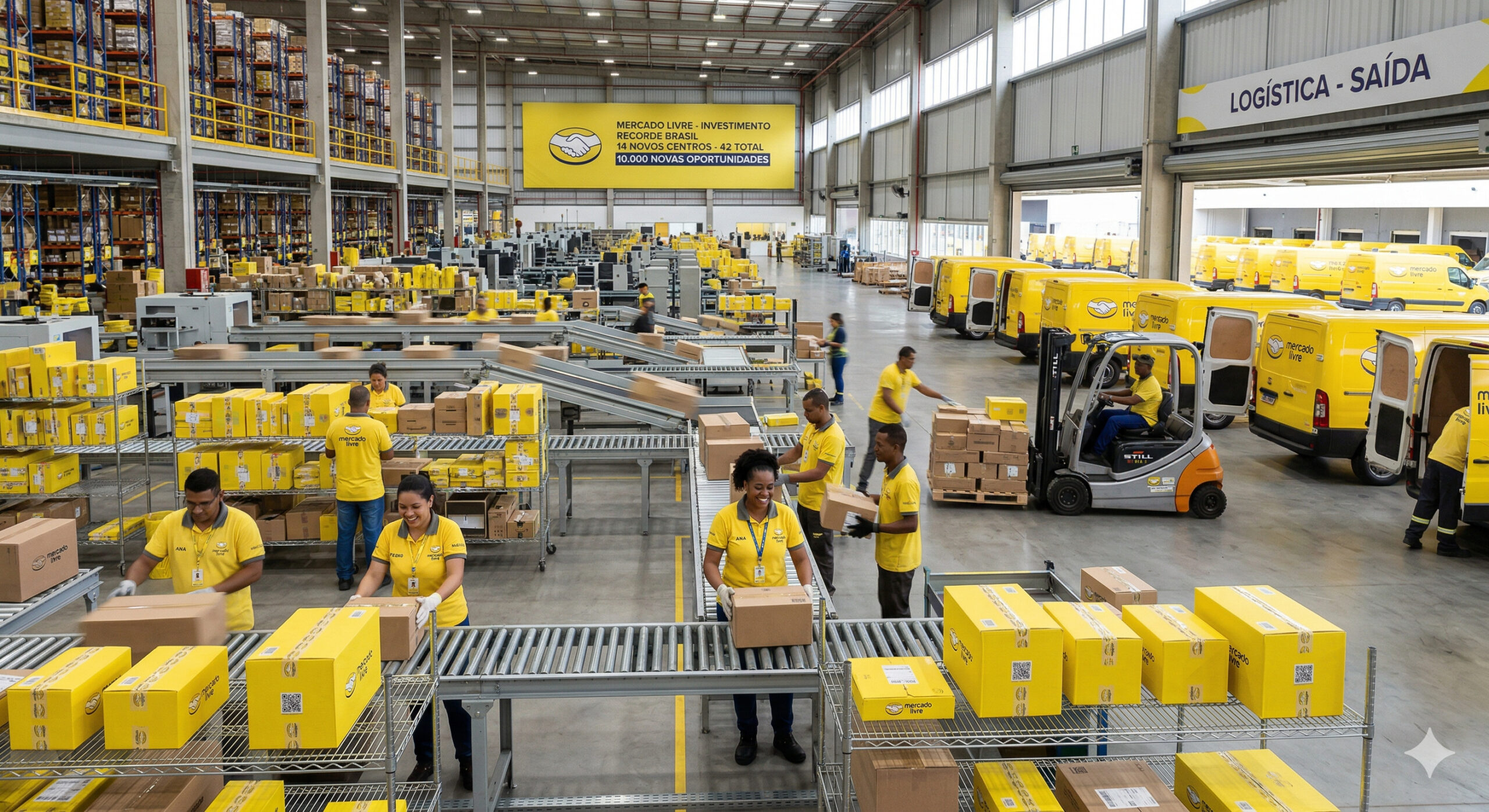
Mercado Livre “opens the vault” and announces a record investment of R$ 57 billion in Brazil in 2026, a value 50% higher than the previous year, with an expansion plan that includes 14 new logistics centers, totaling 42 units in the country and hiring an additional 10,000 employees.

With the growing dependence on the internet for remote work, education, and entertainment, the challenges of connecting isolated regions have gained even more relevance.
Conventional technologies, such as fiber optics and mobile networks, often fail to reach remote areas due to infrastructure limitations.
In this scenario, satellite internet has become a viable solution, and Starlink has been leading this innovation in Brazil.
Starlink Market Leader
Starlink, a satellite internet company owned by Elon Musk, has gained 58% of the Brazilian satellite broadband market, according to data released by the National Telecommunications Agency (Anatel) for December 2024.
With 326.8 thousand active connections, the company has grown rapidly, surpassing traditional competitors and establishing itself as the leading provider of this type of service in the country.
The technology used by Starlink, based on low-orbit satellites, has been a differentiator for this expansion.
Unlike geostationary satellites, which operate at a greater distance from the Earth, Musk’s company’s equipment provides lower latency and higher connection speeds, making it an attractive alternative for consumers and businesses in remote areas.
In addition, the installation of the service is simplified, requiring only a reception kit, which facilitates the adoption of the technology in hard-to-reach locations.
Another factor that has driven Starlink’s growth in Brazil has been the expansion of the number of active satellites.
With the frequent launch of new units, the company’s coverage has rapidly expanded, reaching not only rural areas but also urban locations where traditional internet infrastructure has failures or congestion.
Competition and Market Share
As Starlink grows rapidly, its main competitor, Hughes, has 171.2 thousand active accesses, placing it in second position in Anatel’s ranking.
Hughes uses geostationary satellites to provide connection, a more traditional technology widely used before the popularization of low-orbit satellites.
However, this approach has drawbacks, such as higher latency and lower short-term expansion capacity.
In third place, the American company Viasat recorded 20.3 thousand accesses, while Telebras appears in fourth place with 17.6 thousand accesses. Despite the partnership between these two companies, Anatel accounts for their data separately.
The Brazilian state-owned company, representing only 3.1% of the market, seeks alternatives to expand its presence in low orbit and compete more fairly with the industry leaders.
Among other companies operating in satellite broadband, Claro ranks fifth in Anatel’s ranking, with 12.1 thousand accesses, while Oi appears in sixth place, with 2.6 thousand accesses.
This scenario demonstrates that, although competition still exists, Starlink has consolidated itself as the absolute leader in this segment.

Sector Growth and New Investments
Brazil ended 2024 with 563.4 thousand active accesses in satellite broadband, consolidating an expanding and increasingly competitive market.
With the growing demand for connections in rural and remote areas away from major urban centers, the trend is that the technology will continue to evolve, and new companies will attempt to expand their presence in this segment.
Starlink, for its part, does not intend to stop here.
The company is awaiting authorization from Anatel for the launch of 7.5 thousand new low-orbit satellites, which could further increase its coverage and the quality of the service offered in the country.
If approved, this expansion will allow more Brazilians to access high-speed internet, reducing digital exclusion and promoting greater technological inclusion.
In addition, the impact of Starlink can be felt across various sectors, such as education and health. Schools in remote areas will have access to high-quality digital content, facilitating learning and integrating students into the connected world.
In health, hospitals and clinics distant from major urban centers will be able to rely on telemedicine and quick access to medical databases, improving the quality of care.
However, Starlink’s entry into Brazil has also brought regulatory challenges. The company faces requirements from Anatel to ensure compliance with industry standards and meet local demands.
Another point of discussion is the competition with national providers, who may suffer from client loss due to the technological superiority of Elon Musk’s company.
With this expansion, the expectation is that Starlink will become even more dominant in the national market, becoming a viable option for millions of Brazilians who previously did not have access to quality internet.
Competition will have to adapt quickly to avoid losing ground in a sector that is evolving rapidly.







Como eu faço para ter a internet
No Rio de Janeiro, não tem como assinar o plano residencial
Moro em uma reserva florestal