





 Portuguese
  English
  Spanish
  4 min of reading
  6 comments


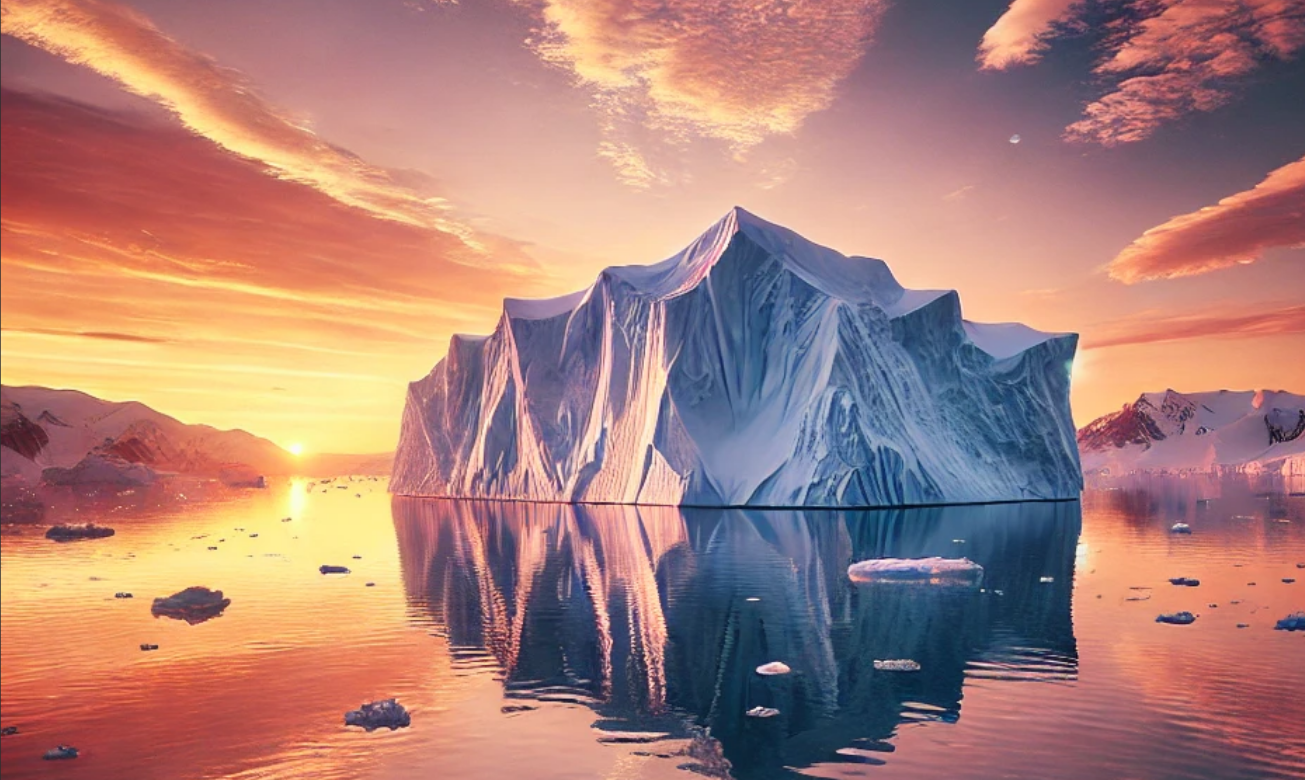


An Ambitious Startup Plans to Use Underwater Drones to Refreeze the Arctic, Proposing a Radical Climate Solution with an Estimated Cost of US$ 10 Trillion Annually.
As the Arctic melts at an alarming rate, scientists explore drastic measures to prevent the collapse of this crucial ecosystem. But is this the wisest choice?
While some experts advocate for geoengineering as a necessary risk, others fear it may divert attention from the true goal: reducing carbon emissions.
A Solution for the Feedback Loop in the Arctic
As Arctic ice melts, the exposed ocean absorbs more heat, further accelerating the thawing process.
-
Germany discovers how to reuse old window glass without melting anything and can transform 220,000 tons per year into new high-performance panels, using material from nearly 150 million old windows that would be discarded.
-
China creates hypersonic engine that can make planes and missiles fly more than 6 times the speed of sound with less weight, more range, and without system change.

-
Mysterious object on Mars divides NASA and Harvard after Curiosity image reignites suspicions about what was really found on the planet.
-
Giant structures 14 meters beneath Egypt are revealed by satellites and expose a millennia-old secret buried in Buto.


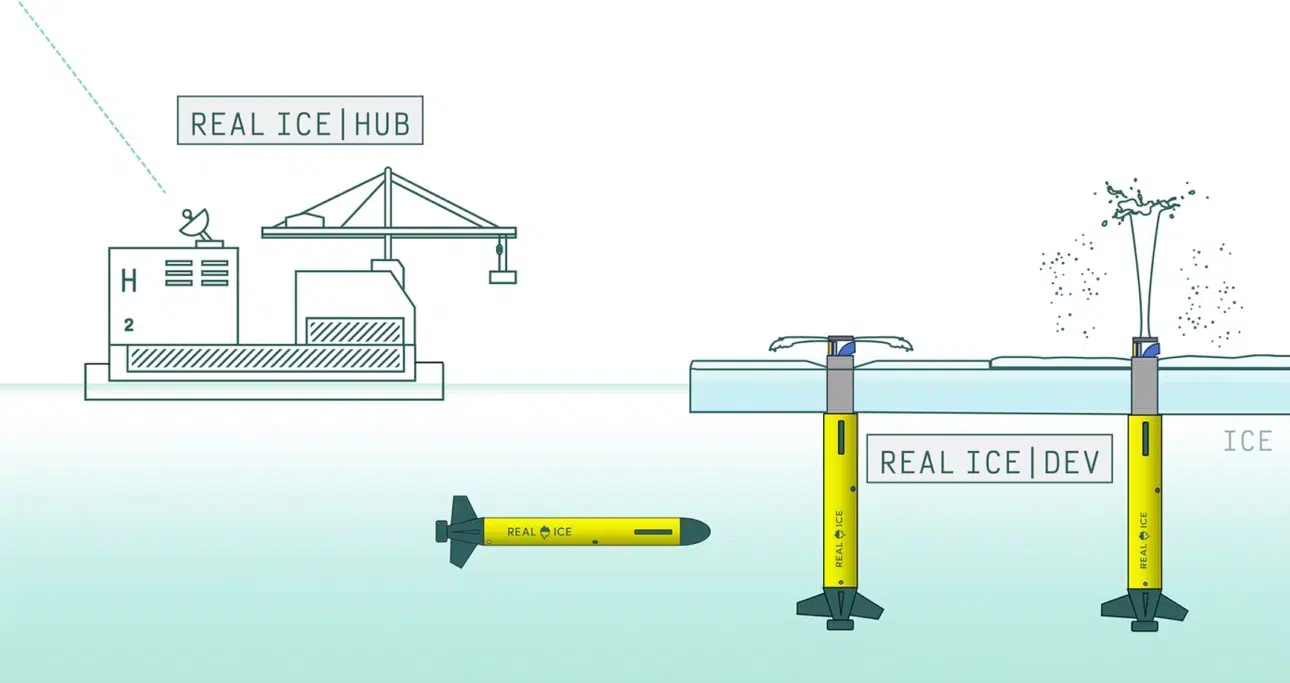
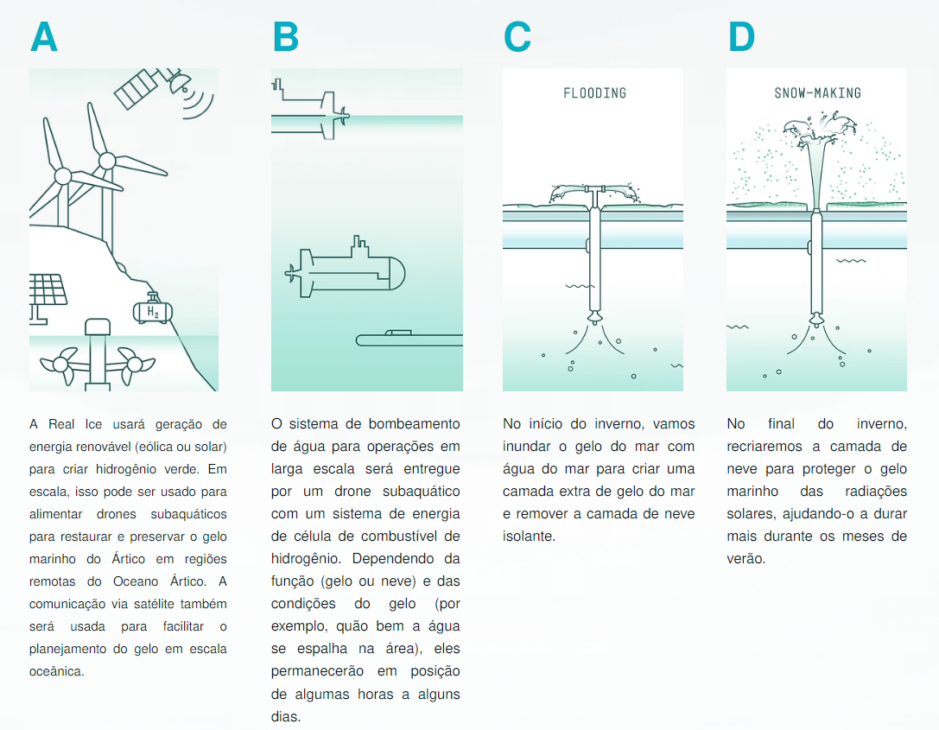
To combat this cycle, researchers from the Climate Repair Center at the University of Cambridge, in partnership with the startup Real Ice, are developing an innovative approach: pumping seawater over existing ice to increase its thickness.
Andrea Ceccolini, CEO of Real Ice, explains: “Our field tests over the past two years show that ‘ice thickness’ is an effective way to encourage additional ice growth over the existing sea ice.”
An Underwater Drone and Thicker Arctic Ice
Since 1979, the Arctic has warmed almost four times faster than the global average. This not only raises sea levels but also reduces the cooling effect of the region, exacerbating global warming.
Real Ice believes it has a solution to reverse the trend.
The startup is developing underwater drones powered by green hydrogen, capable of penetrating the ice and spraying seawater onto its surface. This water freezes, forming a thicker upper layer.
Ceccolini highlights the potential of this approach: “By flooding and freezing the snow layer, which typically insulates sea ice, we can stimulate additional ice growth at the base.”
Colossal Challenges
The proposal faces significant obstacles. First, it must prove that the technology works on a large scale. Then, there is the challenge of securing funding and scaling operations to oceanic levels.
It is estimated that 10 million wind pumps would be needed just to thicken the ice in one-tenth of the Arctic. “On a small scale, pumping water and forming new ice is straightforward,” says Ceccolini. “But scaling this under extreme Arctic winter conditions is the biggest challenge.”
Despite this, the ultimate goal is to create a thick enough ice layer to withstand the summer. However, the effectiveness of this approach still needs to be validated.
Initial Tests and Futuristic Plans
In January, Real Ice led an expedition that generated about a thousand tons of ice in an area the size of a football field. For the first time, a hydrogen fuel cell-powered pumping system was used. Now, the goal is to expand testing in 2024 and 2025.
“So far, our tests have been too small to assess whether the additional ice survives the summer and prevents the polar ice cap from shrinking,” admits Ceccolini.
A High Price: US$ 10 Billion per Year
With scientists warning that we will not meet the goal of limiting global warming to 1.5 °C, Ceccolini believes that his technology can buy time.
“If this approach proves effective, it makes sense to keep it operating on a large scale until we can decarbonize our economies and reduce CO2 levels to around 350 ppm,” he explains.
The initial estimate suggests an annual cost of US$ 10 billion to implement ice thickening on a significant scale. However, Ceccolini asserts that this investment would be a fraction of future adaptation costs and climate damages.
The idea of manipulating the climate is not new, but it carries a bad reputation. In addition to pumping water in the Arctic, scientists are studying stratospheric aerosol injection (SAI), which simulates the effects of a volcanic eruption to cool the planet. However, this technique can cause damages such as acid rain.
Moreover, critics point out that geoengineering may create a “moral hazard” by reducing the urgency to cut emissions. If these technologies fail, the planet may face an even greater disaster.
Aware of the criticism, Ceccolini prefers to describe his approach as “biomimetic” rather than geoengineering. He explains: “We use nature-inspired methods to preserve and restore mechanisms that occurred naturally before climate change affected ecosystems like the Arctic.”
Preparation for the Inevitable
Ceccolini warns that we need solutions beyond emission reduction. The 2023 IPCC report reinforces the need to remove significant amounts of CO2 from the atmosphere, scaling technologies at an unprecedented pace.
“Emission reduction alone has almost zero chance of avoiding the most likely economic scenarios. We will need innovative carbon capture methods and, even then, the required amounts may take too long to prevent the worst temperature increases,” he emphasizes.
The Clock is Ticking
Time is short. CO2 emissions in 2024 are expected to hit a new record, and the World Meteorological Organization predicts more temperature records will be broken.
Ceccolini concludes with a warning: “In the Arctic, the risk of inaction is losing an entire ecosystem, with planetary impacts such as the collapse of Greenland’s glaciers and the release of methane from thawing permafrost.”
As the future of the planet hangs in the balance, solutions like those from Real Ice may be the key to a more resilient world. But will it be enough? Time – and action – will tell.






Nossa que preguiça estar encarnada nesse Planeta neste tempo de Transição Planetária, as pessoa não investem 2 reais em mudanças de comportamento, Terapias para despertar a consciência, conhecimento e em como parar de poluir e desmatar o Planeta…
Mas querem enfiar coisas e cavacar todo o mar e depois que desequilibram tudo, querem vir trazendo uma solução, pelo amor de Deus vamos resolver o básico, que ninguém está falando e nem fazendo…
Vocês sensuram a mensagem.
As pessoas não estão resolvendo o básico e investem bilhões para remediar.
Esses caras andam cheirando ****.
Oras, mas isso não seria uma interferência na natureza igual a que atribuem aos “somente” milhões de carros emissores de gás estufa, o famigerado CO2. Por outro lado, será que isso que dizem estar acontecendo no ártico e antártico é de fato culpa do quase nada de CO2 que os carros e fábricas lançam na atmosfera global. E 10 trilhões de custos anuais, deve ser quase 1/2 economia americana por ano.Trata-se de valores que deverão ser produzidos de alguma forma. Quanto será a agressão à natureza somente para produzir estes equipamentos? Quanta mão de obra será requerida? E de onde virá os valores a serem pagos para estas startups?