





 Portuguese
  English
  Spanish
 3 min of reading


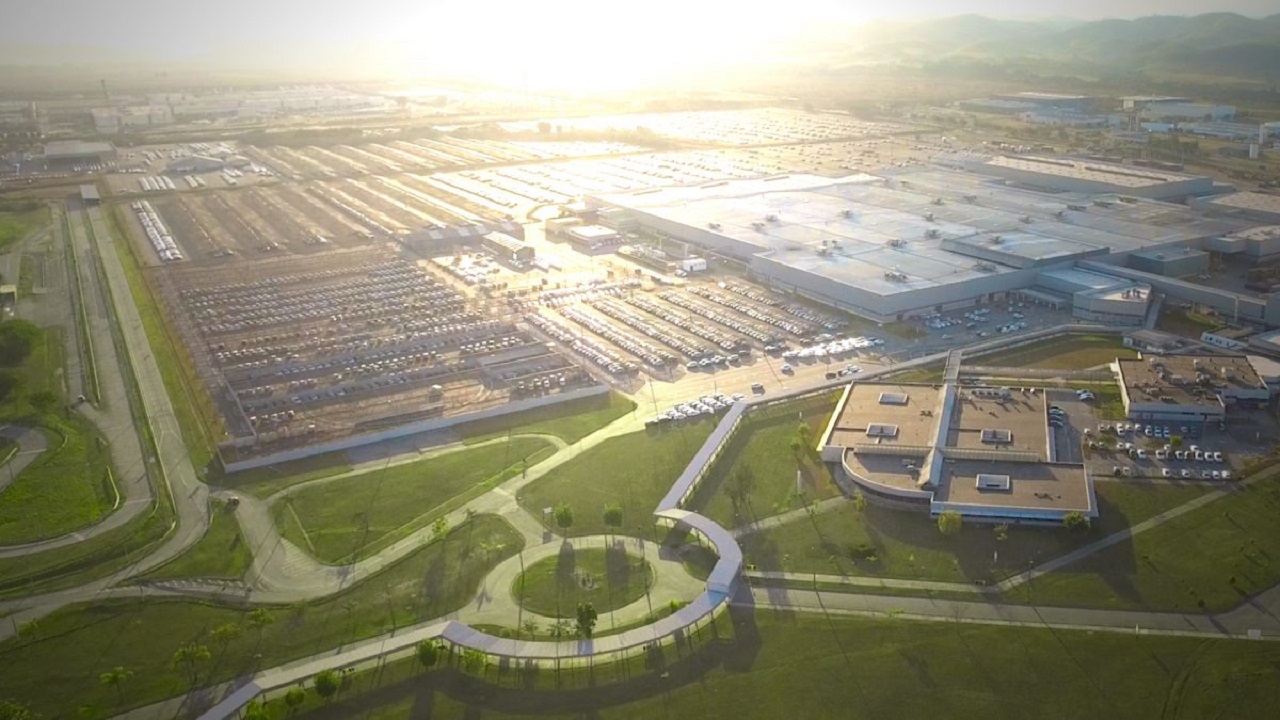
Stellantis Announces End of Production Shift at Its Factory in RJ, Resulting in the Layoff of Hundreds of Employees Hired Last Year.
Stellantis, the automaker responsible for producing models such as Citroën C3, C4 Cactus, and Peugeot 2008, announced the end of the second shift operations at its factory in Porto Real, in the South of Rio de Janeiro. As a consequence, the factory will also carry out mass layoffs of its employees. The company’s decision comes after a significant drop in orders from the foreign market.
Stellantis Layoffs Will Affect 340 Brazilian Employees
Thus, the company’s factory will resume its activities only on March 6, conducting all its production with just one shift. According to the automaker, the capacity of the remaining shift will be expanded to handle production. The second work shift at the unit was resumed by Stellantis in October 2022, which led to the hiring of 340 workers.
The goal was to boost production of the new generation of the Citroën C3, with an estimated launch by 2024. However, the company will carry out the mass layoff of these hired employees. According to the official statement from the company, the unit will concentrate the production of automobiles in a shift with expanded capacity, with greater efficiency and agility to better respond to market demands.
-
The government eliminates the tax on kerosene to try to curb the rise in airfares and includes a billion-dollar credit to airlines in a package against fuel prices, while diesel and cooking gas are also included in the crisis equation.
-
Buying a car may suspend Bolsa Família in 2026 and trigger automatic government oversight.

-
Contactless payments in 2026 soar in Brazil, exposing new invisible fraud gaps and forcing users to double their security precautions with contactless cards.

-
Everyone has started talking about the end of the minimum retirement age in Brazil — but has this “silent change” really happened or are we facing one of the biggest recent rumors about the INSS?

In contrast, several workers questioned a possible intervention by the union regarding the mass layoffs. Accordingly, the council member of the Metalworkers’ Union of Southern Fluminense, Raimundo de Freitas, stated that a meeting has already been scheduled with the automaker. According to Freitas, the union’s lawyer was informed of the automaker’s decision last week, and it is still necessary to study the situation.
Vehicle Exports Decline
As a justification for the mass layoffs, the multinational stated that the decline in vehicle exports influenced the demand for an additional shift at the automaker. It is important to mention that the last year ended with a 28% increase in the number of Brazilian vehicle exports.
Thus, compared to the previous year, 481 thousand more units were exported in 2022. However, the financial crisis in the Argentina, important for Citroën, directly affected the brand’s exports.
Therefore, the National Association of Motor Vehicle Manufacturers (Anfavea) estimates that exports will continue to decline this year. A few weeks ago, Stellantis dismissed rumors that it would be closing the PSA Peugeot Citroën factory in Porto Real. In a statement to the press, the company stated that this is not true and is a clear piece of fake news.
The Porto Real unit is an essential and strategic asset for the company, housing the production of various models and their engines. The plant will continue to contribute to the company maintaining its leadership in the national, Argentine, Chilean, and South American markets, being prepared to meet market expansion.
Mass Layoffs Reflect Early Termination of Temporary Work Contracts
Stellantis further announced that what is being referred to as mass layoffs is, in fact, the early termination of temporary and fixed-term work contracts. The company will operate with only one production shift, with expanded capacity.
According to the released statement, Stellantis has readjusted the industrial planning of the Porto Real unit to align its production pace with the level of demand from the external market.
The unit concentrates the production of automobiles in a shift with expanded capacity, with greater efficiency and agility to better meet market needs. As a result of this adjustment, it was necessary to anticipate the termination of fixed-term and temporary contracts, mostly hired to meet the immediate demand for increased production.








Seja o primeiro a reagir!