





 Portuguese
  English
  Spanish
  5 min of reading
  6 comments


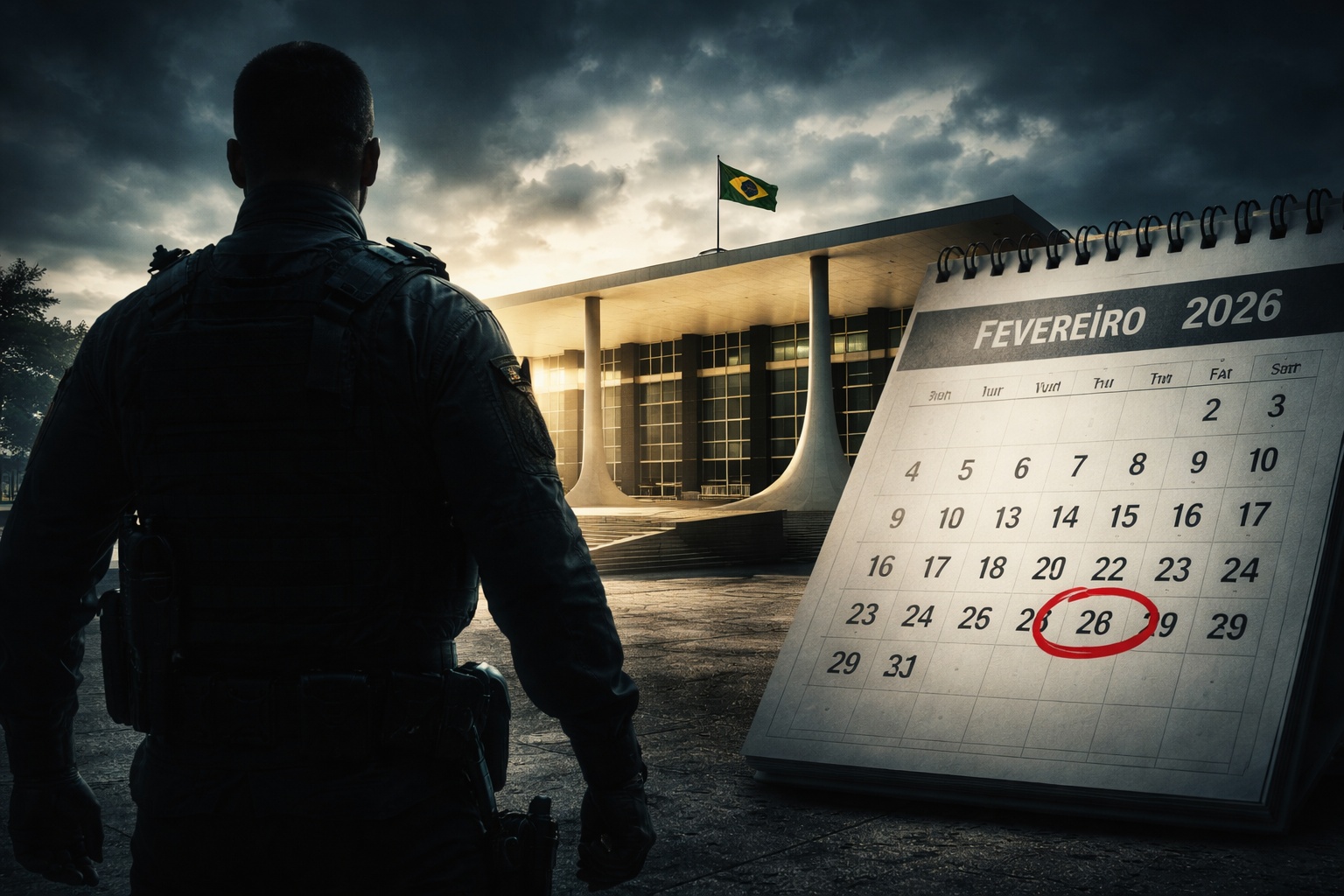


STF Will Decide In February 2026 Whether Security Guards Have The Right To Special Retirement. Decision Could Unlock Thousands Of Benefits In INSS.
The Federal Supreme Court has officially included in its agenda for February 2026 one of the most awaited judgments in the field of social security in recent years. It concerns the definition of the right to special retirement for security guards, a category that works daily under permanent risk to physical integrity and that has been engaged in legal disputes with the INSS for decades to have this time recognized as special. The decision, which will be made under the so-called Topic 1209, has the potential to affect thousands of workers across the country and redefine the interpretation of social security legislation after the Social Security Reform.
The case reached the STF because lower courts began to adopt different understandings about the classification of security guard activity, especially after the express removal of danger from the list of harmful agents by the INSS in administrative norms. Given the legal uncertainty, the Supreme Court recognized the general repercussion of the matter, suspending similar processes across Brazil until the final definition.
What The STF Will Judge In Topic 1209
At the heart of the judgment is the following question: whether the work performed by security guards, armed or not, habitually and permanently exposed to risk to physical integrity, can be recognized as special time for retirement purposes in the General Social Security Regime.
-
The new Civil Code could revolutionize marriages in Brazil with “express divorce” and changes that could exclude spouses from inheritance.
-
Banco do Brasil sues famous influencer for million-dollar debt and intensifies debate on delinquency, risks of seizure, and direct impact on Gkay’s credibility.

-
The Senate approves a bill that criminalizes misogyny, hatred, or aversion towards women, and includes the crime in the Racism Law with a penalty of up to 5 years.
-
Chamber Approves Bill That Allows Pepper Spray for Women Over 16 and Imposes Strict Rules for Purchase, Possession, and Use as Self-Defense

The paradigmatic process is the Extraordinary Appeal No. 1,368,225, which discusses whether danger alone is sufficient to characterize special activity, even in the absence of traditional chemical, physical, or biological agents. The STF’s decision will have binding effect, meaning it must be followed by all judges and courts in the country.
When The Judgment Will Take Place And How It Will Occur
The judgment is scheduled to take place in the virtual plenary of the STF between February 6 and 13, 2026. In this format, the ministers cast their votes electronically throughout the defined period, without a physical session. At the end, the result is proclaimed.
Although it is a virtual judgment, the impact will be equivalent to that of a physical decision, as it involves general repercussion and a legal thesis that will apply nationally.
Why The Retirement Of Security Guards Is Such A Controversial Topic
Historically, the activity of security guards has been recognized as special by jurisprudence, especially when exercised with a firearm. For many years, courts considered that the permanent risk of robberies, violence, and confrontations justified the differentiated counting of service time.
Over time, the INSS began to restrict this recognition, requiring increasingly strict criteria and distancing danger as an autonomous foundation.
After the Social Security Reform of 2019, the discussion intensified, as new rules altered the way special retirement was granted, without clearly resolving the situation of the category.
What Could Change If The STF Recognizes The Right
If the Supreme Court decides that the activity of security guards qualifies as special time due to permanent risk, the practical effects will be broad. Security guards will be able to use this time to reach special retirement or to convert the special period into common time with an increase, according to the rules in effect at the time of work.
In addition, thousands of currently suspended processes could be resumed, and the INSS will be required to adjust its administrative criteria to the thesis set by the STF. This could result in the granting of previously denied benefits and the payment of retroactive amounts to insured individuals who have already filed lawsuits.
And If The STF Decides Against The Security Guards
If the Court understands that danger is not sufficient to characterize special activity, the scenario will be unfavorable for the category.
In that case, only security guards who can prove exposure to other harmful agents recognized by legislation will be able to have their time classified as special.
A decision in this sense is likely to end most ongoing lawsuits and consolidate the restrictive understanding adopted by the INSS in recent years.
Who Could Be Directly Impacted By The Decision
The judgment is relevant not only to security guards but also to private security professionals in general, including those working in banks, cash transport, large companies, and public or private establishments.
Workers who held the position before the Social Security Reform are also closely following the case, as the decision could influence the recognition of past periods.
Why February 2026 Is A Milestone For The Category
The definition of a concrete date for the judgment ends years of uncertainty and expectations. Until then, the issue was being discussed in a fragmented manner, with divergent decisions across the country. From February 2026, there will be a definitive answer from the STF, ending the controversy at the national level.
For security guards who are close to retirement or who have already had requests denied, the judgment represents the real possibility of a change in scenario. For others, it may mean the confirmation of restrictions that will require new retirement planning.
The judgment of special retirement for security guards by the STF goes far beyond a technical debate. It directly touches on how the state recognizes the risks faced by professionals who work daily on the front line of security.
Regardless of the outcome, the decision in February 2026 will be a turning point for the category and for Brazilian social security law.
And you, reader: do you believe that permanent risk to physical integrity should, by itself, guarantee differentiated treatment in retirement?










Sim meu pai tem mais de 35 anos no ramo de vigilante patrimonial trabalha armado está esperando muito por esse julgamento para poder usufruir da aposentadoria especial que foi negada ele tem salubridade comprovada
Sim. O vigilante passa por diversas situações de perigo até mesmo psicológica afetando no seu dia a dia. Portar uma arma de fogo o perigo e iminente que pode acontecer a qualquer momento uma situação de risco a morte
Sim, contribuímos com o salário integral para o INSS com o a inclusão no contra cheque com risco de vida que corresponde a 30%. Se foi pago a contribuição para o INSS incluindo o risco de vida, nada mais justo do que incluir na aposentadoria.