





 Portuguese
  English
  Spanish
  4 min of reading
  4 comments


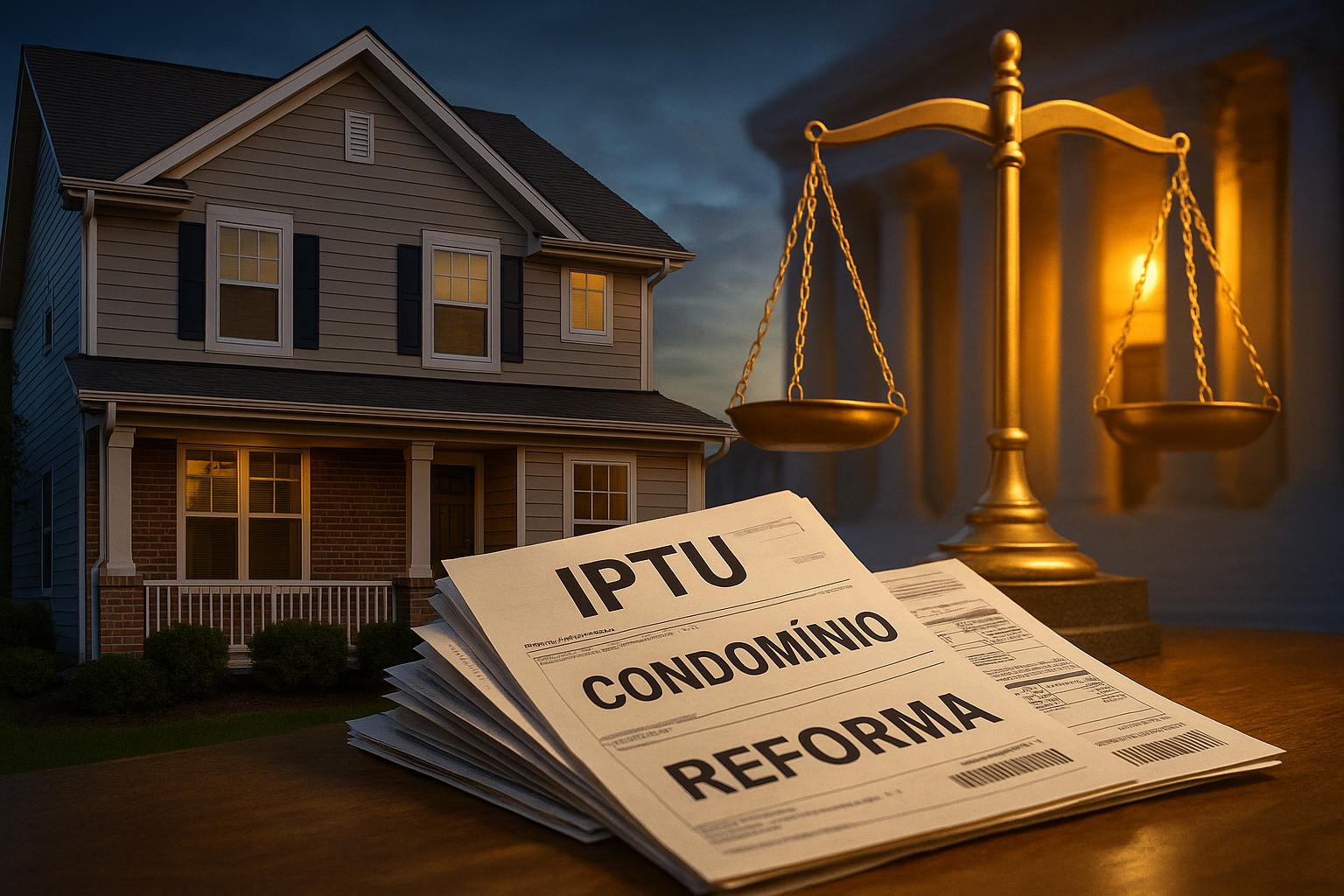


STJ Decides: Heir Who Manages Inherited Property, Pays Property Tax, Covers Renovations, and Collects Rent is Entitled to Reimbursement and Can Demand Compensation from Omissive Relatives
When a property is left as an inheritance, the responsibility for it does not disappear until the division is completed. Property taxes, condominium fees, maintenance costs, and even renovations need to be paid, under penalty of the asset depreciating or even being lost in tax executions.
But what happens when only one of the heirs alone assumes these expenses, while the others do not contribute? This situation is more common than it seems and has already reached the Superior Court of Justice (STJ).
The most recent decision sent a clear message: those who pay alone can demand reimbursement from the omissive relatives.
-
He started running at 66 years old, broke records at 82, and is now a subject of study for having a metabolic age comparable to that of a 20-year-old, in a case that is intriguing scientists and inspiring the world.

-
Oldest tree on the planet reappears after 130 years of searches: Wattieza, 385 million years old, was 10 meters tall and had no leaves or seeds; Gilboa fossils in New York solved the mystery in 2007.

-
A 48-square-meter house assembled in hours with 4,000 bricks made of recycled plastic that does not absorb moisture, has natural thermal insulation, and costs less than 90,000 reais in a complete kit.

-
Luciano Hang revealed that Havan’s air fleet has already accumulated more than 20,000 landings, 10,000 flight hours, and 6 million kilometers traveled, and he says that without the planes, the company would never have grown so quickly.


What Does the Law Say About Inheritance in Condominium
After the death of the owner, all heirs become indivisible co-owners of the property, until the division is completed. This means that each has a right to an ideal share of the asset, even if it is not formally divided.
In this condition, everyone shares both the rights (such as receiving rent or selling the share) and the duties (such as covering taxes, fees, and maintenance).
Article 1,315 of the Civil Code is direct: “The co-owner is obliged, in proportion to their share, to contribute to the expenses of conservation of the thing and to the burdens to which it is subject.”
The Understanding of the STJ
The STJ analyzed cases where only one heir bore the costs of property tax and other expenses while the others remained silent. The court confirmed that this heir has the right to proportional reimbursement.
Even more: in situations where the property was rented, the managing heir could also demand accounting for the received amounts and offset the maintenance costs.
In summary, those who pay alone should not be penalized — and the omissive ones cannot benefit for free from the efforts of others.
Concrete Cases Judged
- In São Paulo, an heir proved that they had paid for years the property tax of an inherited apartment. The STJ confirmed that they could demand from their siblings the proportional return of the amount spent.
- In Rio Grande do Sul, heirs fought because only one sister covered the condominium fees. The court recognized the right to reimbursement, highlighting that the omission of the others did not exempt them from the obligation.
- In another case, the heir who had renovated the property managed to obtain partial compensation, as long as the improvements were demonstrably necessary for the conservation of the asset.
Property Renovation: Right to Reimbursement Also
Another controversial point is the renovation of the inherited property. The STJ has recognized that, when the works are necessary for the preservation of the asset, the heir who covered the costs can request compensation.
However, in cases of improvements solely for appreciation or beautification, the compensation depends on the judge’s assessment, considering whether there was agreement from the others or if it actually increased the value of the common asset.
The Practical Impact for Heirs
These decisions are a relief for those who have already faced the burden of paying property tax, condominium fees, and even renovations in inherited properties alone.
Now, the jurisprudence makes it clear: it is possible to seek judicial reimbursement and even offset these amounts at the time of division.
On the other hand, omissive heirs need to be cautious: ignoring obligations can lead to retroactive charges and exhausting legal disputes.
How the Reimbursement Request Works
The heir who wishes to recover the amounts paid must demonstrate:
- The payments made, such as property tax, condominium fees, and renovations;
- The omission of the others, showing that they were the only responsible party;
- The necessity of the expense, especially in the case of works.
With these documents, the request can be made in a standalone action or within the inventory process at the time of division.
The Balance Between Rights and Duties
The principle guiding these decisions is that of unjust enrichment: it is not fair for one heir to bear all costs while the others enjoy the asset without contributing.
Thus, the Justice seeks to balance the rights of inheritance with the duties of maintaining the asset, ensuring that one person’s effort is not exploited by the others.
Inheritance and Responsibility: A Matter of Justice
The courts make it clear that inheriting does not just mean receiving an asset but also assuming responsibilities.
The heir who pays alone can demand reimbursement. Meanwhile, those who remain silent must be prepared to face legal consequences and bear their share.
The message is simple: in the division, those who invest in maintaining the asset do not come out disadvantaged — and those who remain silent do not come out rewarded.









É decisões muito bem recebida e de sumo valor para os leitores
E quem tem uma casa, com outra em cima da lage,a qual o morador alega ter comprado,não é desmembrado da minha casa e é no meu quintal, só eu pago IPTU,e ÁGUA. Causou muitos danos na casa térrea, com vazamentos, rachaduras, e danos na parte elétrica. Eu continuo consertando os danos,arco com materiais e mão de obra. isso já vai para 20 anos, adoeci com tudo isso. Fui a Defensoria Pública de minha cidade,no mesmo mês em que a pessoa se apossou do segundo pavimento.
A defensora da época me respondeu( Se ela comprou e dona assim como a sra.) Eu disse que estava sendo vítima de esteleonato,pois eu paguei pelo terrenos inteiro com a casa.
No fórum eles Seguiram o processo como se fosse uma briga de vizinhos por conta das INFILTRAÇÕES,mesmo eu tendo apresentado vários documentos de engenheiro da defesa civel da minha cidade. devido o morador ter feito obra aumentado o tamanho da casa sobre minha lage.Na época a Prefeitura EMBARGOU A OBRA, POR DUAS VEZES, e o morador concluiu o aumentado sobre a laje, Mesmo com toda a documentação que eu apresentei. A DEFENSORIA IGNOROU,meu pedido e até hoje,nada aconteceu. Fora o barulho, a agressão física a mim.
NADA FOI FEITO E NEM ME DEVOLVERAM MINHA CASA.
Porque você não procura um advogado, pra esses tipos de causa, pois defensoria pública, só serve pra resolver pequenas causas, pois a sua vejo que é uma grande causa, isso deveria envolver até mesmo a polícia, se é que tem epis**** de agressão física
Mil vezes melhor pagar advogado. Vc não estará gasta dinheiro mas sim investindo na sua paz e direitos.