





 Portuguese
  English
  Spanish
  4 min of reading
  0 comments



STJ Confirms That Bus Drivers and Truck Drivers Can Have Special Time Recognized. Proven Hardship, Retirement Can Be Advanced by Up to 10 Years.
On September 13, 2023, the Superior Court of Justice (STJ) began the judgment of Theme 1307, which discusses the recognition of the activity of bus drivers and truck drivers as special for retirement purposes. The ruling, reaffirmed in sessions of 2024 and 2025, sets a new precedent that may advance the retirement of thousands of road transport professionals. This is a historic change: for decades, the Brazilian social security system ignored the extreme hardship of this profession, marked by exhausting work hours, constant noise from powerful engines, vibrations that compromise the spine and joints, in addition to the daily stress of traffic and the pressure for increasingly shorter deadlines.
Few activities in the country symbolize as much physical and mental wear as those of these workers, who are now finally recognized by the Justice.
Special Time: When the Rigors of the Profession Weigh More in Retirement
In the social security system, there is the concept of special time, a kind of recognition that certain activities harm health or physical integrity and, therefore, should be counted differently in the retirement calculation.
-
End of the 6×1 shift: when the changes will truly come into effect with the proposal for a 36-hour workweek advancing in Congress in 2026 and mobilizing CLT workers.

-
The end of the 6×1 shift becomes a hot topic in Congress! Lula makes the decision, confirms the submission of a project to eliminate the 6×1 shift and reduce the workweek to 40 hours, with two days off and maintenance of salaries.

-
In Spain, a law has created paid menstrual leave funded by the state, turning debilitating cramps into legal leave and placing the country among the most advanced in Europe in terms of women’s health rights.

-
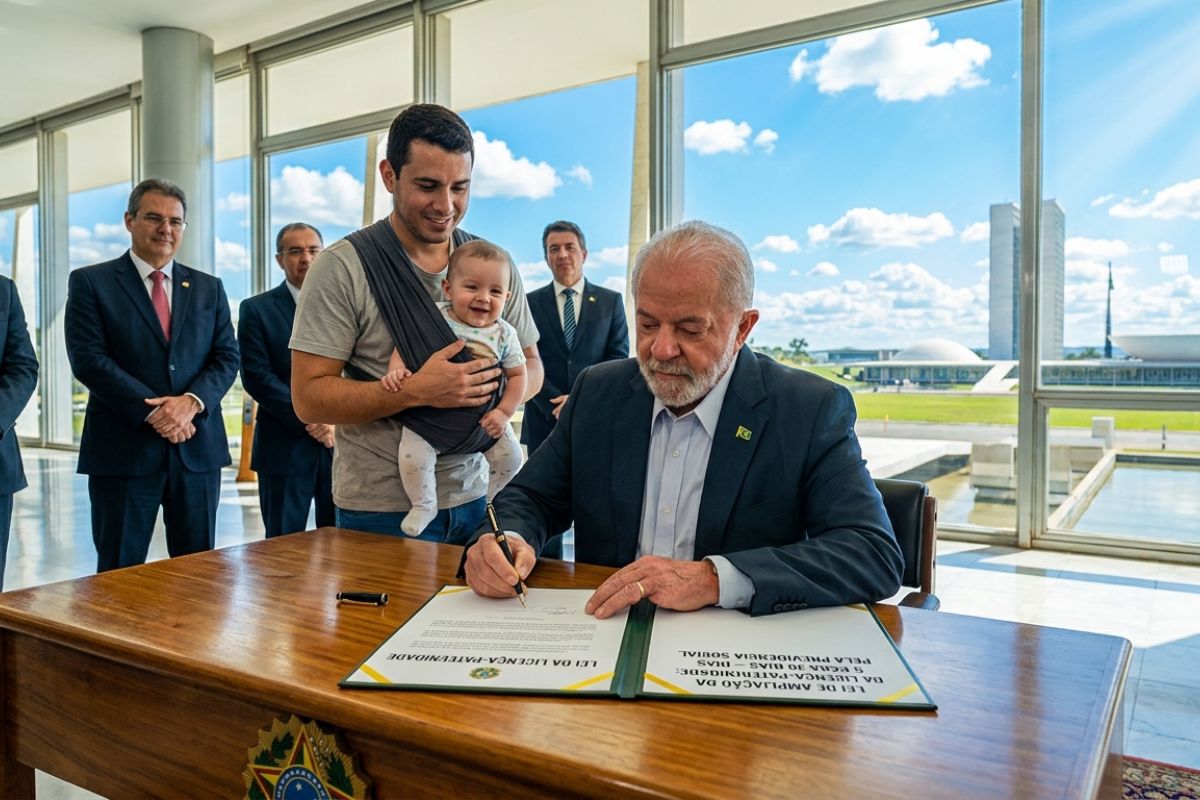
Government enacts new law: paternity leave increases from 5 to 20 days with gradual increases until 2029, and Social Security pays the paternity salary; companies no longer bear the absence cost, estimated at R$ 5.4 billion.
The logic is simple: if the work imposes greater risks, the worker should not be required to remain in the profession for the same period as someone in normal conditions.


This is exactly the reality of bus drivers and truck drivers. The STJ has consolidated the understanding that the service time of these professionals can be classified as special when the exposure to harmful agents, such as noise above legal limits and whole-body vibration, is proven, or when the hardship of the activity is demonstrated.
This does not mean that everyone will automatically have the right, but that the Justice now recognizes that the category can seek this protection as long as they present consistent evidence.
Theme 1307 of the STJ and the Recognition of Hardship
The so-called Theme 1307 of the STJ was the watershed. In it, the ministers analyzed whether hard activities could be recognized as special time even after changes in legislation that, in 1995, removed automatic classification by category.
The answer was positive: bus drivers and truck drivers can, indeed, have special time recognized, provided they present technical reports demonstrating the working conditions.
This means that the PPP (Perfil Profissiográfico Previdenciário) and the LTCAT (Technical Report on Environmental Working Conditions) become decisive documents.
If they prove that the worker was exposed to noise levels above 85 decibels, intense vibration, or other conditions that risk health, the time on the road starts to count more, accelerating the path to retirement.
Practical Impacts for Bus Drivers and Truck Drivers
In practice, this decision can represent up to 10 years of advancement in the right to retire. An urban bus driver, for example, who has worked for 20 years in proven unhealthy conditions, may convert this special time into regular time with a multiplication factor that increases the count, bringing them closer to retirement faster.

Long-distance truck drivers, who face even more exhausting routines, can apply for special retirement directly upon reaching 25 years of proven hard activity.
This change corrects a historical distortion. Many road professionals viewed retirement as a distant dream, despite having aged prematurely due to the heavy routine. The STJ now recognizes that the rigors of the profession must be reflected in the social security calculation.
Court Decisions Reinforce the New Understanding
Even before the STJ decision, regional courts had already been recognizing rights in individual actions. The TRF of the 4th Region, for example, granted special retirement to a truck driver who proved continuous exposure to harmful vibrations.
The TRF of the 3rd Region recognized as special the time of a bus driver exposed to noise levels above the permitted limit. With the consolidated position of the STJ, the scenario gains national uniformity and reduces divergences between states.
It is important to highlight that the recognition of special time will not be automatic. Each driver will need to prove the specific conditions of their work, which requires technical reports, expert evaluations, and formal documentation.
In addition, not all types of exposure will be accepted: it is necessary that the noise level, for example, exceeds the legal limit established by health and safety regulations.
Another point is that many requests are still denied administratively by the INSS, forcing the worker to turn to Justice. The challenge, therefore, will be to transform jurisprudence into uniform administrative practice, avoiding that each driver has to file a lawsuit to have a right already consolidated recognized.
A New Horizon for Those Who Drive Brazil
Road transport is the backbone of the Brazilian economy. Truck drivers and bus drivers keep cities supplied, workers on the move, and production circulating. The recognition by the STJ is, therefore, more than a technical decision: it is a measure of social justice.
By allowing these professionals to advance their retirement when they prove the hardship of their activity, the Judiciary values the contribution of those who literally carry the country on their backs.
The message is clear: if the road takes a greater toll on health, the time of service should count more towards retirement. For bus drivers and truck drivers, this can be the difference between a life of endless work and the right to the deserved rest, achieved sooner.










Seja o primeiro a reagir!