





 Portuguese
  English
  Spanish
  4 min of reading
  0 comments


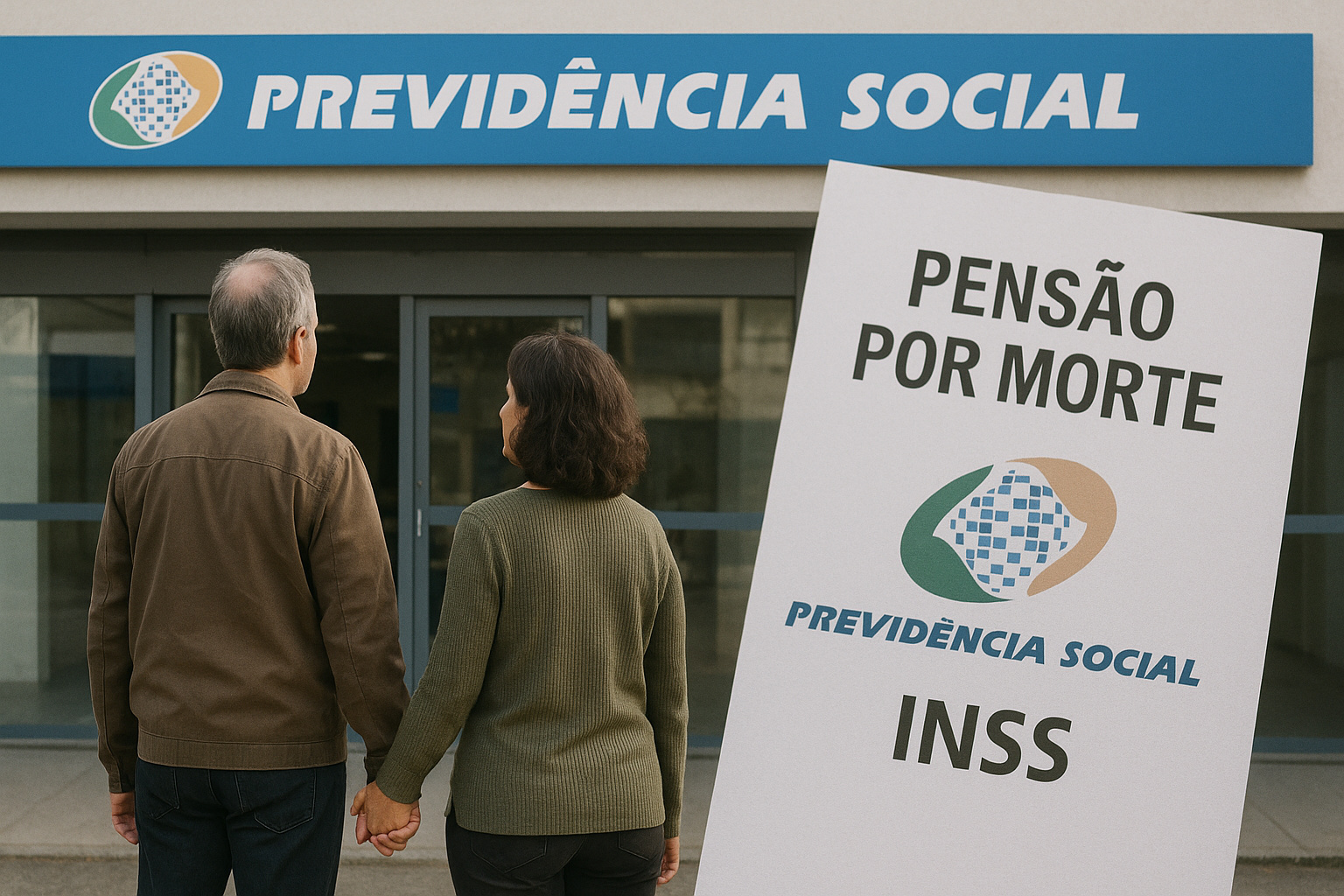
The STJ Recognized That Partners in Stable Unions, Even Without a Public Deed, Have the Right to Pension from the INSS, Provided They Prove Public, Continuous, and Lasting Cohabitation.
The death pension is one of the pillars of the Brazilian Social Security, outlined in the Federal Constitution and regulated by Law 8.213/1991. Its purpose is to ensure that the dependents of a worker who contributed to the INSS are not left financially vulnerable after the insured’s death.
Traditionally, the death pension was only associated with formal marriage, but Brazilian social reality has shown another path: millions of couples live in stable unions, often without a notarized document. In light of this, a central question has emerged in the courts: does a partner in a stable union without registration also have the right to a death pension?
Stable Union: From Invisibility to Legal Protection
The stable union was more robustly incorporated into the legal framework with the 1988 Constitution, which recognized it as a family entity in Article 226. Later, the Civil Code of 2002 brought the definition in Article 1.723: “the stable union between a man and a woman is recognized as a family entity when characterized by public, continuous, and lasting cohabitation, with the intention of establishing a family.”
-
The new Civil Code could revolutionize marriages in Brazil with “express divorce” and changes that could exclude spouses from inheritance.

-
Banco do Brasil sues famous influencer for million-dollar debt and intensifies debate on delinquency, risks of seizure, and direct impact on Gkay’s credibility.

-
The Senate approves a bill that criminalizes misogyny, hatred, or aversion towards women, and includes the crime in the Racism Law with a penalty of up to 5 years.

-
Chamber Approves Bill That Allows Pepper Spray for Women Over 16 and Imposes Strict Rules for Purchase, Possession, and Use as Self-Defense


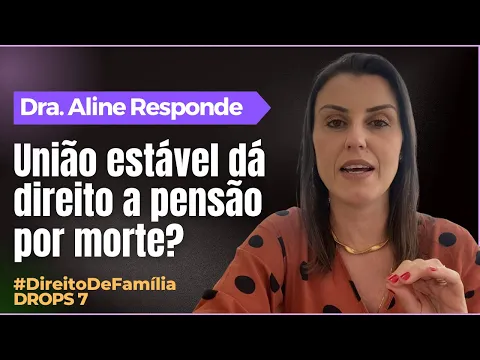

This means that a stable union does not require a ceremony or signed paper but needs to be proven through concrete evidence of shared life. This point is exactly what has led to numerous judicial conflicts involving death pensions, especially when the INSS denied the benefit due to lack of a deed.
The STJ Decision: Right Guaranteed Even Without Notarization
The Superior Court of Justice (STJ), in various rulings, solidified the understanding that a stable union without registration in a notary’s office guarantees the right to a death pension. One emblematic case was REsp 1.723.052/SP, in which the court upheld a partner’s right to the benefit even without a formal deed.
The court made it clear that what matters is not the formality, but the reality of cohabitation: living under the same roof, social recognition of the relationship, and economic dependency.
In other words: if the union indeed existed, there is a right to the pension.
How to Prove the Stable Union at the INSS and in Court
One of the biggest challenges for those seeking a death pension without marriage is the proof of the stable union. The INSS requires documents demonstrating cohabitation, and in their absence, the courts may evaluate testimonies and evidence. Among the main means of proof are:
- Joint bank accounts;
- Declaration of dependency on Income Tax;
- Inclusion in a health plan or club;
- Common children;
- Proof of residence at the same address;
- Witnesses from family, neighbors, and friends.
The STJ has already stated that a single document is not sufficient, but a set of evidence may be enough to prove the stable union.
Frequent Disputes: Family Against Surviving Partner
In practice, many legal disputes arise when the children or relatives of the deceased try to exclude the surviving partner from the pension. They argue, for example, that the union was not formalized or that the relationship was merely casual.

In these cases, the judiciary has favored the partner, as long as there is consistent evidence of the shared life. In high-value estates, there have already been divisions of pensions and inheritance with surviving partners who did not have a deed of union but managed to demonstrate public and stable cohabitation.
The Legal Presumption of Economic Dependency
Another relevant point is the presumption of economic dependency, outlined in Article 16 of Law 8.213/91. For spouses and partners, the law presumes that dependency existed, waiving proof of direct financial support. Thus, it is enough to prove the stable union for the surviving partner to be considered an automatic dependent and entitled to the death pension.
This prevents relatives from attempting to claim a lack of dependency, as the law already guarantees this status.
Social and Social Security Impact
The recognition of stable union as a source of entitlement to a death pension reflects the reality of millions of Brazilians. According to the IBGE, about 36% of Brazilian families live in stable unions, many of them without any formal registration.
Without this judicial protection, partners would be left without any income after the insured’s death, while children or relatives would inherit the benefit. The jurisprudence of the STJ corrects this injustice and guarantees broader social protection.
Criticism and Challenges
Despite the progress, there are still challenges. Many criticize the excess of litigation, as the lack of formalization in a notary’s office leads to prolonged disputes. Another point is the risk of fraud, when people try to pose as partners without having actually lived in a stable union.
The judiciary has sought to balance these risks by requiring robust evidence and analyzing each case individually.
Death Pension and Stable Union: A Consolidated Right
The STJ decision represents a victory for social justice and family protection. The message is clear: it is not the notary’s office that creates the family, but the shared life.
Thus, partners who lived in a stable union, even without a deed, have the right to a death pension, provided they prove the cohabitation. This ensures that thousands of Brazilians are not left unprotected in the face of the loss of their household provider.










-

-

-

-

11 pessoas reagiram a isso.