





 Portuguese
  English
  Spanish
  6 min of reading
  0 comments


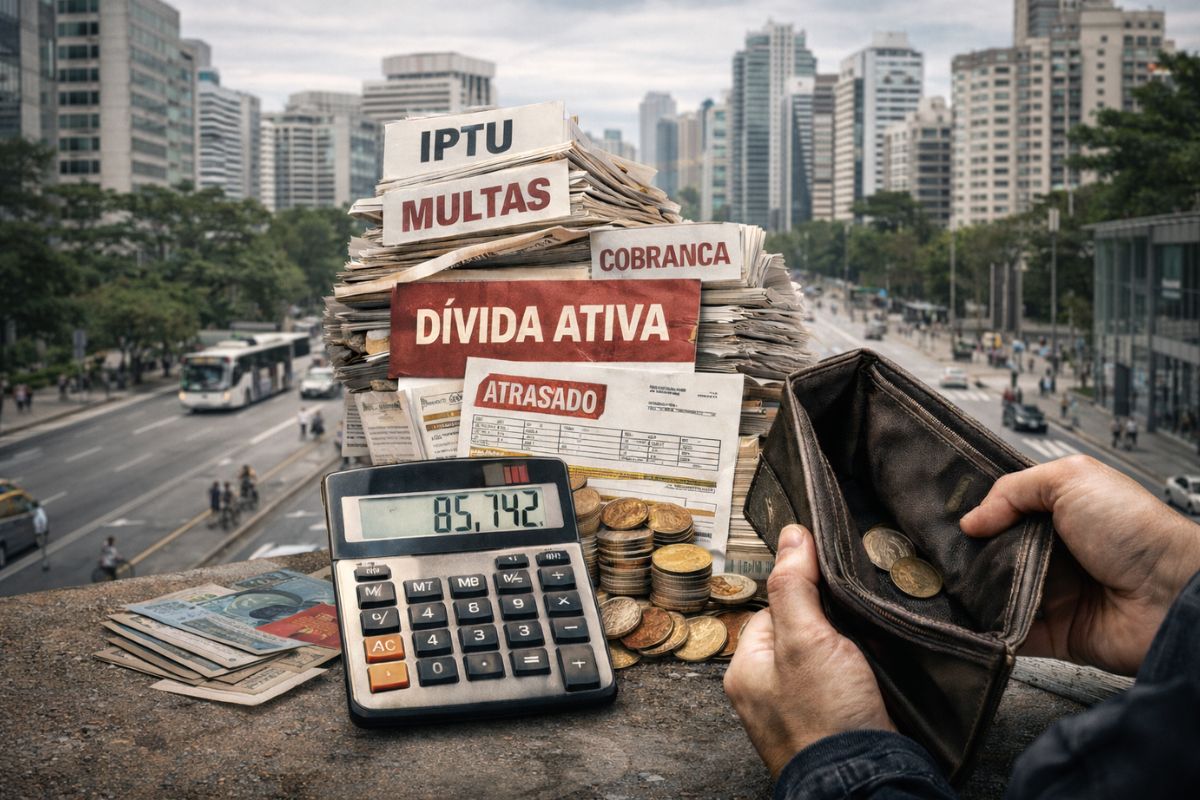
In Many Cities, The Resident Pays The Bill For Imbalanced Management Without Noticing: Increases In IPTU, New Charges, High Fines, And Monthly Interest Erode Income, Savings, And Assets. Understanding How Municipal Public Debt Becomes Daily Pressure Helps To Avoid Silent And Permanent Losses In Family Budgets.
In the city, the impact of public indebtedness rarely comes with a single dramatic charge. It appears in layers: an increase in IPTU, a new fee, a worse service, and then the additional cost that the family assumes to compensate for what has ceased to function. When the public bill bursts, the private bill shrinks.
This process mainly affects those who depend on predictability to organize their month: wage earners, self-employed individuals, retirees, and local small entrepreneurs. The effect is not only present. In scenarios of fiscal tightening, tax delays can migrate to Active Debt with fines and interest, increasing liabilities and raising the risk of legal action against the taxpayer.
How The Mayor’s Deficit Transforms Into Financial Pressure In The City
When revenue needs to cover current expenses and financial charges, the city tends to prioritize cash flow in the short term. In practice, this means seeking revenue more intensively from already existing bases, such as real estate assets and local economic activities. The resident notices it on the bill, not in the technical discourse.
-
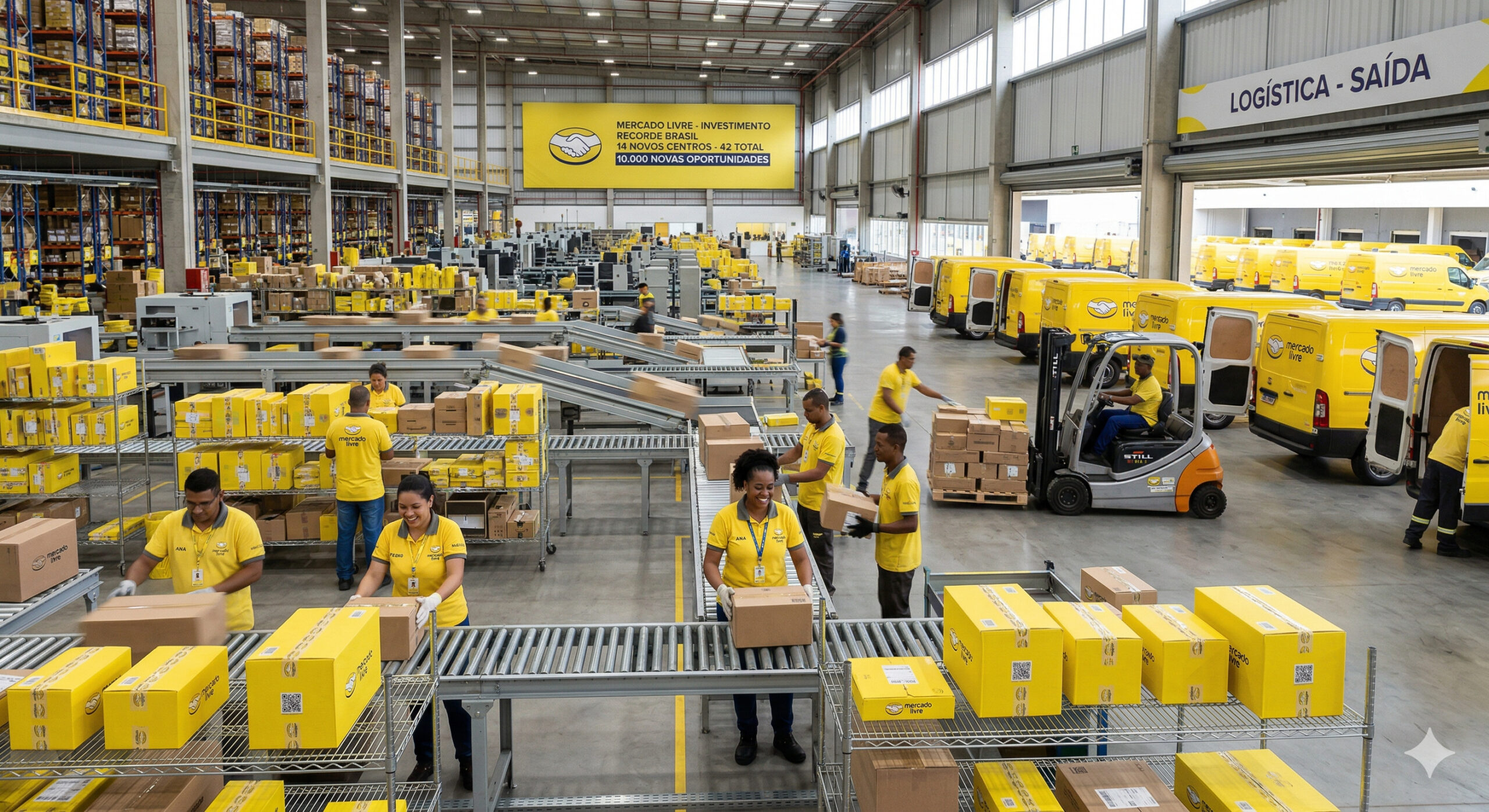
Mercado Livre “opens the vault” and announces a record investment of R$ 57 billion in Brazil in 2026, a value 50% higher than the previous year, with an expansion plan that includes 14 new logistics centers, totaling 42 units in the country and hiring an additional 10,000 employees.
-
How investment in technology can revolutionize the national economy and enhance industrial gains, according to a study that highlights the direct impact on productivity, innovation, and wealth retention within Brazil.

-
The largest food company on the planet, JBS, has just opened a 4,000 square meter laboratory in Florianópolis to develop customized proteins that modulate muscle mass gain, immune response, and metabolic performance.

-
After nearly 30 bids and competition among industry giants, a Spanish company purchases one of the largest airports in Brazil for almost R$ 3 billion and takes over the management of Galeão in a concession that will last until 2039.


In the end, it is the regular taxpayer who pays this difference, as well as those who are already at their limit. The problem is that, in a city pressured by debt, the charge ceases to be merely an administrative obligation and starts to work as a tool for fiscal survival. This change alters the relationship between the city hall and the citizen, as the focus shifts from long-term planning to the immediate inflow of funds.
There is also a significant distributive effect: families with lower income margins feel any mandatory increase more quickly. A seemingly small adjustment can compete with food, transportation, health care, and rent. The burden is not equal for everyone, even though the fee is formally universal.
IPTU, New Fees, And Venal Value: Where The Bill Appears First
The first signal usually arises in the fixed cost of housing. In many situations, the city reviews parameters of the venal value to increase IPTU revenue. Even when the official justification is technical, the taxpayer feels the result as an abrupt increase in annual expenses, especially in middle-class neighborhoods and peripheries undergoing irregular appreciation.
Besides IPTU, charges related to urban services, such as garbage collection, lighting, and licensing, may arise or increase. The sum of these charges is what really tightens the budget. In isolation, each fee may seem manageable; together, they create a recurring cost that alters the family’s decisions, from basic consumption to investment in property maintenance.
Where does this weigh most? In everyday life: in the bill that is due in sequence, in local commerce that passes on costs, in the service provider who adjusts prices to survive, and in the property owner who postpones renovations. The city as a whole begins to operate with less leeway, which reduces economic dynamism in a chain reaction.
There is also an impact for those who are entrepreneurs. When taxes and fees rise in an environment of weak demand, the small business gets squeezed between cost and final price. If they pass it on, they lose customers; if they don’t pass it on, they lose margin. This type of pressure weakens local employment and reinforces the very fragility of revenue collection.
Active Debt And Judicial Collection: When The Delay Becomes Asset Risk
In a tightening context, enforcement tends to become stricter. In the indebted city, open debts can be registered in Active Debt more quickly, transforming a punctual delay into a legal-financial problem. According to informational databases, the fine can reach 20% of the original amount, with monthly interest of 1%, which accelerates the growth of the debt.
This growth is silent and dangerous because it alters the scale of the debt in a short time. The taxpayer who delays regularization due to lack of cash enters a trajectory of increasing liabilities. In extreme cases, judicial collection can lead to bank account blockages and, depending on the procedural stage and amount due, even auctioning of assets for payment.
Who is at greater risk? Those who accumulate installments without formal negotiation, those who ignore notifications, and those who believe that “it can be resolved later.” Judicial collection does not begin at the auction; it starts when there is no response to the first signal. Therefore, the critical point is not just owing but allowing the debt to advance without strategy.
Why does the charge become harsher in this scenario? Because the city hall needs to replenish its cash and demonstrate its revenue-collecting capacity. In a city under fiscal tension, the collection machine gains centrality. From an institutional perspective, it is an attempt to recover revenue; from the resident’s perspective, it increases legal and asset exposure.
Worse Services, Higher Private Spending, And Devaluation Of The Neighborhood In The City
When resources are consumed by financial obligations, investment in infrastructure and services may lose priority. The concrete result is perceived on the streets: degraded roads, pressured public service, and insufficient urban maintenance. The citizen pays twice: in taxes and in private solutions.
In practice, families start to spend on private alternatives to supplant public failures: ride-hail transport, additional security, health insurance, or longer trips to access higher quality services. This shift in spending reduces savings and increases financial vulnerability, especially among middle and low incomes.
Where does this impact assets? In the immediate surroundings. A neighborhood with deteriorated infrastructure tends to suffer a loss of relative attractiveness, which can pressure real estate prices and reduce liquidity in any sale. In economic terms, the city does not only lose quality of life; it also loses perceived value of urban space.
This cycle is particularly sensitive for those who concentrate their wealth in their own residential property. If the cost of maintaining the property rises and the market value weakens, the family is in a more fragile position to renegotiate debts, finance projects, or face emergencies. It’s a complete financial risk, not just tax-related.
How To Protect Yourself Without Waiting For The Next Charge From The City
The first measure is to treat any municipal debt as operational priority, not as a secondary pending issue. In an indebted city, time works against the taxpayer due to fines and interest. Regularizing early usually costs less than litigating when the debt has already grown and entered a harsher collection phase.
The second is to shield financial reserves with a focus on liquidity and diversification. The goal is not to “bet against” the city, but to prevent all assets from being dependent on the same local economic environment. Excessive concentration increases risk when fiscal scenarios worsen. Distributing exposure across different asset classes and terms helps maintain family stability.
The third is to monitor public management practically: follow the Transparency Portal, observe financial emergency decrees, compare the evolution of expenses and revenue, and follow tax calendars diligently. Advanced information reduces surprises and improves decision-making in household budgeting.
For those providing services to the municipality, contractual formalization and complete documentation are essential. In case of delayed payment, seeking appropriate legal avenues may be necessary to preserve cash flow and avoid a domino effect on personal and business accounts. Legal prevention is part of financial protection.
When the city faces fiscal imbalance, the impact on the resident’s wallet does not come all at once; it accumulates through taxes, interest, loss of service quality, and asset risks. Understanding this dynamic allows you to act before the problem reaches account blocking, judicial collection, or devaluation of your main asset.
In your neighborhood, what was the first sign that public accounting began to weigh on your household budget: an increase in IPTU, a new fee, worse service, or fear of entering Active Debt? Share a concrete example from your routine and say what measure you have already taken to protect yourself.








-

Uma pessoa reagiu a isso.