





 Portuguese
  English
  Spanish
  3 min of reading
  0 comments


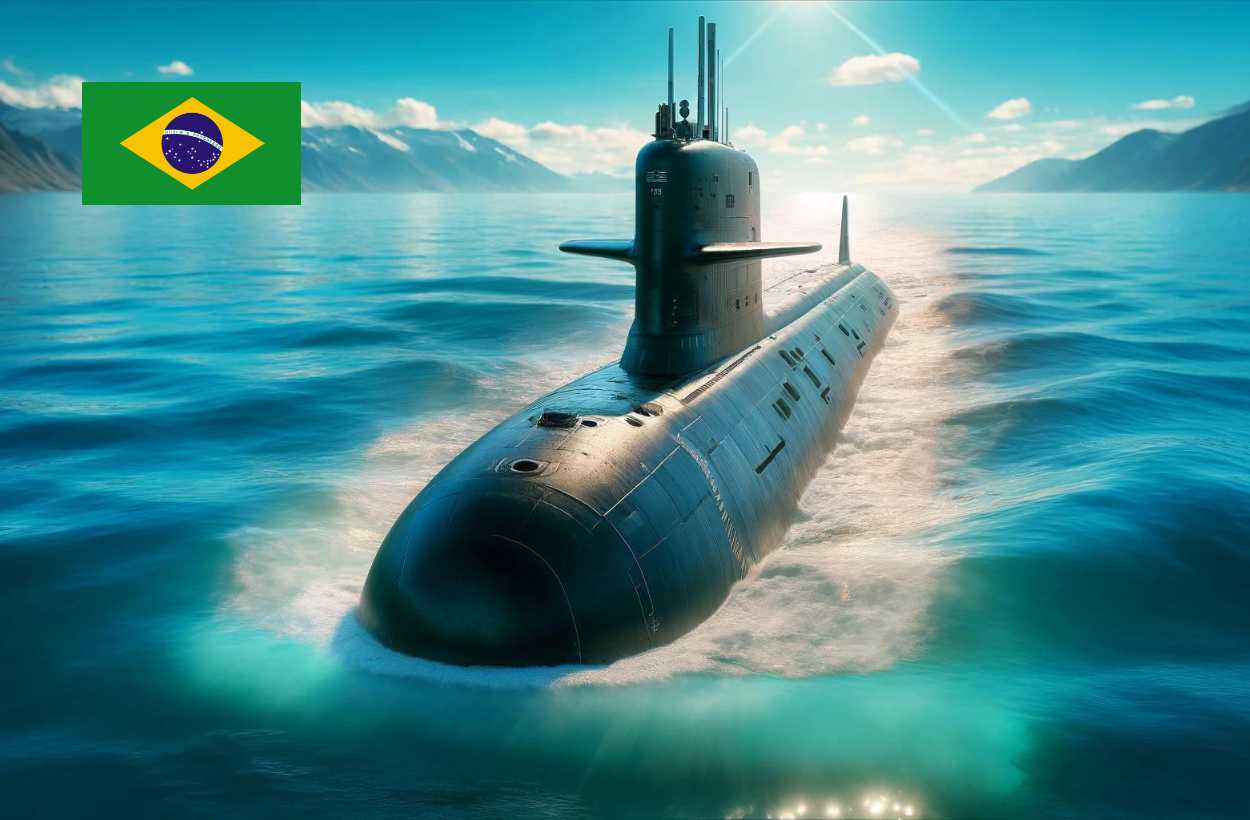
The Riachuelo Submarine (S-40): The Most Advanced Naval Technology in South America in Detail, From Its Military Capabilities to the Daily Life of the Crew, Revealing the Strength and Sophistication of the Brazilian Navy.
Learn more about the Riachuelo Submarine (S-40), the most modern submarine in South America, docked at the Naval Base of Ilha da Madeira. The Riachuelo Submarine (S-40) represents the pinnacle of submarine technology in South America, being the most modern and advanced in terms of operational and military capabilities. Designed to meet the demands of security and effectiveness in hostile underwater environments, this submarine incorporates cutting-edge systems that enable the execution of a wide range of missions, from maritime surveillance to direct combat.
With a capacity to carry 18 weapons, including torpedoes, mines, and missiles, the Riachuelo is a strategic power vector, equipped to ensure sovereignty and security in South American waters. Its design and technology reflect the competence and innovation of the Brazilian naval industry, consolidating Brazil’s position as a leader in submarine technology in the region.
What Is the Capacity of the Riachuelo Submarine S-40, the Most Modern Submarine in South America?
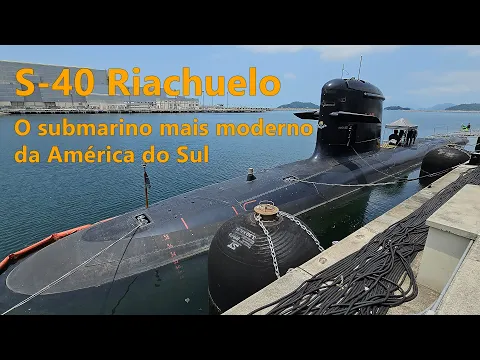

The Riachuelo, with a capacity for 18 weapons, including torpedoes, mines, and missiles, showcases Brazil’s military power and technical sophistication. Its torpedo compartment, strategically designed, allows for effective and agile weapon handling. The vessel, prepared for large-scale missions, adheres to international standards of submarine technology, standing out as the most modern submarine in South America.
-
With 74% of companies facing difficulties in hiring, technicians and engineers in renewable energy are becoming scarce in Brazil and are essential to support the expansion of solar, wind, and green hydrogen projects.

-
Europe is trying to create an ammonia-powered marine engine without auxiliary fuel, which could unlock the race for giant emission-free ships. The technology aims to eliminate one of the biggest obstacles to clean maritime propulsion.
-
A 4,500-ton frigate with just over 100 crew members, state-of-the-art radar, and cruise missiles is being touted as the new standard of naval warfare in the 21st century.
-
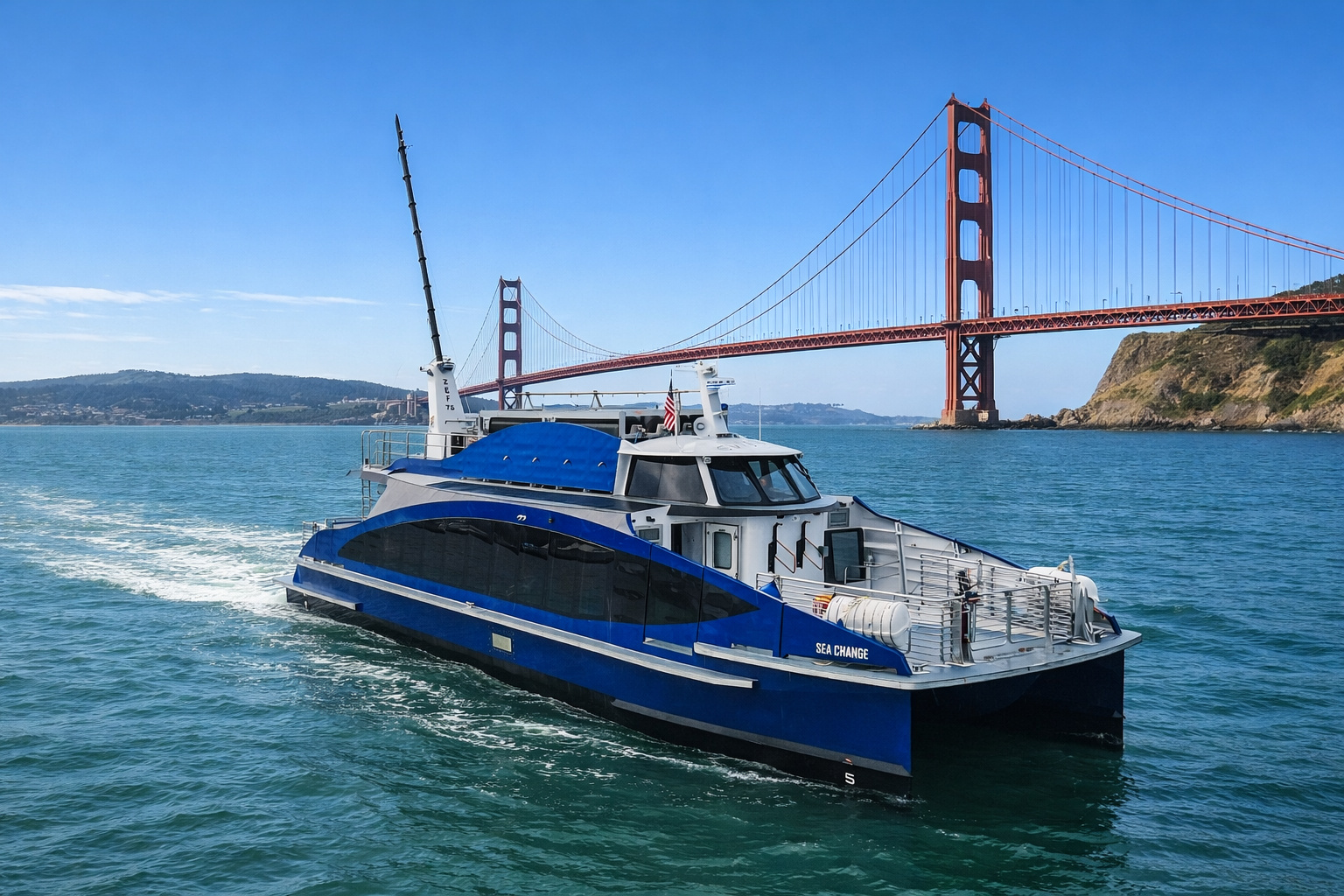
The first commercial hydrogen-powered ferry enters operation in the U.S., eliminates the use of diesel, uses fuel cells to generate clean energy on board, and transforms San Francisco Bay into a landmark of the new era of emission-free navigation.

Internally, the Submarine Is a Maze of Technology and Efficiency
From the command compartment, the operational heart, to the detailed engineering of the engine room, every aspect of the Riachuelo is designed to maximize performance and safety. Automated control systems and a modern joystick for navigation reflect the forefront of maritime technology.
Autonomy of the Riachuelo Submarine S-40
The Riachuelo Submarine (S-40), belonging to the Riachuelo Class, exhibits a remarkable autonomy of 6,000 nautical miles (about 11,000 km) at a speed of 8 knots on the surface and 550 nautical miles (approximately 1,020 km) at 4 knots submerged. With the capacity to operate for up to 70 consecutive days at sea, the Riachuelo is powered by four MTU 12V 396 SE84 diesel engines and one Jeumont-Schneider EPM Magtronic electric motor, classifying it within the category of diesel-electric submarines.
Accommodation at Sea
In addition to its strength, the Riachuelo Submarine is a home for its crew. The accommodations, dining areas, and rest spaces are designed to ensure well-being and operational efficiency during long missions. Life on board is a fusion of military discipline and technological innovation, demonstrating Brazil’s capability to operate at the highest level of naval competence.
The Riachuelo Submarine (S-40) is not just a naval machine, but a symbol of progress, a milestone in Brazil’s naval history, and a testament to the country’s status as a leader in submarine technology in South America.








Seja o primeiro a reagir!