





 Portuguese
  English
  Spanish
  2 min of reading


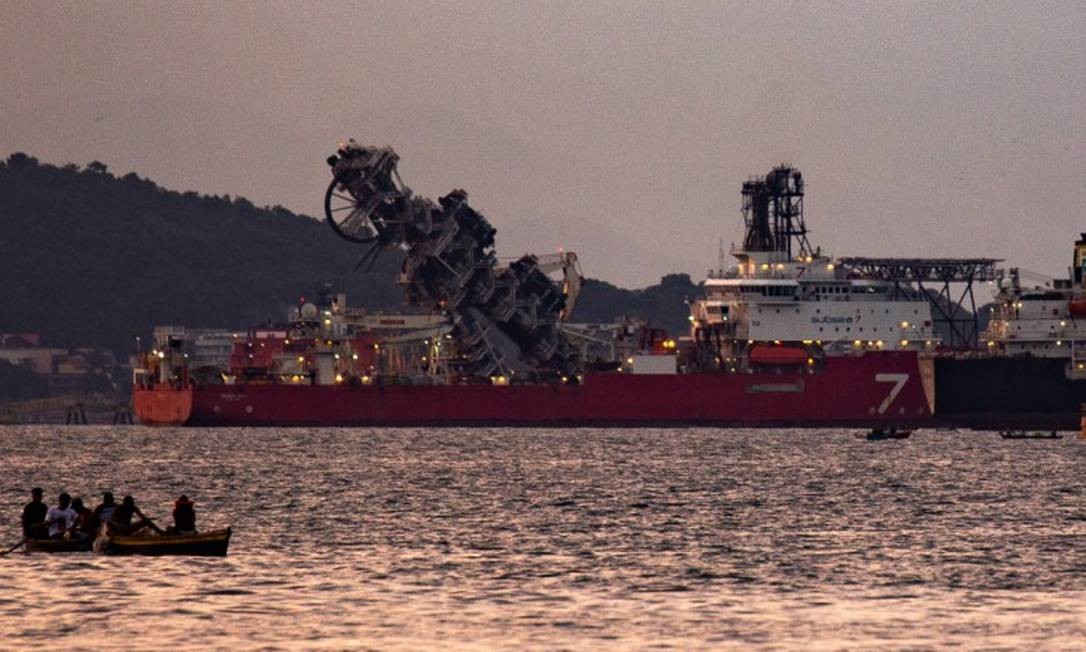
Subsea 7 Received The New Construction Of The Reel Ship Seven Vega
According to Phil Simons, Executive Vice President of Projects and Operations at Subsea 7, the new fleet of ships has been designed to install cost-effective flowline technologies that meet the growing trend of longer subsea tiebacks. This includes complex systems of pipe-in-pipe, piggyback, and heat-traced electrically, risers, umbilicals, and structures in water depths of up to 3,000 m (9,842 feet).
Also Read
The ship Seven Vega, which is now carrying a pipeline, will work on BP’s Manuel project in the Gulf of Mexico, a two-well subsea tieback to the Na Kika platform, in water depths of up to 1,900 m (6,233 feet).
Subsea 7 Committed To Spend $25 Million On Ships
In September, Subsea 7 also committed to spend $25 million on the conversion of the Seven Phoenix for offshore wind cable installation work, as its cable installation vessel Seaway Aimery will likely be busy until 2022. The conversion has begun, and the vessel is expected to rejoin the fleet in Q2 2021.
-
With 74% of companies facing difficulties in hiring, technicians and engineers in renewable energy are becoming scarce in Brazil and are essential to support the expansion of solar, wind, and green hydrogen projects.

-
Europe is trying to create an ammonia-powered marine engine without auxiliary fuel, which could unlock the race for giant emission-free ships. The technology aims to eliminate one of the biggest obstacles to clean maritime propulsion.
-
A 4,500-ton frigate with just over 100 crew members, state-of-the-art radar, and cruise missiles is being touted as the new standard of naval warfare in the 21st century.
-
The first commercial hydrogen-powered ferry enters operation in the U.S., eliminates the use of diesel, uses fuel cells to generate clean energy on board, and transforms San Francisco Bay into a landmark of the new era of emission-free navigation.

Additionally, the company published an update on several ongoing projects in its Q3 earnings statement. In Norway, the Seven Arctic completed the final offshore phase of the Snorre Expansion project for Equinor, while the Seven Oceans installed an electrically traced flowline in Ærfugl for Aker BP.
Market Outlook For The New Fleet
Regarding market outlook, Subsea 7 sees activity levels increasing in the Gulf of Mexico, with a portfolio of projects involving low-cost tiebacks to existing infrastructure.
In Brazil, strong tenders for pre-salt work benefit from favorable oil price reductions, and Norway also offers opportunities following the introduction of tax incentives.
Elsewhere, notably in the UK, Africa, and Asia, the outlook is less certain, with the timing of certain projects in Saudi Arabia, including Marjan 2, under client review.






Seja o primeiro a reagir!