





 Portuguese
  English
  Spanish
  6 min of reading
  5 comments


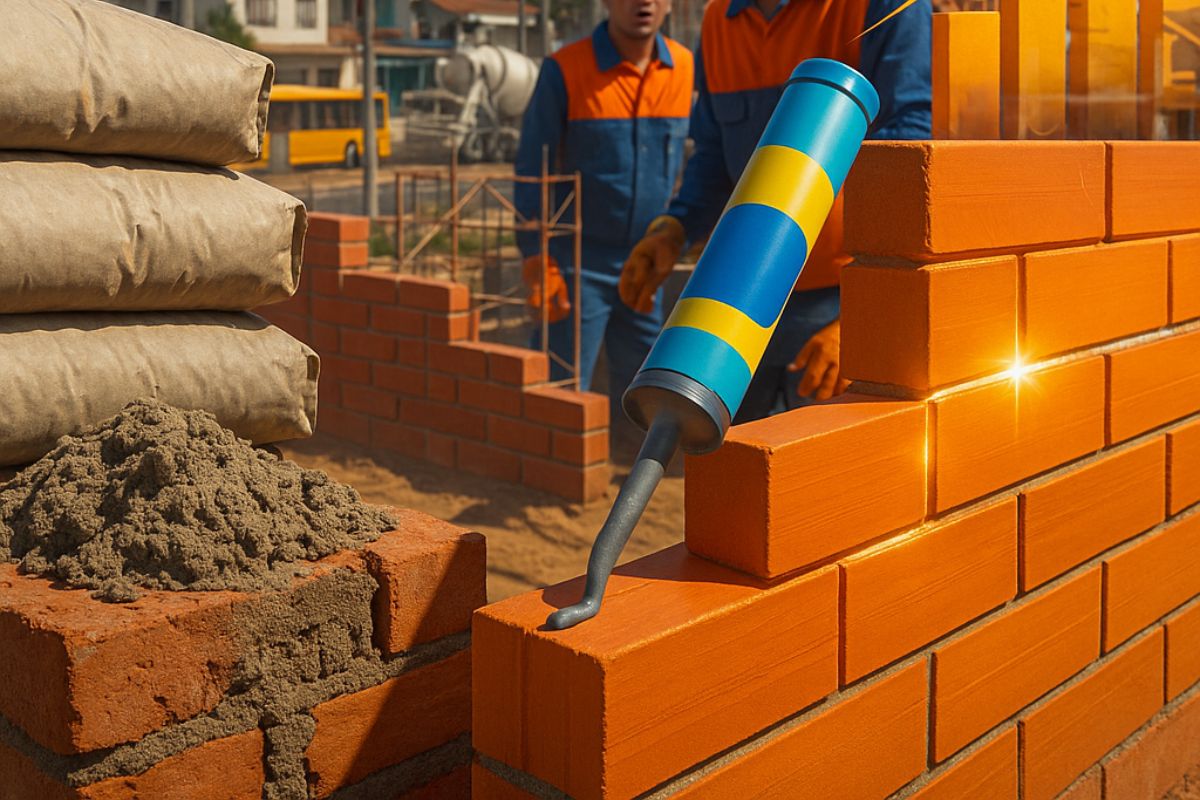


With the pressure to reduce costs and deadlines in civil construction, the cement substitute has gained space on construction sites as an alternative for laying blocks and bricks more quickly, with less mess and less dependence on bulky labor. In practice, polymer mortar emerges as a substitute for traditional cement in specific parts of the work, promising savings that can reach about 30 percent in controlled scenarios.
At the same time, the use of the cement substitute requires a rigorous technical understanding of where it can or cannot be applied, as structural safety remains entirely anchored in ABNT standards and the responsibility of the engineer or architect.
In other words, the cement substitute is a productivity technology and not a license to ignore design limits, which makes it essential to separate advertising from technical criteria before adopting it on a large scale.
What Is the Cement Substitute and How Does Polymer Mortar Work
In practice, when discussing the cement substitute in the current context, the focus is on polymer mortar, a ready-to-use material that eliminates the traditional mixing of cement, lime, and sand in concrete mixers or mortar mixers.
-
How 5,000 Indian dabbawalas manage to deliver around 200,000 lunchboxes a day in Mumbai for over 130 years using bicycles, crowded trains, and a manual system that continues to operate with impressive accuracy.

-
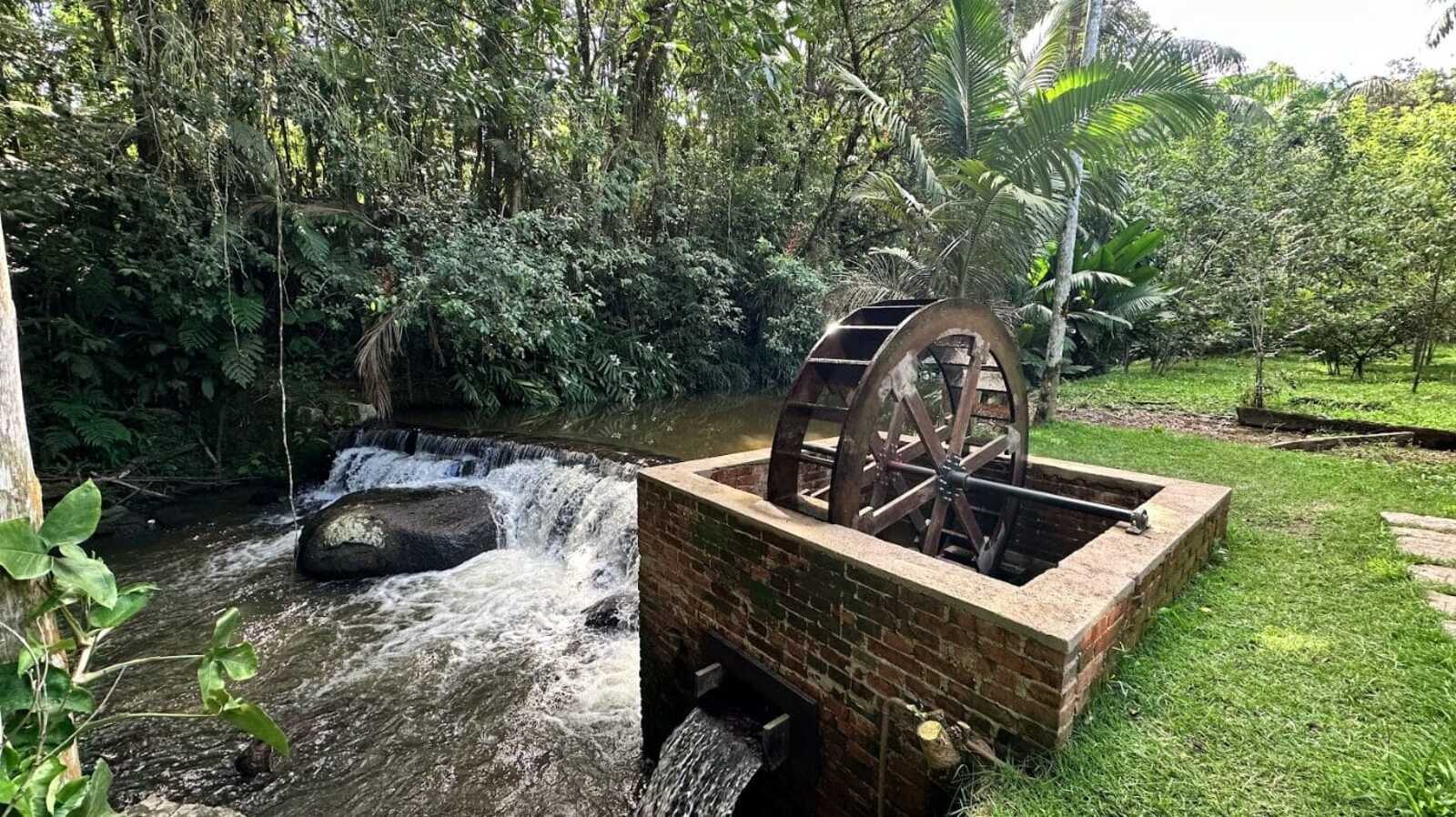
While restoring a historic mansion from 1910, a brick structure with an old turbine that generated energy from the Rio do Testo emerged, along with a hidden door and a rare floor concealed under layers of wax.
-
Italian researchers have detected what appears to be a second Sphinx buried under the sands of Egypt, and satellite scans reveal a gigantic underground megastructure hidden beneath the Giza Plateau for over 3,000 years.

-
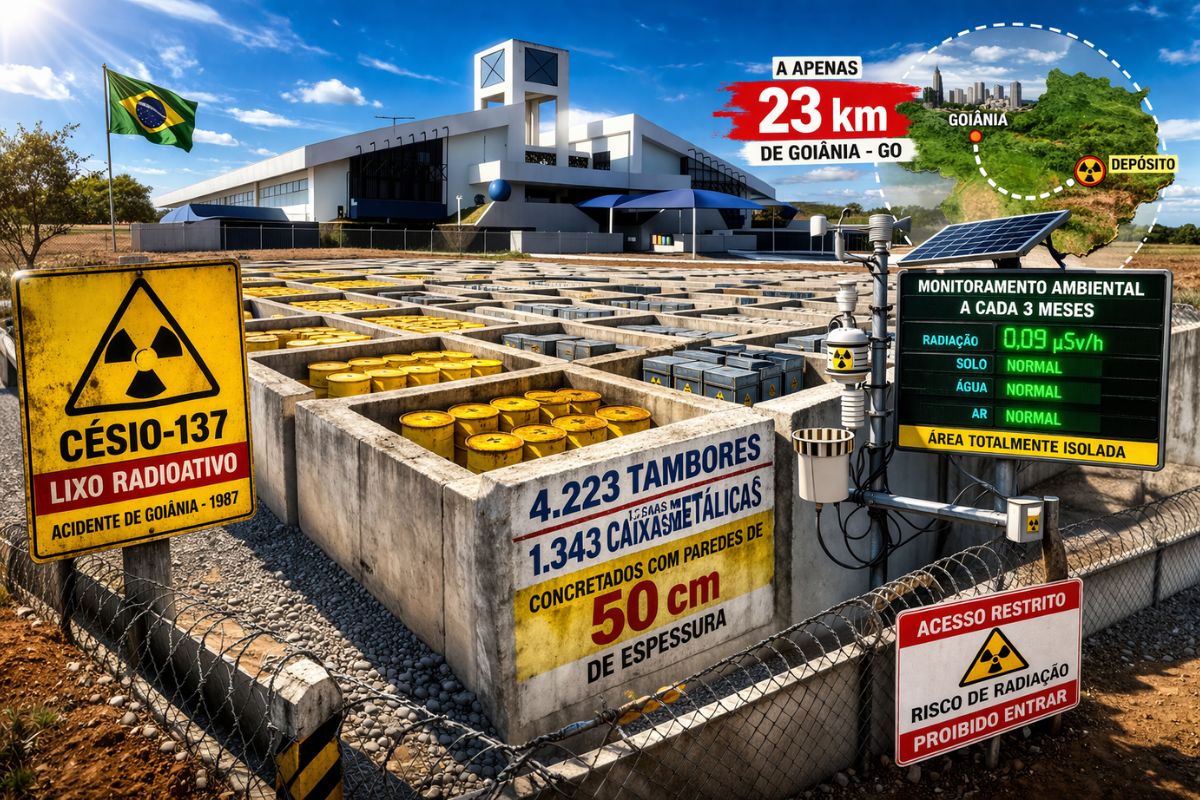
There are 4,223 drums and 1,343 metal boxes concreted with 50-centimeter walls that store the radioactive waste from Cesium-137 in the worst radiological accident in Brazil, just 23 kilometers from Goiânia, with environmental monitoring every three months.

This is an industrialized adhesive mass, supplied in tubes or buckets, applied directly to the blocks and bricks to build walls in a continuous and standardized manner.
This cement substitute is formulated to ensure sufficient adherence between masonry elements, with a joint thickness much smaller than that of conventional mortar.
By eliminating manual preparation, the transportation of mass around the site, and part of the mess associated with mixing on-site, polymer mortar transforms masonry work into a cleaner, leaner, and repeatable operation, which explains the growing interest among construction companies and work teams.
Where the Cement Substitute Can and Cannot Be Used
A critical point is that the cement substitute was not designed for all functions of the work.
Polymer mortar is allowed exclusively in non-structural masonry, that is, internal or external walls that have no structural function and do not support significant loads other than their own weight.
In these contexts, the material serves the purpose of joining blocks and bricks, provided it is applied according to the manufacturer’s recommendations.
On the other hand, the cement substitute is expressly prohibited in structural elements, such as beams, columns, slabs, and foundations, as well as during plastering.
In these functions, conventional concrete and mortar solutions with proven structural performance still apply.
Using it outside the indicated limits compromises the safety of the building since the mechanical behavior of polymer mortar has not been sized to receive and redistribute structural forces.
Productivity and Impact of the Cement Substitute on Labor
The main operational advantage of the cement substitute is its ability to multiply the productivity of the masonry team.
Since the material arrives ready for application, all the time spent on mixing cement, lime, and sand, transporting mass, adjusting consistency, and cleaning the concrete mixer is eliminated, freeing the mason to focus almost exclusively on laying blocks.
Field studies and project reports indicate that an experienced mason can become up to three times more productive when using the cement substitute in the sealing stage.
This means reducing the time needed to build equivalent walls by more than 50 percent, directly impacting labor costs.
By shortening deadlines, the cement substitute reduces hours worked, decreases the team’s presence on-site, and facilitates aligning masonry work with the overall construction schedule.
Indirect Costs Eliminated by the Cement Substitute
In addition to direct productivity, the cement substitute impacts a range of indirect costs of the work.
Without the need to prepare traditional mortar, the demand for concrete mixers disappears, whether rented or purchased, as well as the electricity costs associated with the continuous use of this equipment.
The construction site becomes physically leaner, with fewer machines, fewer cables, and fewer operational risk points.
Another effect is the reduction of storage area for cement, sand, and other inputs of conventional mixtures.
Bags of cement require protection against moisture, and piles of sand need adequate space, containment, and frequent handling.
By switching to the cement substitute in tubes, the project starts dealing with smaller and more organized volumes of material. This reduces manual transport efforts, losses due to environmental exposure, and rework associated with stock control.
Safety, Technical Standards, and Responsibility in Using the Cement Substitute
From a regulatory standpoint, the cement substitute in non-structural masonry is covered by ABNT NBR 16590, which establishes quality, strength, and usage conditions for polymer mortar.
This reference is central to ensure that the product’s performance is within the minimum required parameters in terms of adherence, durability, and behavior in response to typical demands of sealing walls.
Without adherence to the standard, any promise of savings loses technical support.
Furthermore, the safety of the building remains linked to the responsibility of the engineer or architect.
It is the professional’s responsibility to assess whether the cement substitute is suitable for the type of work, whether it is correctly specified in the project, and whether its use will be monitored in a manner compatible with the legislation.
The adoption of polymer mortar must be documented in the ART or RRT with the CONFEA CREA system or related council, formalizing that the decision to use the cement substitute in non-structural masonry was made based on explicitly assumed technical criteria by the responsible party.
How Much the Cement Substitute Can Save in Practice
When comparing the cement substitute to conventional mortar in a concrete scenario, the difference in yield is significant.
To build about 2 square meters of wall, a traditional mortar consumes around 60 kilograms of material, while polymer mortar, acting as a cement substitute, performs the same service with approximately 3 kilograms.
Even though the cost per kilogram of the polymer version is higher, the yield gain completely alters the final result.
In a simplified example with 200 square meters of wall, equivalent to a house of about 100 square meters of built area, estimates indicate a total cost of approximately 9 thousand reais for the conventional system, including material and labor.
With the cement substitute, this amount drops to around 6 thousand reais, representing savings of about 33 percent in this scope.
It is this type of practical comparison that supports the perception that the cement substitute can save up to about 30 percent in the sealing masonry phase when applied correctly.
Is the Cement Substitute a Consolidated Trend or a Punctual Solution
The combination of savings, speed, cleanliness, and reduced equipment positions the cement substitute as a technology that directly engages with the industrialization of construction.
On sites where sealing masonry represents a significant portion of the schedule, polymer mortar tends to consolidate as a standard, especially in projects that seek repeatability and strict cost control.
The perception that the cement substitute facilitates organization and predictability helps explain why the material is increasingly appearing in residential and commercial projects.
On the other hand, adoption should not be done automatically.
Every project has its unique characteristics of structure, deadlines, teams, and logistics, and not every context will benefit in the same way from the cement substitute.
The decision involves feasibility studies, careful reading of standards, and training of execution teams.
Ultimately, the cement substitute does not eliminate the need for quality engineering but offers an additional tool for those who wish to build more efficiently and with less waste.
In a scenario where the cement substitute promises savings, agility, and cleaner sites, but requires respect for clear technical limits, how do you perceive the use of polymer mortar in practice: do you intend to test the cement substitute in future projects or still have doubts about when this technology truly makes sense in your project?








Vale a pena ressaltar, que existem várias marcas de argamassa polimérica. Porém somente a Massa DunDun possui certificado ABNT, então antes de comprar outras marcas de polimérica consulte o site da própria ABNT e confira se o produto realmente tem certificação. Um material certificado te a garantia que o produto é fiscalizado pela própria ABNT. Diferente dos laudos e relatórios de ensaios, que servem para demonstrar que determinada amostra atende ou não uma norma técnica, a Certificação serve para garantir que a produção é controlada e que os produtos estão atendendo as normas técnicas continuamente. Toda inovação precisa de atenção , então não vale a pena correr riscos para economizar um pouco mais. Até porque o retrabalho sai muito mais caro. E é bem simples de verificar. Entre no site da ABNT e busque por empresas certificadas e digite a indústria que produz a argamassa. A construção civil precisa evoluir e precisa ser com qualidade
Excelente material. De fato, a construção civil precisa de materiais que industrializem o canteiro de obras.
Massa DunDun – Único composto polimérico certificado pela ABNT na norma NBR 16590, norma de composto polimérico para assentamento de alvenaria de vedação.
47 9 92402330
Top 👏🏻👏🏻👏🏻👏🏻👏🏻 é muito bom o avanço da tecnologia