





 Portuguese
  English
  Spanish
  3 min of reading
  0 comments


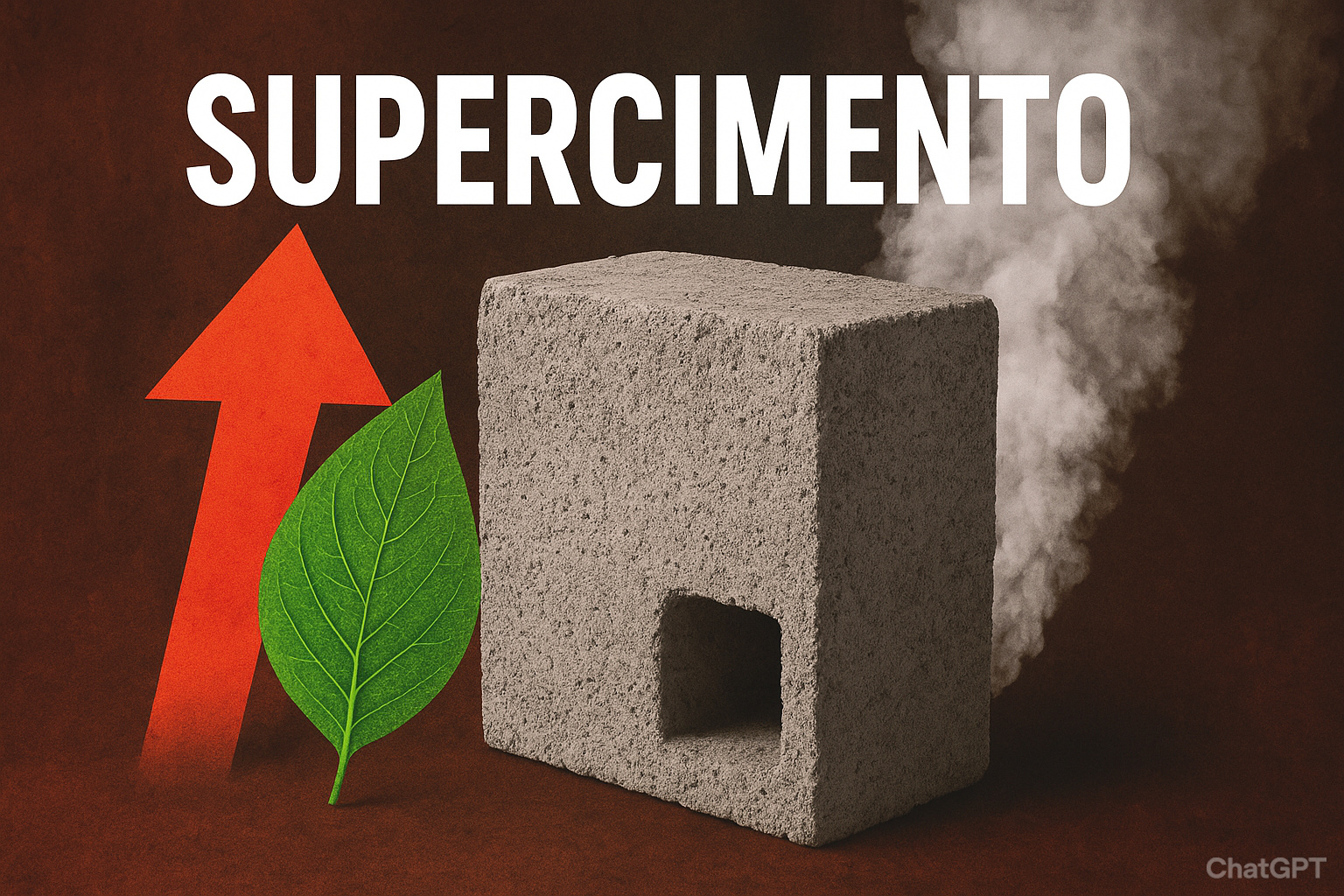
New Sustainable Cement Reduces Costs, Captures More CO₂ and Opens Million-Dollar Opportunities for Sustainable Construction.
Revolution in Construction: What is Happening?
A new material could change the course of global construction. Recently, researchers at the University of Pennsylvania announced sustainable cement, an innovation that reduces raw material use by up to 60%, while increasing CO₂ capture by over 140% and maintaining the necessary strength to support buildings, bridges, and large structures.
After years of studies that brought together experts in architecture, engineering, and materials science, the discovery was finally revealed. Thus, the construction sector gains an alternative capable of transforming its production processes.
In addition, the proposal draws attention not only for the technology but also for its cost-effectiveness. In a scenario where pressure for sustainable solutions is growing, sustainable cement emerges as a strategic ally for companies looking to reduce environmental impacts without losing competitiveness.
-
The lack of welders, electricians, and operators becomes a structural threat in 2025, with the construction industry and manufacturing already suffering from delays, cost pressures, and labor shortages in Brazil.
-
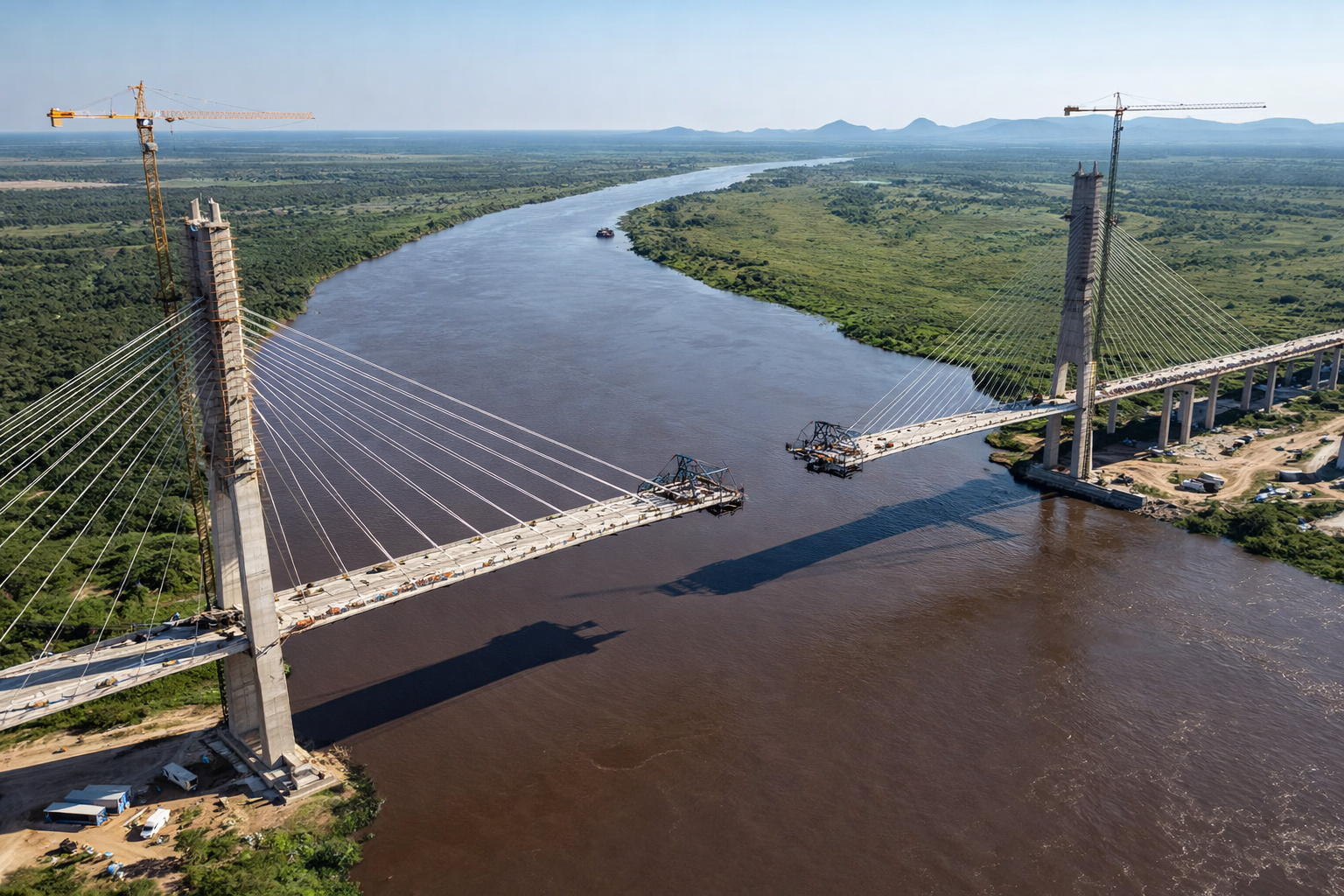
Brazil and Paraguay are just 46 meters away from a historic union on the bioceanic bridge that promises to revolutionize trade between the Atlantic and the Pacific.
-
With 55 km over the sea, a cost of US$ 20 billion, and enough steel to build 60 Eiffel Towers, China’s largest project has connected Hong Kong, Zhuhai, and Macau in a colossal bridge that defies the logic of engineering.

-
A trick with joint compound transforms a Styrofoam ceiling into a plaster-like ceiling: leveled panels, wires and mesh at the joints, sand, paint, and change the environment while spending little today.


In summary, the innovation combines efficiency, sustainability, and economic viability, paving the way for a new era in civil engineering.
Sustainable Cement: Less Raw Materials, More Sustainability
Produced from biominerals, sustainable cement combines 3D printing with the fossil structure of microscopic algae. The result is an extremely lightweight and solid compound that uses up to 68% less raw material compared to conventional cement.
According to researchers, the key lies in diatomaceous earth, formed by fossilized microorganisms. Its porous texture allows for large-scale carbon dioxide capture, turning the construction process into an opportunity for climate mitigation.
“Normally, when increasing surface area or porosity, strength decreases. But here, the opposite happened: the structure strengthened over time,” highlighted Professor Shu Yang from the University of Pennsylvania.
Direct Impact on the Cost-Effectiveness of Projects
For industry entrepreneurs, the differential goes beyond scientific innovation. By drastically reducing raw material consumption, sustainable cement can lower operational costs and make large projects more financially viable.
“We unlocked a new structural logic. We reduced material use by nearly 60% and still supported the load, showing that it is possible to do much more with much less,” stated Professor Masoud Akbarzadeh.
Thus, the technology presents itself as a dual investment: lower production costs and increased credibility in the global market, which is increasingly demanding regarding sustainability practices.
The Role of Microscopic Algae
Diatomaceous earth, algae that have formed deposits over millions of years, are the protagonists of this innovation. Already known as agricultural additives and industrial filters, they are now becoming key components in the future of construction.
The porous structure of these fossils allows for the diffusion of CO₂ and the formation of calcium carbonate, increasing carbon absorption and reinforcing the mechanical strength of sustainable cement. This characteristic even enables applications in environmental restoration projects.
Mathematics Applied to Sustainability
Another differential of sustainable cement is the use of minimal triple periodic surfaces (TPMS), complex mathematical shapes that exist in nature in bones, coral reefs, and starfish. These geometries increase surface area, ensure structural rigidity, and reduce material consumption.
Digitally modeled and 3D printed, these shapes allowed for the creation of blocks that are 68% lighter, with compression performance close to that of solid concrete and a CO₂ capture 32% higher per unit of material.
Next Steps and Opportunities for Investors
The research team is already studying the application of sustainable cement in large-scale architectural components, with advanced reinforcement systems. The goal is to take the technology from the laboratory to construction sites and, eventually, to skyscrapers and megaprojects in infrastructure.
For the business sector, the message is clear: investing in sustainable cement can represent economic, environmental, and reputational gains.
In a market pressured by climate goals and global competitiveness, innovative materials with high cost-effectiveness could become the key to new contracts and international expansion.









Seja o primeiro a reagir!