





 Portuguese
  English
  Spanish
  3 min of reading
  0 comments



National Project Promises to Transform the Country into a Global Power by Developing a Supercomputer Exclusively for AI.
One of the largest investments in AI in the United Kingdom has just been confirmed. The University of Edinburgh will be home to a new national supercomputer, valued at US$ 956 million, approximately R$ 5.4 billion, focused on artificial intelligence and high-performance computing.
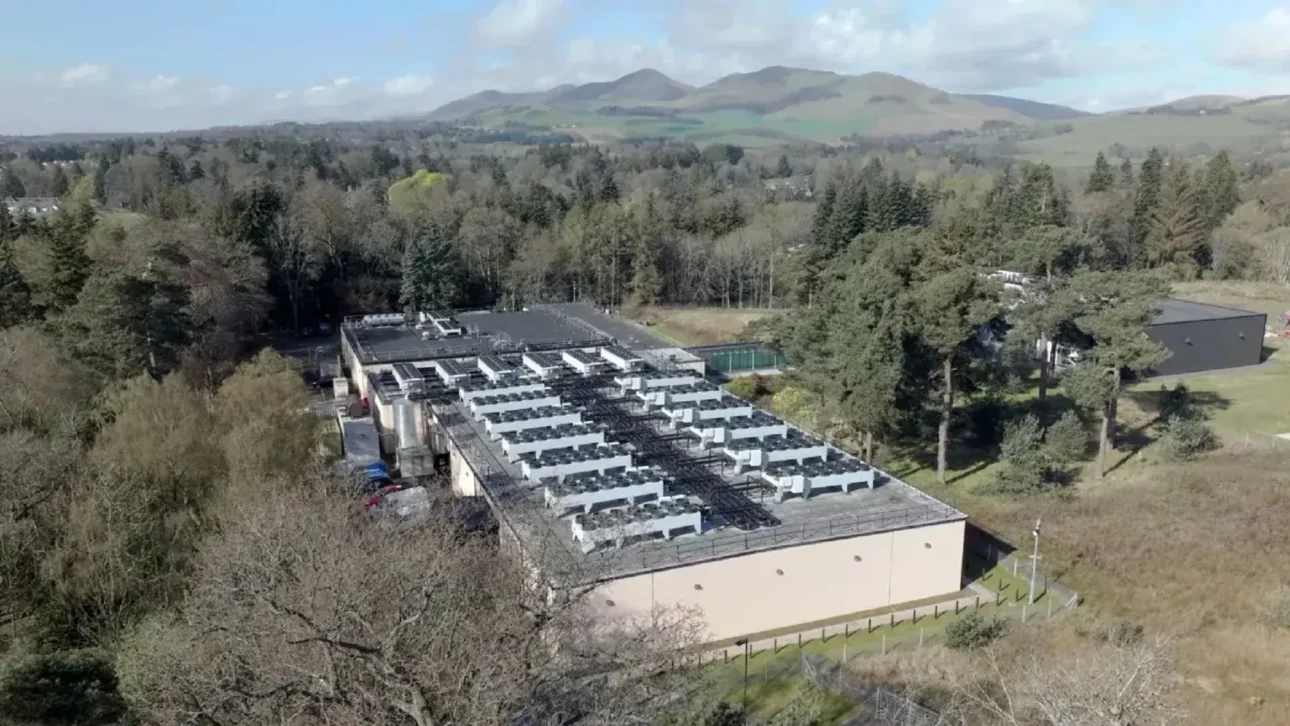
The machine will be installed at the university’s Advanced Computing Facilities.
Its aim is to boost research in strategic areas such as climate, health, and national security. Researchers and companies from across the country will have access to the technology.
-
How the terraforming of Mars can transform the planet: artificial aerosols can increase the temperature by up to 35°C in 15 years, creating conditions for liquid water.

-
Scientists drilled nearly 8,000 meters into the ocean floor above the fault that caused the 2011 tsunami in Japan and discovered that a layer of clay 130 million years old was responsible for making the wave much worse than any model had predicted.

-
Thousands of years after causing the largest eruption of the Holocene, one of the world’s largest supervolcanoes is rebuilding itself beneath the sea south of Japan, receiving new magma and alarming scientists with its transformation.

-
China has activated a magnet 700,000 times more powerful than the Earth’s magnetic field that operates for over 200 consecutive hours while consuming little energy, and now the world wants to know what Beijing plans to do with this technology in 2026.

Strategic Advancements in AI
The announcement of the supercomputer is part of a broader initiative.
The British government plans to increase its AI computing capacity twenty-fold by 2030. The measure was detailed in the Spending Review presented by the Chancellor of the Exchequer.
This effort is connected to the US$ 1.27 billion plan announced by Prime Minister Keir Starmer.
The strategy seeks to establish the United Kingdom as one of the leading innovation hubs in artificial intelligence worldwide.
The new supercomputer will integrate the AI Research Resource, a national network that will be expanded over the coming decades. The project is led by the Department for Science, Innovation and Technology.
Surpassing the Current ARCHER2
Currently, the ARCHER2 supercomputer is the national reference system. Also located at the University of Edinburgh, it will be surpassed by the new equipment.
The expectation is that the new machine will perform a billion billion operations per second.
Sir Peter Mathieson, the university’s director, stated that the investment will have a direct impact on the country’s international position. “This powerful supercomputer will support advances in medicine, drive emerging industries, and unlock the full potential of AI,” he said.
Three Decades of Computing Experience
The University of Edinburgh has been home to the national high-performance computing services for over 30 years. Additionally, it has been a recognized center for artificial intelligence research since the 1960s.
Professor Mark Parsons, director of the EPCC and Dean of Research Computing, highlighted the university’s role. “We will use everything we’ve learned over the past 30 years to deliver the best possible service to thousands of users from all scientific and industrial research communities in the UK,” he stated.
Resumption of a Suspended Commitment
The project marks the resumption of funding that had been cancelled. The previous administration, led by the Conservatives, had promised US$ 1 billion but withdrew support, leading to criticism from industry leaders.
At the time of the cut, the university had already invested US$ 37.5 million in infrastructure. The current government restored funding, now fixed at US$ 937.5 million.
Scotland as a Technological Hub
According to Scotland’s Secretary of State, Ian Murray, the initiative reinforces the region’s strategic role. He stated that the investment will position Scotland at the forefront of the UK’s technological revolution.
In addition to scientific research, the supercomputer is expected to generate skilled jobs and attract new industrial partnerships. There is an expectation of economic growth and opportunities for various communities.
The new system in Edinburgh represents a technological leap. With it, the United Kingdom aims to take a leading role in AI and advanced computing over the coming decades.










Seja o primeiro a reagir!