





 Portuguese
  English
  Spanish
  4 min of reading
  0 comments


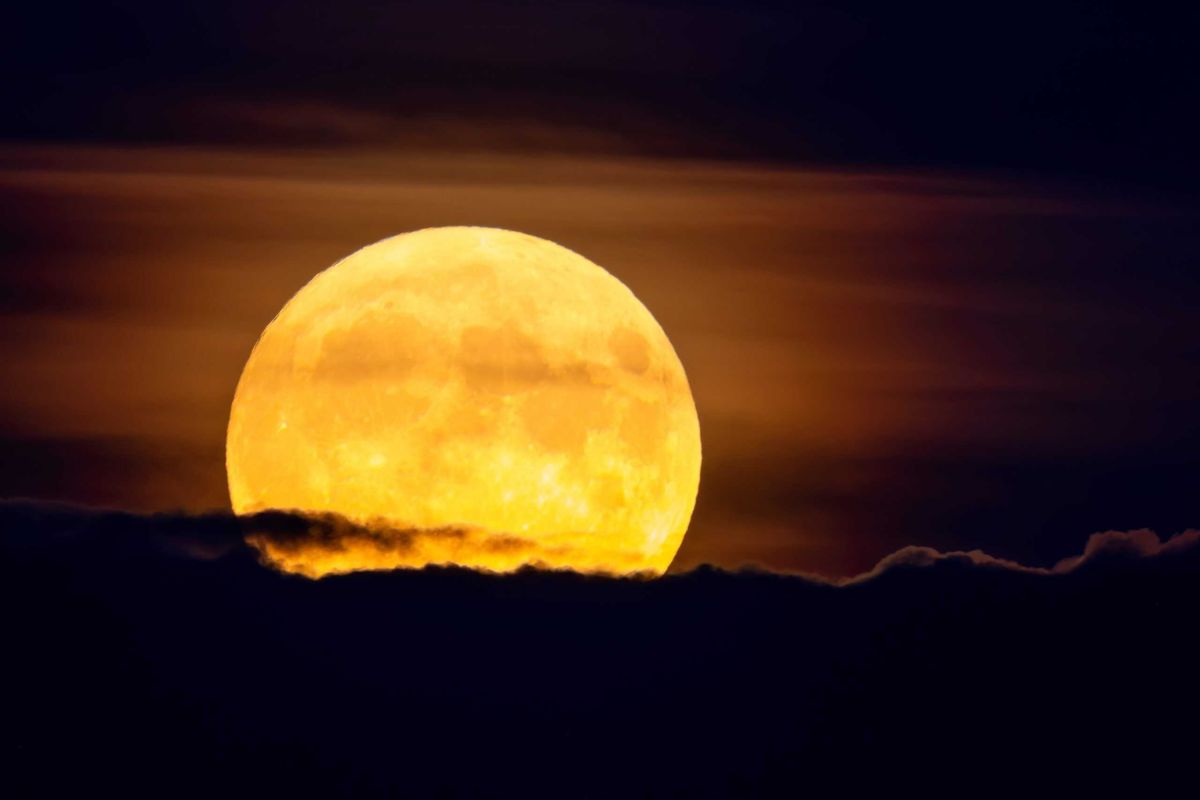
National Observatory Calendar Confirms Three Supermoons in 2025 with Occurrences on October 6, Now on November 5, and Again on December 4, with Better Viewing at Dusk and to the Naked Eye if the Weather Cooperates
According to the G1 portal, the supermoons in 2025 consist of three consecutive events at the end of the year. The first occurred on October 6, the second takes place now on November 5, and the third returns on December 4. In all of them, the full Moon coincides with the phase when the satellite is closest to Earth in its orbit, the perigee, which makes the disc appear slightly larger and brighter.
Although the term “supermoon” does not have a formal definition in astronomy, it has become popular to indicate the full Moon near perigee.
To the naked eye, the effect is subtle but noticeable, and requires no equipment. The recommendation is to observe right after sunset, when the Moon rises on the horizon and the reference with buildings and mountains enhances the sense of size.
-
In a flooded well, archaeologists found a 1,700-year-old Roman egg that still contains clear and yolk intact inside the very thin shell.

-
Something is happening around the Earth: Inside the huge explosion of fireballs in 2026

-
A hot air bubble coming from Argentina expands over Brazil, causing thermometers to exceed 38 degrees with a thermal sensation of 40 degrees in late March, affecting 6 states at once.

-
The radish leaf that almost everyone throws away has more polyphenols, flavonoids, and fiber than the consumed root, and a 2025 study showed that the leaf contains compounds that protect the intestine, combat inflammation, and may inhibit the growth of cancer cells.


What Characterizes a Supermoon and Why Does It Appear Larger
The term supermoon has been in popular use since 1979 to designate the coincidence between the full phase and the maximum proximity of the lunar orbit. Technically, the full Moon is an instant, but for the observer, it appears full for up to three consecutive nights, which extends the practical observation window.
When the full Moon occurs close to perigee, the disc can appear about 14% larger and up to 30% brighter than when it is at apogee.
The difference is associated with the variation in distance throughout the orbit. Generally, a supermoon is considered to be when the full Moon occurs less than 360,000 km from Earth, which explains the increase in apparent brightness without a change in the actual color of the celestial body.
Dates and Times of Reference for Brazil
The National Observatory calendar points to three supermoons in 2025. The first has passed, on October 6. The second occurs on November 5, and the third arrives on December 4. If the sky is clear, the best moment is at dusk, when the contrast with the horizon helps in perceiving size.
The times of appearance vary by location. In Brasília time, the Moon should appear around 6:45 PM in São Paulo, 6:14 PM in Belém, and 5:28 PM in Recife. No telescope is necessary.
To the naked eye, the Moon will already appear brighter and with an apparent increase in size compared to a full Moon distant from perigee.
Supermoon Is Not an Eclipse and Does Not Change the Phase
A supermoon does not alter the lunar phase nor does it imply any kind of eclipse. The full phase simply indicates that the illuminated side of the satellite is facing us, while an eclipse depends on the precise alignment between the Sun, Earth, and Moon casting a shadow.
The supermoon is a distance effect, not a shadow geometry.
Since it is not a central concept in professional astronomy, criteria vary among calendars and platforms. Still, the popular usage is useful for engaging the public and organizing the observation of a phenomenon that, although subtle, offers excellent opportunities for scientific outreach and naked eye observation.
How to Make the Most of the Observation
To enhance the perception of size, observe at the time the Moon rises, with references on the horizon such as buildings, trees, and hills.
Clear sky and low light pollution help to notice the increase in brightness. Observing for three nights around the date also works, as the appearance of “full” extends for more than one day for those watching without instruments.
For casual recordings, there is no requirement for equipment. The priority is to choose a spot with a good view of the horizon and check the local weather forecast.
Even in cities, the supermoon yields great urban compositions, especially when it rises between 6 PM and 7 PM in the Southeast and North/Northeast capitals mentioned.
Will you try to photograph the supermoons in 2025 or do you prefer just to observe them with the naked eye? Share from which city you will look at the sky and what you intend to frame on the horizon.







Seja o primeiro a reagir!