





 Portuguese
  English
  Spanish
  3 min of reading
  1 comment





Extra-budgetary Payments Concentrated in the Judiciary and the Public Ministry Totaled Billions Between 2024 and 2025 and Reinforced Discussions About Inequality, Salary Cap, and Administrative Reform
Right from the start, remunerations above the constitutional cap of public service placed around 40,000 public servants in the top 1% richest of the Brazilian population in 2025. The cap corresponds to the salary of the ministers of the Supreme Federal Court, around R$ 46,4 thousand monthly.
The data is part of a study released in the second half of 2025, based on payments made between August 2024 and July 2025. During this period, Brazil disbursed approximately R$ 20 billion in extra-budgetary salaries.
These amounts arise, above all, from the classification of allowances as compensatory funds. Thus, these portions are excluded from the calculation of the constitutional cap. In addition, they do not incur income tax, which increases the net income of the beneficiaries.
-
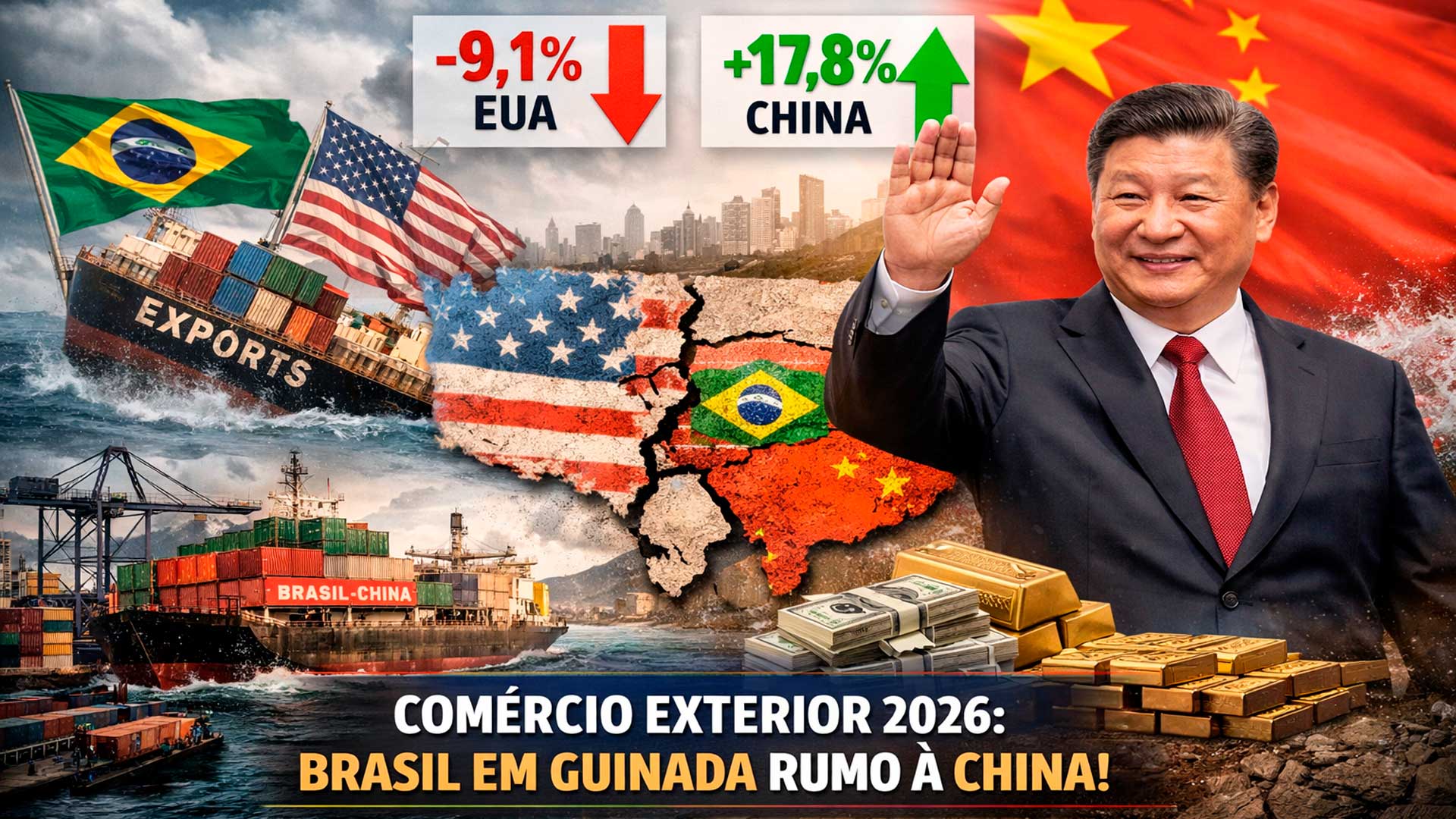
Brazil’s exports to the U.S. plunge for the eighth consecutive time, while China expands its leadership, and this is changing the landscape of foreign trade in 2026.
-
The Federal Government wants to curb family indebtedness and is considering releasing FGTS with a renegotiation that could cut up to 80% of debts for families and individual micro-entrepreneurs (MEIs).

-
‘Theory of the Madman’ is the strategy that explains why Trump threatened to end Iran and hours later offered a two-week truce as if nothing had happened.

-
Oil secures a larger drop, exports advance in March, and Brazil ends the month with a surplus of $6.4 billion despite the strong rise in imports.

International Comparison Exposes Disparities
At the same time, the international analysis shows that Brazil’s spending on super salaries is 21 times that of Argentina, the second highest in the ranking. Meanwhile, the United States, France, Italy, and the United Kingdom report significantly lower volumes. Moreover, Germany shows no cases of remuneration above the cap.
According to the survey, the R$ 20 billion paid in Brazil is equivalent to 716,000 times the median national income. The median is estimated at R$ 28 thousand annually. In contrast, in Argentina, even with around 27,000 servants above the cap, the spending corresponds to 25,000 times the median local income.
Judiciary Concentrates Largest Share of Earnings
Within this scenario, the judiciary concentrates the largest share of super salaries. Approximately 19,933 judges are part of the top 1% of the population. Next, there are 8,446 members of the Public Ministry.
In addition, 10,256 federal executive servants receive values above the cap. Three quarters belong to the Attorney General’s Office. The others are distributed among the Legislative and other agencies.
There is also a more extreme cut. More than 9,000 servants receive over R$ 1.2 million per year. Thus, they belong to the top 0.4% richest in the country in 2025. Almost all work in the Judiciary or the Public Ministry.
Technical Study and Fiscal Impact
The study “International Benchmark on Salary Cap in the Public Sector” was conducted by Sergio Guedes-Reis from the University of California, San Diego. The research was commissioned by the People First Movement and República.org.
The survey compared Brazil with ten countries, including Chile, Colombia, Mexico, and Portugal. According to Guilherme Cezar Coelho, founder of República.org, the fiscal impact could be even greater.
According to him, with an expanded analysis base, the cost could reach R$ 40 billion. This amount is equivalent to 40% of the fiscal deficit projected by the federal government for 2025.
Political Debate Advances Slowly
Despite the repercussions, the advancement of measures to contain super salaries remains limited. For Ricardo Ribeiro, analyst of 4intelligence, the problem is longstanding. He highlights the recurring use of mechanisms that circumvent the Constitution.
Furthermore, Ribeiro points to the corporate influence of the Judiciary and political resistance in Congress. Nevertheless, the topic gained traction in 2025. During this period, Simone Tebet, Planning Minister, and President Luiz Inácio Lula da Silva publicly criticized the excesses.
In addition, a Datafolha survey from July 2025 showed that 83% of the population support effective regulation of super salaries.
International Experiences and Next Steps
Meanwhile, international experiences point to possible pathways. Chile and the United Kingdom use independent commissions to determine salaries. European countries restrict bonuses and adopt unified salary tables.
Meanwhile, the United States includes all components in the annual cap. Thus, fringe benefits are rendered unfeasible. In this context, experts evaluate that the end of super salaries in Brazil depends on political coordination and continuous social pressure.
Thus, the central question remains: will the country be able to align spending control, fiscal justice, and reduction of inequality in the coming years?









Servidor público é uma classe privilegiada. O Brasil É POBRE, a renda média brasileira É BAIXA, mas é a REALIDADE do Brasil. A Súmula Vinculante n. 16 do STF obriga que a REMUNERAÇÃO TOTAL do funcionário público NÃO PODE ser inferior ao salário mínimo (1 SM). A PNAD Contínua (2016) indica que METADE da população (50%) brasileira vivia com MENOS de um salário (1 SM). A PNAD Contínua (2019) ainda mostrava que 70% dos brasileiros ganhavam ATÉ DOIS salários mínimos (R$ 1.996,00) e que 90% dos brasileiros ganhava MENOS de R$ 3,5 mil por mês (R$ 3.422,00 ou 3,43 SM). MEI e EI são DONOS DOS MEIOS DE PRODUÇÃO, portanto, são EMPRESÁRIOS. E segundo o Sebrae (2022), 26% dos empresários possuem renda de ATÉ 1 Salário Mínimo e 14% dos empresários possuem renda entre 1 e 2 Salários Mínimos. Em 2023, a plataforma República.org mostra que 70% dos SERVIDORES PÚBLICOS, que não são donos dos meios de produção, do país recebem, por mês, até R$ 5.000 (3,79 SM). A classificação de classes sociais no Brasil (IBGE) divide a população com base na renda familiar mensal e em 2024/2025 indica que a Classe D (Baixa): Renda familiar entre 1 e 3 salários mínimos. Prefiro utilizar o termo FUNCIONÁRIOS PÚBLICOS para designar as pessoas com “ocupação no setor público”. Fica evidente que TODOS os FUNCIONÁRIOS PÚBLICOS de “baixo escalão” (como: garis, faxineiros, porteiros, etc.) estão na metade superior da pirâmide econômica (os mais ricos), não estão na classe social “E” e ganham mais que 26% dos empresários, donos dos meios de produção. Para o MDIC (2020) as micro e pequena empresas (MEI, EIRELI, ME, EPP) representam 90% das empresas brasileiras e 69% dos empregos, fazendo ajustes para incluir as grandes empresas, podemos afirmar que 50,4% dos EMPRESÁRIOS brasileiros ganharam de ATÉ até 1 (um) Salário-Mínimo. Em outras palavras a MAIORIA dos EMPRESÁRIOS (50,4%) GANHA MENOS que um FUNCIONÁRIO PÚBLICO. .. HÁ 6 FUNCIONÁRIOS PÚBLICOS na CLASSE “A” brasileira para cada empresário de pequena, média e grande empresa. E servidores de “baixo escalão” fazem parte da elite financeira do Brasil. O embate marxista clássico “operário vs. industrial” foi substituído por tensões entre setor público vs. setor privado. A indústria corresponde a 24,7% do PIB, apesar de representar 35,2% de toda a arrecadação de tributos federais, o pagamento do funcionalismo público corresponde a 13% do PIB. IBPT aponta que os brasileiros trabalham 5 meses só para pagar impostos. Brasileiros estão em situação de escravidão financeira pois 40,7% da renda média do trabalhador está comprometida com a carga tributária.