Portuguese
  Spanish


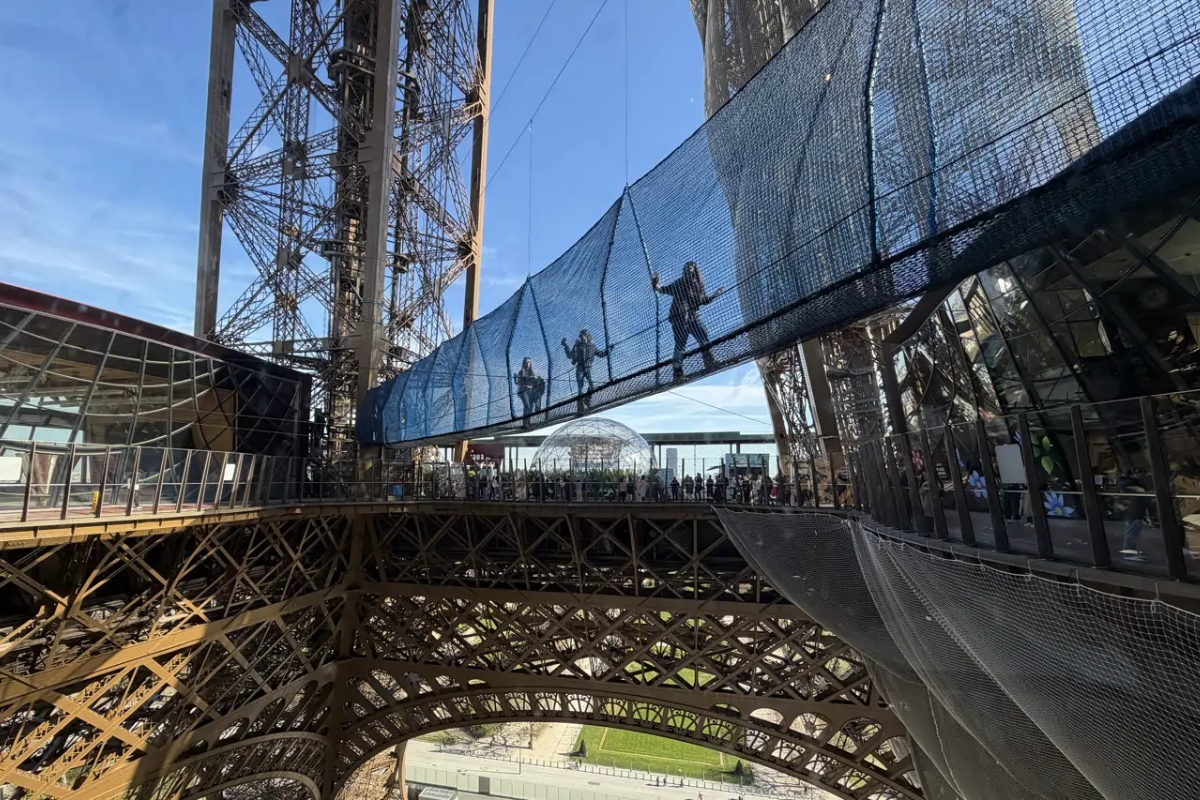

Paris reopens the void, and the Eiffel Tower welcomes visitors again on a temporary bridge suspended 60 meters above the ground, with registration by QR Code on the first platform and passage limited to only four people at a time
The Eiffel Tower has once again offered this European spring an experience that transforms the visit to the monument into a journey over the void. The structure allows crossing the first platform via a suspended walkway about 60 meters high.
The attraction will be available until May 3, 2026 and reappears surrounded by expectation after mobilizing thousands of people in the previous edition. For those who ascend the monument, the practical effect is clear: in addition to the view of Paris, there is now the chance to walk along a section that heightens the sensation of altitude and tension.
Suspended structure returns after attracting more than 24,000 people in the previous edition
The temporary installation reappears after a first test that drew attention within the most visited tourist spot in the world with an admission fee. In the last edition, the crossing was made by more than 24,000 visitors.
-
In a city where every piece of land is worth gold, he began buying plots in the 1960s and built a real estate empire with over a thousand properties.

-
An artist sank over 500 life-sized human statues at the bottom of the Caribbean Sea, and what seemed like macabre art turned into a living reef covered with corals that attracts divers from all over the world.

-
A fossil kept for years in a small museum in Montreal concealed 450-million-year-old soft tissue, a discovery that has only happened once before in history.

-
Engineers spend a decade building a $2.3 million bridge, but the project features a surreal curve, becomes a joke, and ends with seven suspended.


With this, the space regained the title of highest urban bridge in France. The return reinforces the appeal of the attraction among tourists seeking an experience outside the traditional visit circuit.

Walkway uses 25,000 panels and supports more than 30,000 kilograms per square meter
The crossing is suspended above the ground and was assembled with a structure made of 25,000 high-strength mesh panels. The declared capacity exceeds 30,000 kilograms per square meter, which supports the operation with strict access control.
The floor is one of the central points of the experience. As the mesh allows seeing the Champ de Mars beneath one’s feet, the visitor simultaneously feels exposure, height, and movement, which amplifies the impact of the journey.
Access to the route depends on registration by QR Code already on the first platform
Access to the crossing is included in the general ticket for the tower, with prices ranging from 14.80 euros to 36.70 euros, depending on the type of ascent, the chosen height, and available discounts. There is no early release online to reserve this specific section.
According to Viajes National Geographic, registration must be done via QR Code already on the first platform. This system determines the turn of each visitor and concentrates the flow at the attraction site.
Hours change during the week and crossing accepts only 4 people at a time
On some days, entry operates from 11 AM to 6 PM. On others, the hours extend until 8 PM, which expands the window for those looking to fit the crossing into their city itinerary.
At the same time, control remains tight. Only 4 people at a time can cross the structure, a measure designed to reduce crowds and ensure safety during circulation.
Children from 3 years old can enter, but there are important restrictions

The minimum age to participate is 3 years. Children under 12 years must be accompanied during the crossing, which limits the autonomous access of minors.
There are also objective prohibitions. Entry with high heels, bulky bags, or food is not allowed, as these items can compromise circulation in a narrow and suspended area.
Bad weather can interrupt the experience and final terrace extends the visit
Operations may be suspended preventively when there are strong winds or poor weather conditions. Another important point is that the structure was not designed to accommodate people with reduced mobility.
After the crossing, visitors find the temporary space La Vie en Fleurs, a gastronomic area with a panoramic view set up to complement the journey. This extends the time spent at the monument and transforms the passage through the tower into a more extensive experience.
The reopening of the walkway places Paris back at the center of an attraction that mixes tourism, height, and sensory limits in one of the most recognized postcards on the planet. With operation until May 3, 2026, the window to experience this crossing is short and concentrated.