





 Portuguese
  English
  Spanish
  4 min of reading
  0 comments


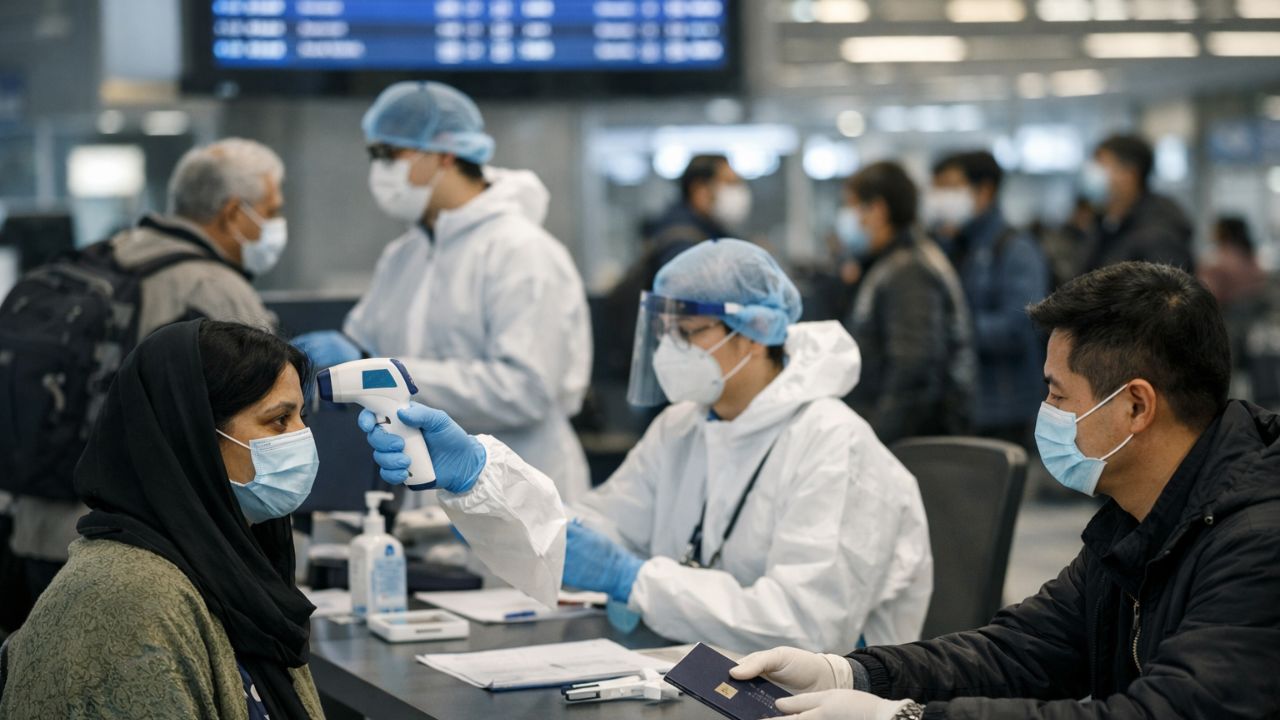
Nipah Virus Outbreak in India Puts Asia on Alert and Leads Countries to Strengthen Sanitary Controls at Airports.
A new outbreak of the Nipah virus has raised health alerts in India, mobilizing health authorities and leading Asian countries to strengthen controls at airports.
The disease, identified in early January in West Bengal, involves a highly lethal pathogen with no vaccine or cure, worrying international organizations since its discovery in 1999.
Increased surveillance is occurring to prevent the spread of the virus, which can cause severe respiratory infections and inflammation of the brain.
-
With a cost per shot close to zero, the DragonFire laser could change naval warfare in 2027 and provide British ships with nearly unlimited defense against drones.

-
A British startup creates tires that generate electricity in electric vehicles when passing over potholes, speed bumps, and cracks.

-
Scientists have created robots made with living cells that have their own nervous system, swim on their own, explore the environment, and self-organize without any genetic engineering, and now they want to do the same with human cells.

-
Students create a solar-powered ambulance that operates without a plug, without fuel, and still keeps medical equipment running in remote areas.


See more: India Advances in Agreement with the EU and Plans to Reduce Car Import Tariffs
See more: How Venezuelan Oil Led from Wealth to Economic Crisis in Venezuela
Recent Nipah Outbreak in India Mobilizes Authorities
Indian authorities have placed around 110 people in quarantine after confirming cases of Nipah among healthcare professionals in West Bengal.
Two medical workers required treatment after coming into contact with infected patients.
Although they initially tested negative, strict monitoring was maintained to prevent the spread of the disease.
According to local media reports, at least five cases have been detected this month among healthcare professionals.
Nevertheless, authorities state that the situation is under control, with ongoing monitoring and isolation protocols applied as a preventive measure.
Asian Countries Strengthen Airport Security
In light of the outbreak’s advance in India, neighboring countries have begun adopting additional surveillance measures.
Thailand announced special health protocols and screening at three international airports: Don Mueang, Suvarnabhumi, and Phuket. The decision was made after identifying direct flights from the affected region.
At Phuket airport, which receives five weekly flights from West Bengal, cleaning of common areas has intensified, and there is greater integration with communicable disease control posts.
At Suvarnabhumi, authorities screened 332 passengers arriving from India, with no reported suspected cases so far.
Additionally, Nepal, Taiwan, and other Asian countries have resumed verification procedures similar to those adopted during the COVID-19 pandemic.
China, through its state broadcaster CCTV, reported that there are no confirmed cases in the country but acknowledged the risk of imported infections.
/i.s3.glbimg.com/v1/AUTH_59edd422c0c84a879bd37670ae4f538a/internal_photos/bs/2026/n/W/F4pCTpQkqJReXB4dwOEA/143d01a0-fb60-11f0-b385-5f48925de19a.png.webp)
Why Is the Nipah Virus So Concerning?
The Nipah virus is considered one of the most dangerous pathogens in the world. The World Health Organization includes Nipah in its list of priority diseases for research, alongside Ebola, Zika, and COVID-19, due to its potential to cause a global epidemic.
The fatality rate can reach 75% of infected individuals, making each new outbreak a matter of great concern, especially in densely populated regions of Asia.
How Is the Nipah Virus Transmitted?
Nipah infection is a zoonosis, meaning it is transmitted from animals to humans. The main natural reservoirs of the virus are fruit bats, but transmission can also occur via pigs, contaminated food, or direct contact between infected individuals.
Studies indicate that consuming fruits or related products, such as raw date juice contaminated with bat saliva or urine, has been the source of previous outbreaks.
Therefore, authorities reinforce alerts regarding food hygiene in risk areas.
Symptoms of the Disease Range from Mild to Fatal
The symptoms of the Nipah virus can vary widely. In some cases, infection is asymptomatic. In others, it rapidly evolves into severe conditions. Initial signs include fever, headache, muscle pain, vomiting, and sore throat.
As the disease progresses, dizziness, drowsiness, mental confusion, and neurological symptoms may arise.
More severe cases involve encephalitis, seizures, and respiratory failure, potentially leading to coma within 48 hours. The incubation period typically ranges from four to 14 days, but there have been reports of up to 45 days.
There Is No Vaccine or Cure for Nipah
Currently, there is no vaccine or specific treatment for the Nipah virus. Medical care is limited to symptom management and palliative care, which underscores the importance of prevention, rapid isolation of suspected cases, and epidemiological surveillance.
History of Virus Outbreaks in Asia
The first recorded outbreak occurred in 1999 in Malaysia, causing over 100 deaths and leading to the culling of about one million pigs.
Since then, Nipah has been identified in countries such as Singapore, Bangladesh, and India.
Bangladesh is currently the most affected country, with over 100 deaths since 2001. In India, previous outbreaks were recorded in Kerala in 2013 and 2018, and were managed within a few weeks through mass testing and strict isolation.
Other countries in Asia and Africa, such as Cambodia, Indonesia, the Philippines, Thailand, Madagascar, and Ghana, are also considered risk areas, as evidence of the virus has been found in bat populations.
In light of this scenario, the new outbreak in India reinforces the need for international cooperation and constant surveillance to contain a disease that, despite being rare, continues to pose a serious threat to global health.









-

-

-

-

19 pessoas reagiram a isso.