





 Portuguese
  English
  Spanish
  5 min of reading
  0 comments


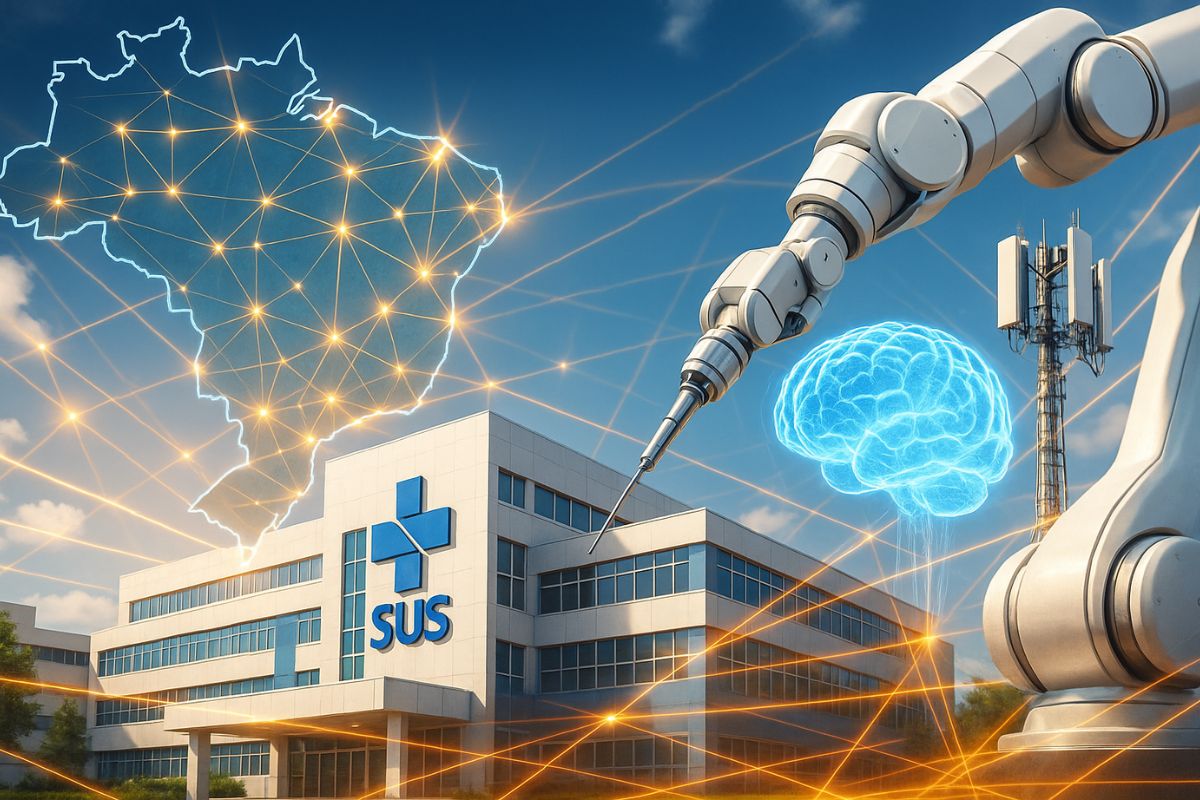
With Requested Investment of R$ 1.7 Billion from the Brics Bank, the SUS Prepares to Create a National Network of Hospitals and Smart Services, with Automated ICUs in 14 Cities, High-Precision Hospital in São Paulo, and Massive Use of Artificial Intelligence, Telemedicine, 5G, and Robotic Surgeries by the End of the Decade.
The Ministry of Health announced that the SUS will gain a National Network of Hospitals and Smart Services and Precision Medicine, with operations scheduled to start in 2026. The new structure will gather 14 smart ICUs, modernization of eight hospitals, and the construction of the Technological Emergency Institute of the Hospital das Clínicas of USP, which will be the country’s first smart hospital.
This network will be part of the Now There Are Specialists program, aimed at expanding access to doctors and high-complexity services for SUS patients. The goal is to combine artificial intelligence, 5G, telemedicine, and robotic surgeries to reduce waiting times, accelerate diagnoses, and bring precision medicine to more Brazilians served by the public system.
What Changes in the SUS with the Network of Hospitals and Smart Services
According to the Ministry of Health, the new National Network of Hospitals and Smart Services of the SUS will be built on three main pillars: automated ICUs, modernized hospitals, and the new Technological Emergency Institute in São Paulo.
-
The largest food company on the planet, JBS, has just opened a 4,000 square meter laboratory in Florianópolis to develop customized proteins that modulate muscle mass gain, immune response, and metabolic performance.

-
After nearly 30 bids and competition among industry giants, a Spanish company purchases one of the largest airports in Brazil for almost R$ 3 billion and takes over the management of Galeão in a concession that will last until 2039.

-
The Federal Revenue Service now automatically cross-references everything you declare with data from banks, credit cards, brokerage firms, and insurance companies, and any discrepancy between your income and your expenses triggers an alert in seconds.

-
Amid global tensions, Brazil blocks the United States’ proposal at the WTO and paves the way for a trade crisis and possible retaliations.


The 14 smart ICUs will operate within existing hospitals in capitals and major centers, with enhanced monitoring, process automation, and support from technologies such as artificial intelligence and big data.
The idea is to create an intensive care network capable of generating real-time data for quicker decisions, preventing complications, and improving the recovery of SUS patients arriving in critical condition.
In addition, eight hospital units will be modernized to operate within this concept of “smart services,” focusing on infrastructure, connectivity, and digital integration.
Technological Emergency Institute: the First Smart Hospital of the SUS
The highlight of the project is the Technological Emergency Institute of the Hospital das Clínicas of USP, identified by the government as the first smart hospital in the country within the SUS network. The unit is part of the Now There Are Specialists program and is expected to start operations in 2029.
The hospital will have 800 beds, including 250 for emergency, 350 for ICU, and 200 for inpatient care, along with 25 surgical rooms. The expectation is that the institute will benefit around 20,000 patients per year, concentrating high-complexity care.
In practice, the SUS will have a structure designed from the ground up to integrate data, automate workflows, and support high-scale precision medicine.
Artificial Intelligence, 5G, and Robotic Surgeries in the SUS Routine
The Ministry of Health’s plan envisions that the new SUS ecosystem will use a combination of advanced technologies in daily operations. The structure has been designed to incorporate:
- Artificial intelligence in triage, helping prioritize severe cases and organize emergency care queues
- Telemedicine to expand access to specialists without requiring patient and team relocation
- 5G ambulances, with real-time monitoring of vital signs and sending data to hospitals even before the patient arrives
- Robotic surgeries, especially in complex cases, increasing the precision of procedures
- Precision medicine, with more personalized treatments based on clinical data and patterns identified by digital systems
According to the ministry, the use of AI and big data could reduce emergency wait times by up to five times, in addition to making diagnosis and specialized assistance faster and more accurate within the SUS.
Where the Smart ICUs and Modernized Hospitals Will Be Located
The 14 smart ICUs of the SUS will be distributed among selected hospitals in Belém, Belo Horizonte, Brasília, Curitiba, Dourados (MS), Fortaleza, Manaus, Porto Alegre, Recife, Rio de Janeiro, Salvador, São Paulo, and Teresina.
The eight modernized units will be located in São Paulo, Rio Grande do Sul, and Rio de Janeiro. The first phase includes the new hospital of the Federal University of São Paulo (Unifesp) and four federal hospitals, in partnership with the Conceição Hospital Group (GHC), Oswaldo Cruz Foundation (Fiocruz), and Federal University of Rio de Janeiro (UFRJ). This way, the SUS aims to create a technological reference network in different regions, connecting research, teaching, and real-time assistance.
Where the Funding for the Smart Hospitals of the SUS Will Come From
To bring the project to fruition, the Ministry of Health reported that it requested R$ 1.7 billion in financing from the Brics Bank. The ministry is waiting for the financial institution’s final assessment to begin the construction of the Technological Emergency Institute and make feasible the complete structure of the smart hospital integrated into the SUS.
The National Network of Hospitals and Smart Services will officially be incorporated into the Now There Are Specialists program, which already aims to expand specialized care for SUS users.
If the funding is approved and the schedule is met, the public health system will have a previously unprecedented technological backbone, with smart ICUs, modern surgical blocks, and emergency services designed from the outset to operate with high precision.
What This Technological Turn Could Mean for SUS Patients
If the promises hold true, the arrival of smart hospitals, automated ICUs, and AI services could change the experience for many SUS users, especially in emergencies and high-complexity cases.
The reduction in waiting times, more accurate triage, and expanded access to specialists via telemedicine could represent a leap in quality in assistance, without the patient needing to leave the public network.
On the other hand, the success of this network will depend on the real implementation of the technologies, the training of teams, and the integration between units spread across the country.
The technological turn of the SUS is not just a matter of construction and machines, but of intelligent use of data and the ability to turn innovation into concrete care on the ground.
Given this scenario, tell me in the comments: do you believe that this new smart network of the SUS will really reduce wait times and improve care, or are you afraid that the technology will remain just talk and not actually reach those who need it?








-

-

2 pessoas reagiram a isso.