





 Portuguese
  English
  Spanish
  3 min of reading
  0 comments


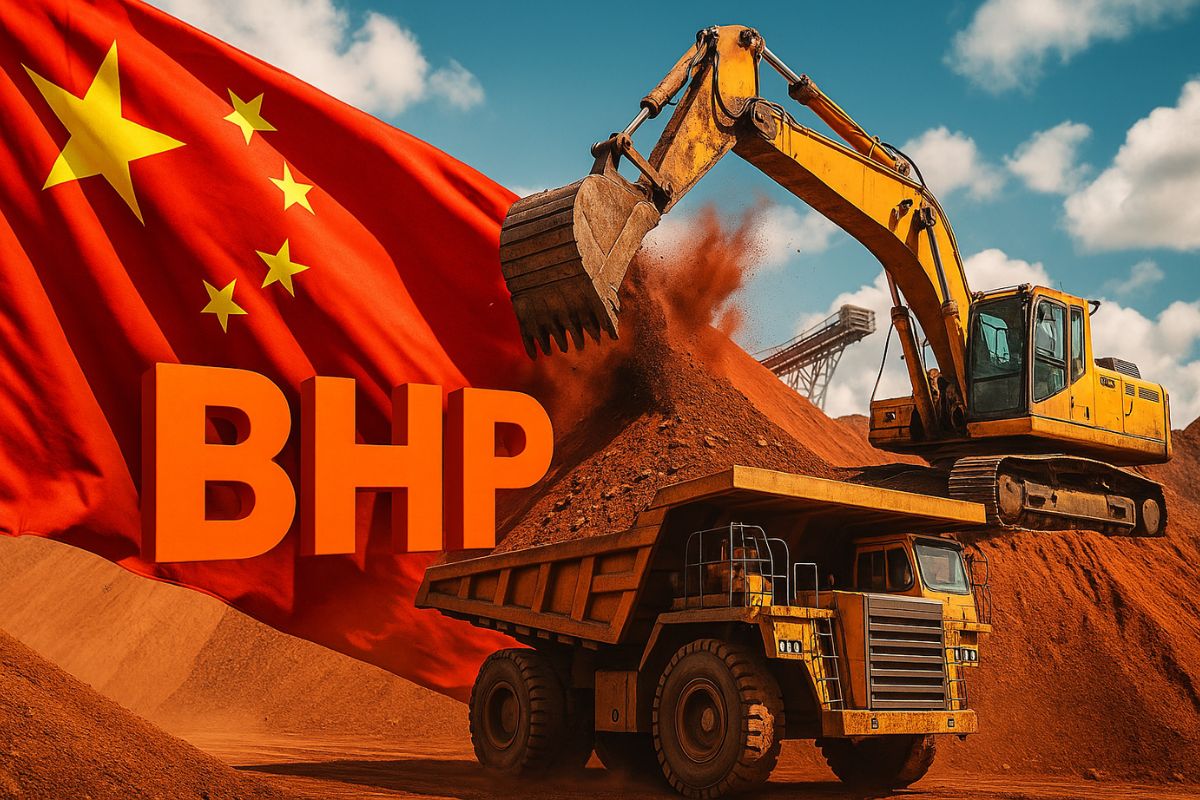
By Suspending Its Purchase of Iron Ore from Australian BHP, China Unveils Its Strength in the Market, Creates Instability in Global Negotiations, and Raises an Alert for Giants Like Vale and Rio Tinto, According to Folha de S. Paulo.
China’s decision to suspend all purchases of iron ore from BHP, one of the world’s largest miners, surprised the international market. The move reflects Beijing’s strategy to centralize imports and gain greater bargaining power in a sector essential for steel production.
According to Folha de S. Paulo, the gesture highlights not only Australia’s dependence on the Chinese market, but also the vulnerability of other global miners, such as Vale and Rio Tinto, in the face of the growing influence of CMRG, the state-owned entity that centralizes negotiations.
Why BHP’s Suspension Worries
BHP exports about 70% of its iron ore to China, and the halt in contracts even affects already shipped cargo.
-
Oil surged to $115 a barrel due to the war in the Middle East, and diesel in Brazil has already risen to R$ 7.45 per liter, while the United States…

-
Brazilian city bets on the business environment to generate jobs and attract investments in the energy sector — secretary reveals strategy at Macaé Energy 2026.

-
50 viaducts, 4 tunnels, 28 bridges, and 40 kilometers of bike paths: BR-262 in Espírito Santo will receive 8.6 billion reais for the largest engineering project in the state’s history, inspired by the Immigrant Highway in São Paulo.

-
Brazil produces too much clean energy and doesn’t know what to do with it: over 20% of solar and wind capacity was wasted in 2025 while investors flee and 509 renewable generation projects were abandoned in the last year.


The impasse arose amid price disagreements during a time of weakened domestic demand for Chinese steel.
Experts consulted by Folha state that China has “drawn a line in the sand”, showing its ability to influence a market worth hundreds of billions of dollars.
By centralizing purchases through CMRG, the Chinese government strengthens its position in negotiations and sets a precedent for future trade disputes.
Effects on Vale and Rio Tinto
Although the suspension creates opportunities for miners like Vale and Rio Tinto to increase their sales to the Chinese market, the scenario carries risks.
First, because some of BHP’s products are not easily substitutable.
Second, because if the Chinese are successful in their pressure, they may adopt the same stance towards other suppliers.
According to Daniel Sasson, an analyst at Itaú BBA, fully replacing BHP would be “difficult, inefficient, and expensive”, which could even raise global iron prices.
This means that even if Vale and Rio Tinto increase their market share, Chinese pressure could squeeze negotiation margins in the medium term.
China’s Bargaining Power
CMRG, established three years ago, was central to this decision. Its role is to concentrate iron ore imports and prevent global miners from dictating prices.
This centralization reinforces China’s position just as the country expands its presence as a steel exporter, even in the face of declining domestic demand.
For analysts, the suspension is not just about a one-off price dispute.
It represents a structural change in how China conducts its negotiations with strategic suppliers.
The trend is towards greater coordination and assertiveness, which could redefine the balance of power in the sector in the coming years.
What to Expect Going Forward
Although UBS considers it unlikely that the suspension will last long, the episode already signals a new pattern in the relationships between Beijing and global miners.
Vale and Rio Tinto are on alert, as any escalation of China’s strategy could directly impact their contracts and margins.
In the short term, the Chinese may redirect purchases, but a complete replacement of BHP seems unlikely.
The greater risk lies in the psychological effect on the market and the message conveyed by Beijing: those who dictate the rules of the largest consumer market can impose increasingly tough conditions.
China’s historic suspension against BHP shows how the global iron ore market is exposed to the power of a single buyer.
The episode pressures rival miners and calls into question the balance of international negotiations.
In your opinion, should China extend this stance to Vale and Rio Tinto as well? Or will the strategic weight of iron force Beijing to back down quickly? Leave your opinion in the comments.









-

2 pessoas reagiram a isso.