





 Portuguese
  English
  Spanish
  4 min of reading
  0 comments



With canceled flights, closed airspace, and visas nearing expiration, an international mobilization has begun to reduce fines, extend legal stays, and accelerate the return of travelers stranded in Middle Eastern countries.
The Switzerland has joined an international mobilization to assist travelers who became stranded in the Middle East due to flight cancellations, airspace closures, and visa expirations. The response also involves Canada, the United Kingdom, India, Germany, Thailand, South Africa, Italy, and Australia.
In practice, the measure paves the way for emergency visa extensions, waiving fines for overstays, and accelerating repatriation efforts. The immediate effect falls on individuals stranded in Israel, Qatar, the United Arab Emirates, Bahrain, and Iraq, amid escalating regional tensions.
The crisis has escalated with the advancement of conflicts and the blockage of strategic air routes. Airports and hotels have begun to concentrate an increasing number of passengers with no clear return timeline, putting pressure on immigration authorities and transportation networks.
-
Trump’s tariffs reduced trade between the US and China by up to 30% in 2025, but China did not lose; it redirected exports, cut prices, and found new markets, while Southeast Asia grew by trading with both, and Europe was squeezed between the two sides.

-
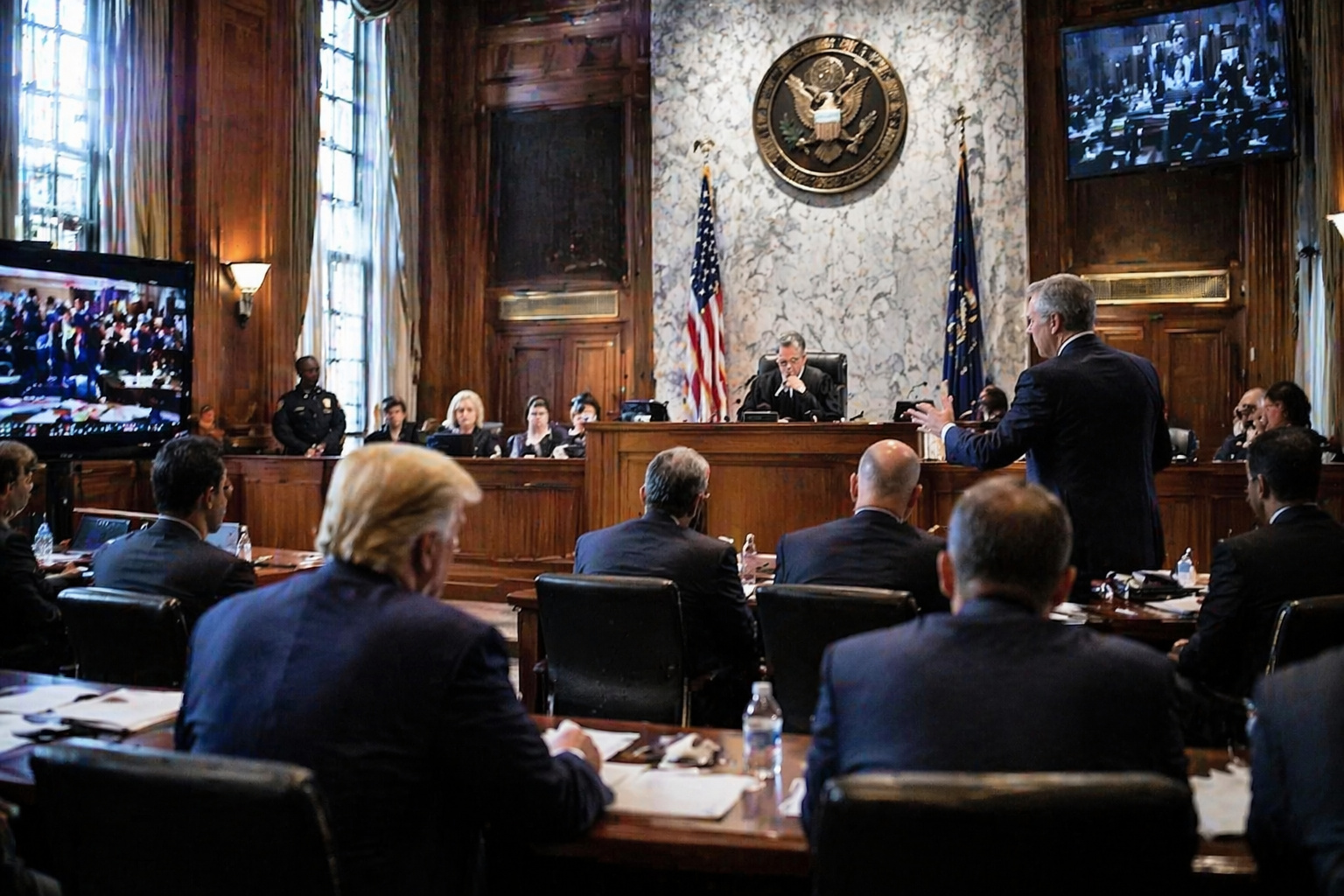
Why U.S. federal judges have increasingly blocked decisions by Donald Trump and how this wave of injunctions is reshaping the limits of presidential power.
-
The US bombs Iran’s largest oil center and raises global tension after Trump’s explosive ultimatum with a threat of total destruction.

-
Eurasia Group, a group that has accurately identified the biggest geopolitical risks of the last 20 years, issues a new warning and states that the greatest danger of 2026 does not come from China or Russia, but from within the United States itself, and that the world’s greatest power is dismantling the global order it created on its own.

As a result, coordination among governments has become central to preventing thousands of people from facing legal issues, extra costs, and further delays in leaving the region. The movement also reduces the insecurity for those who already have an expired visa or are close to expiration.
Switzerland grants emergency extension for visas expired after February 2026
The Swiss response includes an emergency extension for visitors who were unable to board due to the crisis. The initiative covers travelers with visas that expired after February 2026, reducing the risk of sanctions and immigration hurdles.
Additionally, authorities in the country have begun to facilitate the return of people stranded in critical points such as Qatar, the United Arab Emirates, Bahrain, and Israel. The priority is to avoid further delays and provide a legal exit for those awaiting new flight options.
Canada and the United Kingdom adopt immigration relief and strengthen repatriation
Canada has decided to suspend fines for irregular stays related to cancellations and airspace restrictions. The measure acts as an emergency cushion for those who have overstayed due to circumstances beyond their control.
In the United Kingdom, the response includes a zero fine policy for individuals unable to leave the region during the crisis. The scope includes tourist and business visas, expanding protection for foreigners and nationals affected by the disorganization of air traffic.
Both countries have also begun to strengthen consular support and reorganize departures, with the participation of embassies, local authorities, and airlines. The goal is to shorten wait times and reduce the number of travelers without a defined route.
India and Germany accelerate departures amid flight collapse
India has also opened a humanitarian visa extension for people unable to leave due to airspace closures and flight suspensions. The focus is to ensure regular stays until new routes become viable.
Germany, in turn, has expanded guidelines to alleviate situations of overstays and has begun to concentrate efforts on repatriation flights. Berlin is emerging as one of the hubs of this operation, in an attempt to absorb some of the pressure created by the crisis.
According to material released by Travel And Tour World, an international news portal on tourism and aviation, the coordination brings together countries from different continents to reduce fines, extend legal stays, and accelerate the return of travelers affected by the conflicts.
Thailand, South Africa, Italy, and Australia join the response
Thailand has adopted an emergency extension for visitors impacted by regional instability, while South Africa has implemented a zero fine policy to alleviate the situation of travelers and nationals stranded in the Middle East.
Italy has also extended the validity of visas on an emergency basis for people stranded in Qatar, the United Arab Emirates, Bahrain, and Israel. At the same time, it is working on coordinated exits with embassies and airlines.
Australia has introduced visa extensions, waivers of penalties, and support for repatriation. The country is also directing financial assistance in some cases and prioritizing rebookings for those left without boarding options.
Qatar, the United Arab Emirates, Bahrain, and Israel concentrate the largest bottlenecks
The strongest impact of the crisis appears in major transit hubs. In Qatar, the Hamad International Airport has become one of the main retention points for passengers, struggling to manage the accumulated demand.
In the United Arab Emirates, the pressure falls on Dubai and Abu Dhabi, where thousands of people are facing cancellations and operational blockages. Local authorities have begun granting a 30-day extension for some travelers, trying to avoid a new wave of immigration irregularity.
In Bahrain, uncertainty about schedules, the reopening of airspace, and the resumption of routes keeps the scenario unstable. In Israel, Ben Gurion Airport is also facing significant disorganization, with a need for external support to unlock the exit of passengers.
The international response reduces immediate pressure and changes the weight of the crisis
The joint mobilization shows that the crisis has ceased to be merely an airline problem and now requires direct action from governments. The combination of visa extensions, waiving fines, and repatriation flights prevents the migratory chaos from advancing alongside the conflict.
For those who are stranded, the main effect is clear. Less risk of punishment, more legal time to stay, and a greater chance of securing a safe return route amid the paralysis of air traffic.
The situation remains unstable, but the coordinated reaction is already altering the immediate impact on thousands of travelers. By alleviating pressure at critical points in the Middle East, this international response changes the strategic reading.










Seja o primeiro a reagir!