





 Portuguese
  English
  Spanish
  5 min of reading
  0 comments


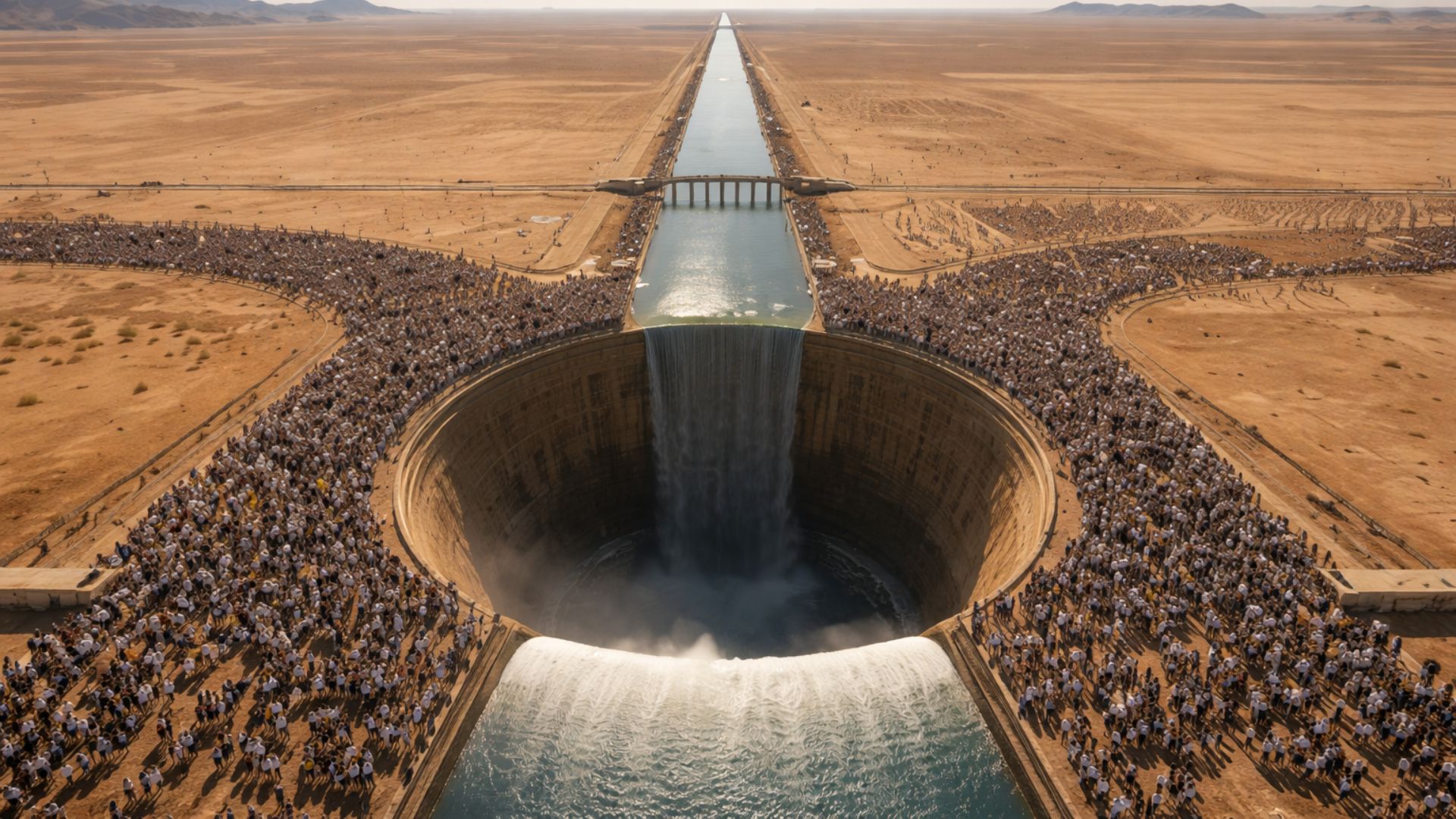
Mega Projects Advance out of the Spotlight and Involve Water, Energy, Mining, and Logistics on a Continental Scale, Repositioning Afghanistan at the Center of Strategic Routes in Central and South Asia, with Direct Impacts on Neighboring Countries and Global Supply Chains.
While international attention has been focused on wars, elections, and political crises, a set of unprecedented-scale projects has advanced away from the spotlight in Afghanistan.
The information, gathered and analyzed by the channel Tecnívora, which published a video detailing these projects on YouTube, reveals that, without official announcements at global forums, the Taliban has initiated one of the most ambitious infrastructure programs in the recent history of the country.
According to the survey presented by Tecnívora, this is not just about political decisions or ideological disputes.
-
Luciano Hang revealed that Havan’s air fleet has already accumulated more than 20,000 landings, 10,000 flight hours, and 6 million kilometers traveled, and he says that without the planes, the company would never have grown so quickly.

-
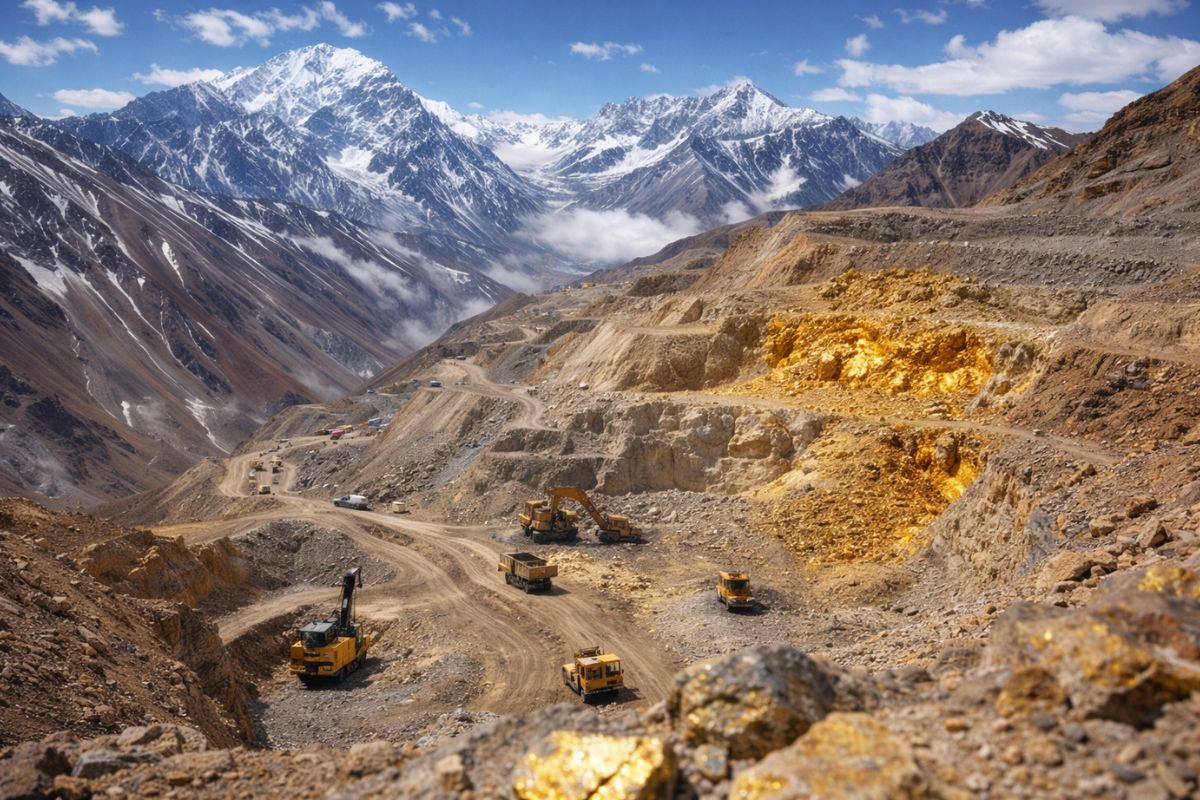
A historical discovery in the Andes Mountains reveals a gold deposit valued at 770 billion reais hidden over 4,000 meters above sea level on the border between Chile and Argentina, and the whole world is watching.
-
With just joint compound, white glue, and pigment, you can make a homemade paint that yields double the conventional amount, saves up to 70%, and leaves the wall with a finish that no one would believe wasn’t store-bought paint.

-
Home environment can influence the brain, mood, and well-being: studies indicate an increase of up to 15% in productivity, a reduction of 12% in stress with plants, and a direct impact of the circadian rhythm on the 24 hours of the day.


What is underway involves heavy engineering, billion-dollar investments, control of strategic natural resources, and the reactivation of commercial and energy routes that have been considered unfeasible for decades.
Together, these projects are repositioning Afghanistan at the center of the economic and geopolitical dynamics of Central Asia.
Qosh Tepa Canal and Water Control in Central Asia
One of the most emblematic projects highlighted by the channel is the Qosh Tepa canal, in the northern part of the country.
Stretching about 185 kilometers, the structure traverses desert areas and is already described as the largest artificial canal under construction in Central Asia.
According to information gathered by Tecnívora, more than six thousand workers are continuously engaged in excavation, operating heavy machinery day and night.
The canal is designed to divert approximately 20% of the water from the Amu Darya river, one of the major waterways in the region.
The released content indicates that this water will be channeled to irrigate about 550 thousand hectares of dry land in northern Afghanistan, an area comparable to that of the Brazilian Federal District.
The declared objective is to significantly increase the country’s agricultural production.
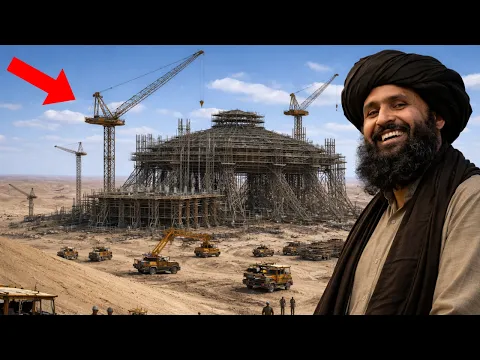

According to Tecnívora, Afghan authorities estimate that the completion of Qosh Tepa could increase Afghanistan’s arable land by more than one third, bringing the country closer to food self-sufficiency.
The total cost of the project is estimated at 684 million dollars, with over 100 million financed by internal government resources.
The regional impact, however, is sensitive.
The Amu Darya supplies countries such as Uzbekistan and Turkmenistan, which are heavily reliant on the river for their cotton plantations.
By highlighting this point, Tecnívora emphasizes that control of the water flow transforms the resource into a tool of geopolitical power, capable of influencing diplomatic relations throughout Central Asia.
Dams and Energy as Instruments of Regional Negotiation
In addition to the canal, the video also draws attention to the construction and resumption of dams in different regions of the country.
Among them is the Bakshabad dam, built amidst diplomatic tensions with Iran related to water rights.
As explained by the channel, these structures not only serve for irrigation.
They also increase hydropower generation and reduce Afghanistan’s dependence on imports.
Kabul New City and the Planned New Capital
In the urban sphere, Tecnívora highlights the progress of the Kabul New City project.
Planned to cover about 722 square kilometers, the new capital was designed to alleviate the current Kabul.
The project anticipates capacity to accommodate between 1.1 million and 3 million people.
The plan includes the construction of approximately 250 thousand residential units, in addition to hospitals, schools, commercial centers, and green areas.
According to the released material, the development will be divided into hundreds of sectors and is expected to unfold over three decades.
Some areas, such as the so-called Golden City, already house tens of thousands of residences.
Other sectors had work resumed between 2023 and 2024, with individual investments potentially reaching 700 million dollars.
Logistical Corridors and Strategic Railways
Tecnívora’s analysis also emphasizes the Taliban’s logistical strategy.
In 2025, China, Pakistan, and Afghanistan signed an agreement to extend the China-Pakistan Economic Corridor into Afghan territory.
The project is valued at over 60 billion dollars.
The initiative creates a direct link between the Chinese region of Xinjiang, Pakistan, and Afghanistan.
Another highlight is the 573-kilometer railway that will connect Uzbekistan and Pakistan, crossing Afghanistan.
Valued at 4.8 billion dollars, the project promises to reduce the transportation time of goods from 35 days to just four.
The route requires the construction of more than 300 bridges and five large tunnels in extremely complex terrain.
TAPI Pipeline and Energy Integration
In the energy sector, the channel details the resumption of the TAPI pipeline, which connects Turkmenistan, Afghanistan, Pakistan, and India.
Designed to transport 33 billion cubic meters of natural gas per year, the approximately 10 billion dollars project had the construction of the Afghan section resumed in 2024.
If completed, it could generate approximately 1 billion dollars annually in revenues for Afghanistan.
The video also discusses the CASA-1000 project, which aims to transmit hydropower from Kyrgyzstan and Tajikistan to Pakistan.
According to Tecnívora, the system is expected to transport 1,300 megawatts of energy, with about 300 megawatts allocated for Afghan domestic consumption.
The resumption was approved by the World Bank in 2024.
Mining, Internal Revenues, and Critical Infrastructure
To financially support this set of projects, the Taliban is betting on mineral exploration.
Tecnívora highlights estimates pointing to trillions of dollars in copper, lithium, and rare earth elements in the Afghan underground.
In 2024, the Mes Aynak copper mine resumed progress.
During the same period, the intensification of taxation on mining reportedly yielded more than 1 billion dollars in a single year.
As a symbol of this new phase, the channel recalls the reconstruction of the Salang tunnel, inaugurated in 1964.
For decades known as one of the most dangerous roads in the country, the structure underwent modernization announced in 2023.
The estimated investment was 100 million dollars.
The information gathered by Tecnívora indicates that these projects are underway, with declared budgets and concrete regional effects.
The Taliban created special forces to protect canals, railways, mines, and energy corridors, treating each project as a strategic asset.
The big unknown remains: will this ambitious infrastructure program be sustainable in the long term in a country marked by chronic instability?




-

-

-

-

-

31 pessoas reagiram a isso.