





 Portuguese
  English
  Spanish
  6 min of reading
  0 comments


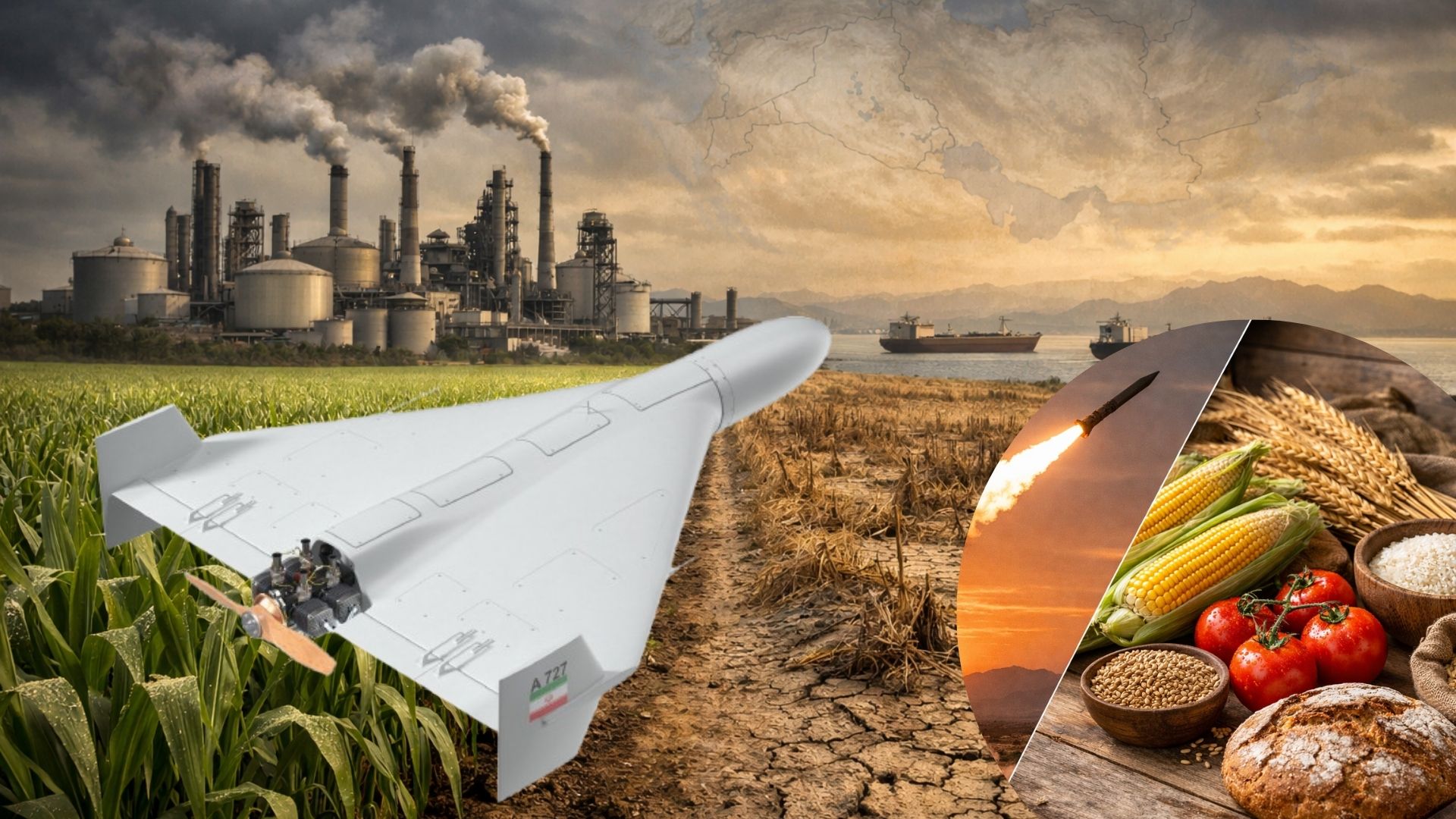
Middle East Conflict Hits Essential Fertilizer Production, Threatens Global Food Chain and Raises Alarm Over Potential Impact on Wheat, Corn, Rice and Other Basic Commodities
In the early 20th century, the world faced a dilemma that seemed unsolvable. The population was growing rapidly and, at the same time, crops were insufficient to feed everyone. Farmers faced natural limitations in productivity, and experts feared that food scarcity would become one of humanity’s biggest challenges.
It was in this scenario that a revolutionary solution emerged. Industrial chemistry enabled the creation of a process capable of producing artificial nutrients for plants, drastically increasing agricultural productivity worldwide. With the advancement of this technology, harvests multiplied, and global food production entered a new era.
However, despite supporting billions of people, this system, which ensures food on the tables around the world, depends on an extremely fragile supply chain. Today, a localized war in the Middle East could threaten this global balance, mainly due to a substance little known outside the agricultural sector: urea.
-
For years, no one could cross a neighborhood in Tokyo because of the tracks, but an impressive solution changed mobility and completely transformed the local routine.

-
With 15 floors, an unusual building in Curitiba uses concrete, pilasters, and exposed roofs to create the effect of stacked houses.

-
Archaeologists opened a secret chamber that had been sealed by sand for 40,000 years inside a cave in Gibraltar and found what may be the last place where Neanderthals lived before disappearing from Europe forever.
-
The water that may have gone to the Moon with NASA during the Apollo 11 mission and been consumed by the astronauts springs in a Brazilian city at an altitude of 945 meters, famous for its thermal springs, above-average quality of life, and a natural radioactivity so unusual that it attracted Marie Curie.

The Invisible Fertilizer That Sustains Half Of Global Food Production
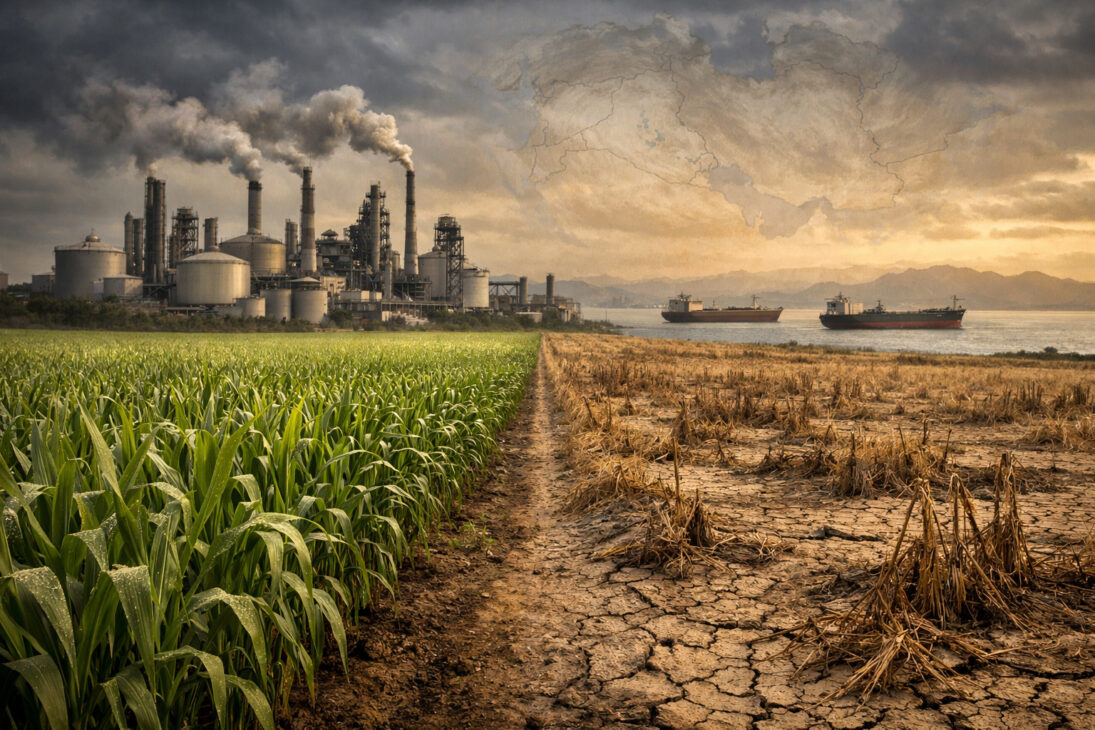
You may have never heard of urea. Still, this chemical compound has become one of the silent pillars of modern agriculture. It is the most widely used nitrogen fertilizer on the planet and, indirectly, it accounts for approximately half of global food production.
The function of urea is relatively simple but absolutely crucial. It provides nitrogen for crops, an essential nutrient for the rapid growth of plants and increased agricultural productivity. Thanks to this process, key crops like wheat, corn, and rice can achieve yields much higher than would be possible with only natural soil nutrients.
To give an idea of its importance, about half of the world’s food production depends on synthetic nitrogen-based fertilizers, and urea is the most widespread among them. Without this input, experts warn that global agricultural production could plummet drastically, jeopardizing food security in various countries.
Moreover, urea has become a fundamental piece in a globalized agricultural system. Farmers on all continents depend on fertilizers produced in a few industrial hubs scattered around the world, making supply vulnerable to geopolitical crises.
Middle East and Strait of Hormuz: The Heart Of The Global Fertilizer Chain
A large part of this global agricultural structure directly depends on a very specific region of the planet: the Persian Gulf. The Middle East is home to some of the largest fertilizer factories in the world and also provides essential raw materials for their production, such as ammonia and sulfur.
At the same time, there is a geographical point that has become essential for the transport of these products: the Strait of Hormuz. This narrow waterway connects the Persian Gulf to the rest of the planet and serves as a true logistical artery for global fertilizer trade.
Between one-quarter and one-third of the world’s traffic of raw materials used in fertilizer production passes through this region. Additionally, approximately 35% of global urea exports cross the Strait of Hormuz, as well as 45% of the world’s sulfur trade, another essential input for the agricultural chemical industry.
Thus, any interruption in this maritime corridor can have immediate impacts on the entire food production chain. And this is precisely what experts have begun to observe in recent weeks.
War in Iran Begins to Impact the Global Food Chain
The military escalation involving Iran and tensions near the Strait of Hormuz have already started to affect this delicate global fertilizer system. Missile attacks, drones, and incidents involving ships are drastically reducing maritime traffic in the region.
According to information released by the Financial Times, several commercial vessels have started to avoid the area due to the increasing risk of attacks, while industrial facilities in the Persian Gulf have suffered direct damage amid the confrontations.
In Qatar, for example, one of the largest fertilizer factories in the world had to halt its operations following a drone attack. At the same time, Iran itself suspended part of its ammonia production, a fundamental raw material for the manufacture of nitrogen fertilizers.
Each new attack in the region represents more than just a military event. In practice, it also means a blow to global fertilizer production and, consequently, to the agricultural capacity of various countries.
When Urea Disappears, Food Becomes More Expensive
The impact of the disruption in fertilizer supply can spread rapidly throughout the global food chain. When farmers cannot apply enough fertilizers to their crops, the immediate consequence is a drop in productivity.
Some experts estimate that the lack of fertilizers could reduce harvests by up to 50% in the first affected crop. This type of reduction can trigger a domino effect that starts on the farms and ends directly in consumers’ pockets.
Initially, basic products like wheat, corn, and rice become more expensive. Subsequently, derived foods also see price increases. Bread may become more costly in just a few weeks, while products such as eggs, chicken, and pork tend to rise in price months later, as the cost of animal feed gradually increases.
Thus, a crisis that seems distant — starting in a conflict zone in the Middle East — could end up directly impacting food prices in supermarkets around the world.
Natural Gas: The Hidden Ingredient Behind Fertilizers
Another essential factor in understanding this production chain is natural gas. The manufacture of nitrogen fertilizers heavily relies on this fuel, which is used in the chemical process responsible for transforming nitrogen present in the atmosphere into compounds usable by plants.
Between 60% and 80% of the production cost of fertilizers is directly related to the natural gas used in this industrial process. Therefore, any increase in energy prices or disruption in supply immediately impacts the final cost of these products.
With the war driving up energy prices and damaging industrial infrastructure in the Gulf region, production costs have skyrocketed. In just a few days, the international price of urea rose more than 25%, reaching approximately US$ 625 per ton, equivalent to about R$ 3,277.
This sudden increase raises alarms throughout the agricultural sector, especially because it occurs at a particularly sensitive time in the global agricultural calendar.
A Possible Global Food Shock
The problem becomes even more serious because the crisis occurs right during the planting season in the Northern Hemisphere. In much of Europe, North America, and Asia, farmers are starting the spring season — a time when they buy and apply fertilizers that will determine the productivity of this year’s harvests.
If the logistical blockade in the Strait of Hormuz or the damage to fertilizer infrastructure lasts more than a few weeks, the effects may extend beyond the energy sector or maritime transport.
In this scenario, a regional geopolitical crisis could quickly evolve into something much broader. Economists and market analysts are already warning that the world may face a new global food shock, similar to — or even more intense than — what was observed after the Russian invasion of Ukraine in 2022.
Thus, the war in Iran could end up being fought not only with missiles and drones but also in the agricultural fields that produce food for half of the planet’s population.
With information from: Xataka





-

2 pessoas reagiram a isso.