





 Portuguese
  English
  Spanish
  4 min of reading
  0 comments


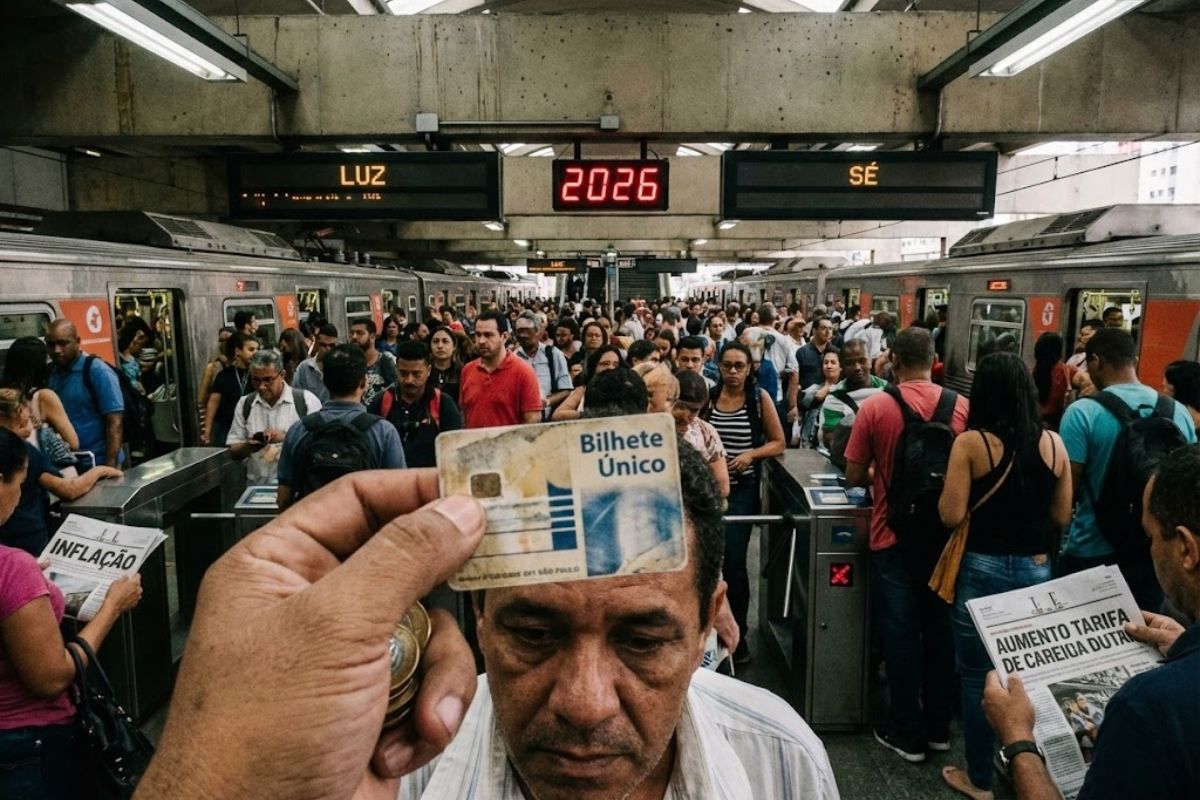
Government Tarcísio Admits That Train And Subway Fares In São Paulo Must Be Adjusted For Inflation In 2026, In A Decision Yet To Be Discussed With The City Hall, While Passengers Are Already Paying R$ 5.20 Since January To Maintain The System And Avoid New Deficits In The Metropolitan Public Transport In São Paulo.
On Thursday, the 18th, during an annual management review event at Palácio dos Bandeirantes, Governor Tarcísio de Freitas stated that the train and subway fare in São Paulo should be adjusted in 2026 based on inflation to keep the system’s accounts in order. The declaration raises concerns for those who rely daily on rail transport in the capital.
According to the governor, no specific value has been defined yet, but the idea is to repeat the formula used in the last two years, where the price index served as a reference for the ticket. Meanwhile, the passenger, who currently pays R$ 5.20 per trip, is already preparing for a possible new increase that could further strain family budgets throughout 2026.
Government Wants To Use Inflation As A Basis For The Fare Adjustment
Tarcísio de Freitas explained that the government’s guideline is to consider the inflation of the period as the main basis for adjusting the train and subway fare next year.
-
Government suspends over 3 million traffic fines in Brazil and drivers breathe a sigh of relief.

-
Iran has just approved toll charges for ships in the Strait of Hormuz and has completely prohibited the passage of vessels from the United States and Israel in the world’s most important maritime route for the global energy market.
-
Government cancels R$ 25 million “celebration” for Brasília’s anniversary and allocates funds to health.

-
Winning money seems like a dream, but it can quickly turn into a nightmare when financial success awakens envy, demands, and opportunism from all sides; this was the case with Jack Whittaker, who won $315 million in 2002 and ended up alone, bankrupt, and devastated.

The rationale, according to him, is to use the price index as a major indexer, ensuring that the amount paid at the turnstiles keeps pace with the rising costs of the system over time.
The governor emphasized that there is still no solid decision regarding the format of the adjustment, but made it clear that the management’s stance is to preserve the financial health of rail transport.
For the state government, updating the fare according to inflation is a way to try to maintain a balance between what passengers pay and what the State needs to contribute to ensure that services continue to operate.
Decision On Train And Subway Will Be Negotiated With The City Hall
During the annual management review, Tarcísio stated that the definition regarding the adjustment of the train and subway fare will not be made in isolation by the state government.
He highlighted that the decision will be built in conjunction with the São Paulo City Hall, responsible for the bus system and a direct partner in the fare integration with the railways.
According to the governor, this conversation with the municipality should take place later this year, to provide predictability for both public administrations and those who use transport daily.
The explicit goal is to reach an understanding that allows for the necessary contributions to be planned and, at the same time, to notify in advance what may happen with ticket prices in 2026.
R$ 5.20 Fare Has Already Been Adjusted In January This Year
Currently, the fare for trains and the subway in São Paulo is R$ 5.20.
The amount was adjusted in January this year, in an increase of R$ 0.20 compared to the previous price, which already represented a greater expense for those who use the system for work, study, or access services in the capital.
At that time, the Metropolitan Transport Department justified the adjustment as necessary to ensure the financial sustainability of the system.
According to the government, the increase in the ticket price was calculated after analyzing operational expenses, including the maintenance of trains, stations, and tracks, investments in infrastructure, and personnel costs involved in the operation of rail transport.
Financial Sustainability Is The Main Argument Of The Government
In defending the possibility of a new adjustment in 2026, Tarcísio reiterated the argument of the financial sustainability of the train and subway network.
For the governor, considering inflation as the main parameter helps to keep the level of public contributions manageable, avoiding further pressure on the state to cover the difference between the actual cost of the system and what is collected at the ticket counters.
According to the management, maintaining the balance between fares, subsidies, and operational costs is the central point of the discussion.
Without periodic updates to the amount paid by users, the system could accumulate a larger deficit, impacting the quality of service and the capacity for investment in modernization, expansion of lines, and maintenance of the fleet.
Passengers Fear Impact On The Pocket With A New Increase In 2026
For those already paying R$ 5.20 per trip, the prospect of a new adjustment in 2026 generates immediate concern.
Passengers who rely on trains and the subway for multiple daily commutes may feel a noticeable difference at the end of the month, especially those who do not receive subsidies, discounts, or specific benefits for transport.
In practice, any potential increase, even if aligned with inflation, tends to consume part of the salary of workers who are already facing tight budgets.
Every cent more on the fare represents a portion of the budget that is no longer allocated to food, household bills, or leisure, which helps explain the atmosphere of apprehension regarding the governor’s remarks about 2026.
And you, do you think that an adjustment based on inflation of the train and subway fare in São Paulo in 2026 is inevitable, or should the government seek other ways to ease the passenger’s financial burden?





Seja o primeiro a reagir!