





 Portuguese
  English
  Spanish
  5 min of reading
  230 comments


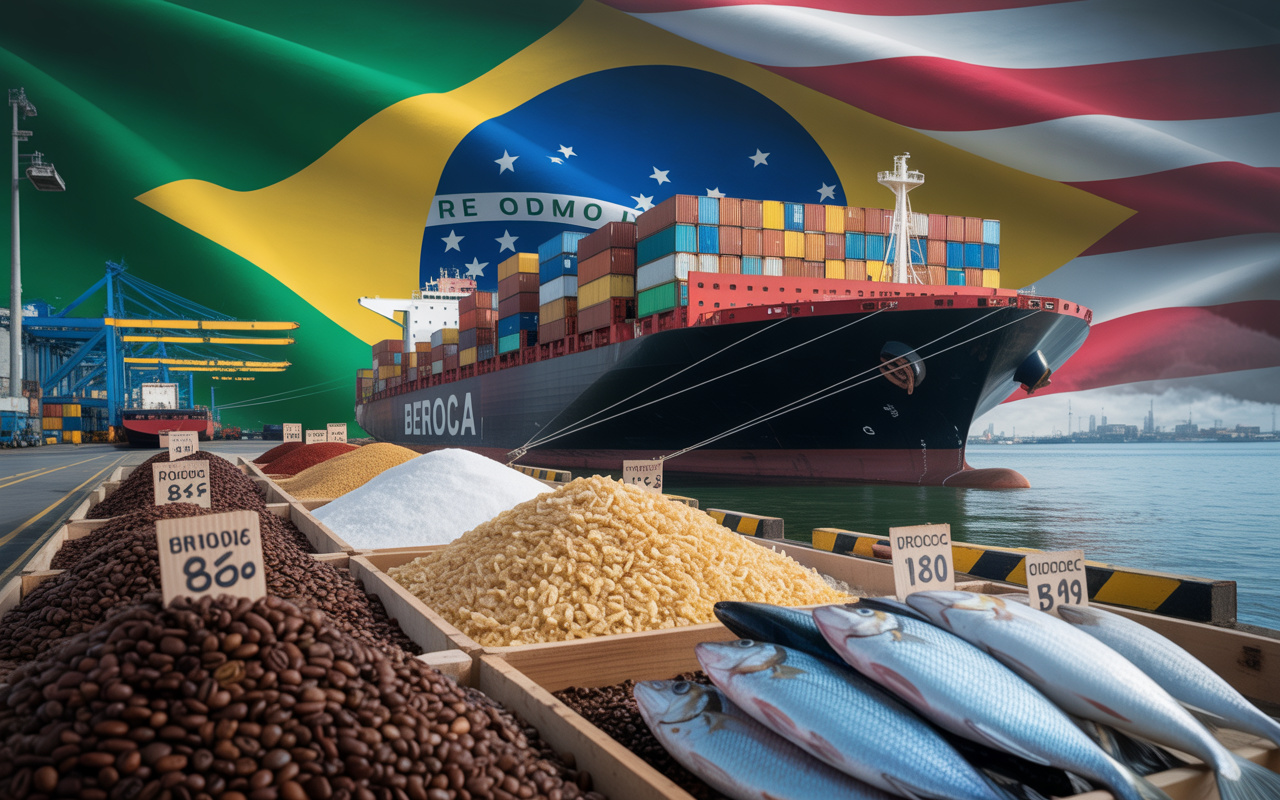


U.S. Tariff Pressure on Exporters Leads to Price Increases in Brazil. Coffee, Sugar, and Fish Become More Expensive, and Consumers Pay the Price of the Trade War.
The 50% tariff announced by the United States against Brazilian products has made it clear that the trade dispute will not be confined to borders. According to an analysis published by the specialized portal Farmdoc Daily from the University of Illinois, the impacts of these measures go beyond the drop in exports: part of the cost is being transferred within Brazil.
The result is a scenario where exporters lose competitiveness abroad while, at the same time, Brazilian consumers face higher prices on essential items like coffee, sugar, and fish. The trade war thus translates into dual pressure on the national economy.
How the 50% Tariff Affects Agriculture and Industry
The United States is one of the largest consumer markets for Brazilian agricultural commodities. Coffee, sugar, meats, and fish are essential to the trade balance.
-
The largest food company on the planet, JBS, has just opened a 4,000 square meter laboratory in Florianópolis to develop customized proteins that modulate muscle mass gain, immune response, and metabolic performance.

-
After nearly 30 bids and competition among industry giants, a Spanish company purchases one of the largest airports in Brazil for almost R$ 3 billion and takes over the management of Galeão in a concession that will last until 2039.

-
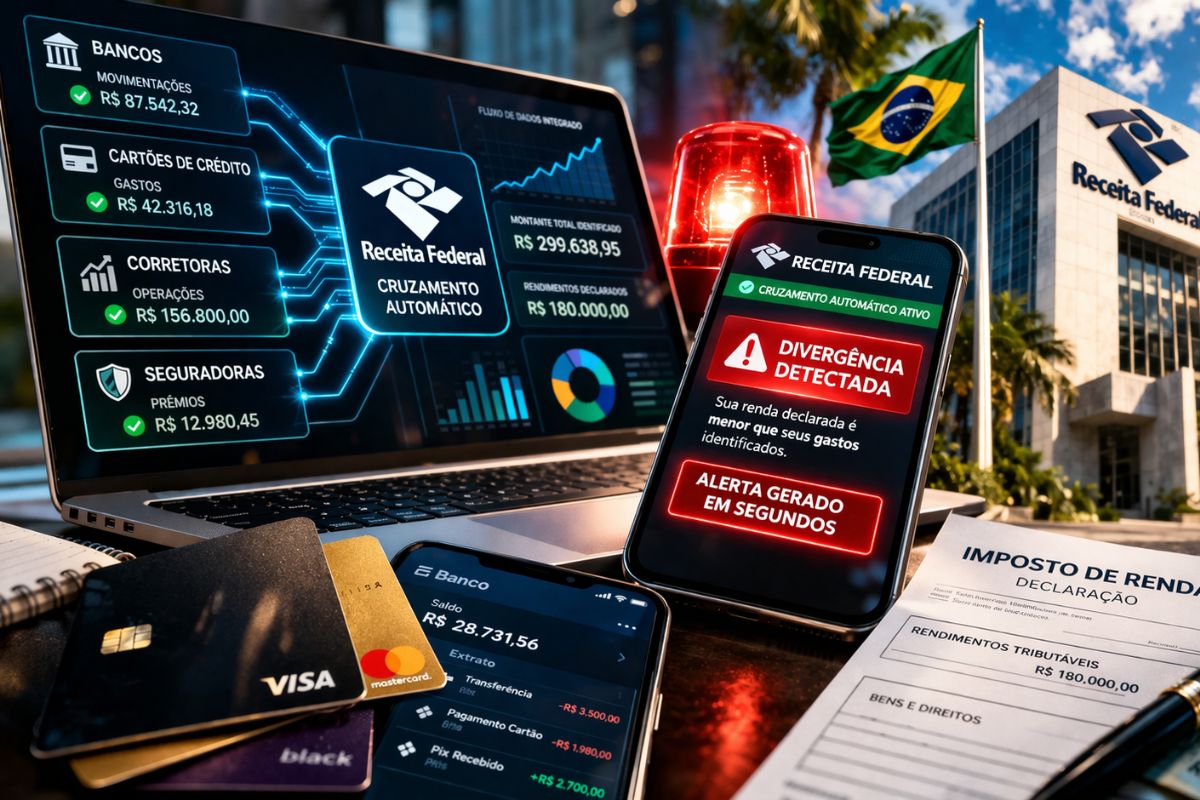
The Federal Revenue Service now automatically cross-references everything you declare with data from banks, credit cards, brokerage firms, and insurance companies, and any discrepancy between your income and your expenses triggers an alert in seconds.
-
Amid global tensions, Brazil blocks the United States’ proposal at the WTO and paves the way for a trade crisis and possible retaliations.
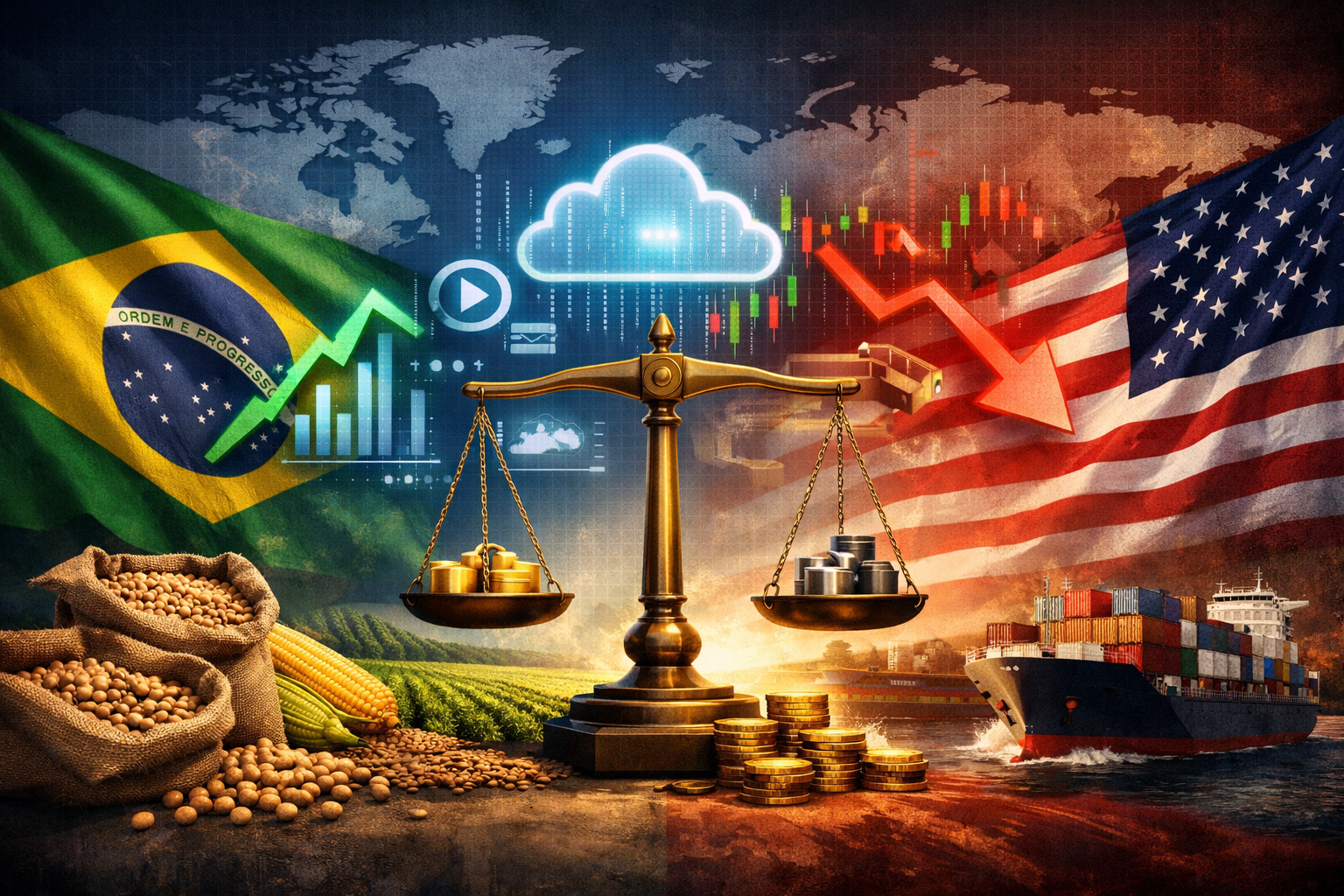
By imposing a 50% tariff, Washington raises the prices of these Brazilian-origin products and opens the door for competitors like Colombia, Vietnam, India, and Chile.
This means that Brazil sells less and earns less in international contracts. To compensate, part of the production that previously went to export is redirected to the domestic market.
However, instead of resulting in lower prices for consumers, the dynamic is different: producers prefer to maintain margins, adjusting prices upward, as they have to deal with higher costs and trade uncertainties. This is where the American tariff is directly felt in Brazilian supermarkets.
Coffee: National Pride Under Pressure from the 50% Tariff
Coffee is one of the most emblematic cases. Brazil is a global leader and sends millions of bags per year to the U.S. With the surcharge, the flow has decreased, and American roasters are seeking other suppliers.
In Brazil, the coffee sector is facing rising production costs — from more expensive imported inputs to the difficulty of agricultural credit, which remains costly due to high interest rates.


The result is that, even with part of the production staying in the country, the price of the bag does not fall. Consumers are already reporting increases in the price of roasted coffee on the shelves, in some cases exceeding 15% compared to the same period in 2024.
Sugar: Domestic Market Feels the Impact
Sugar is another strategic product that was left off the American exceptions list. Brazil is the world’s largest exporter, but now faces barriers that reduce competitiveness.
Producers who have lost market share abroad are trying to recover margins within Brazil by raising prices.
Additionally, since part of the sugarcane harvest is directed towards ethanol, there is direct competition between fuels and food.
With the U.S. off the radar and margins under pressure, the pass-through to domestic consumers intensifies. A study cited by Farmdoc suggests that the trend is toward sectoral inflation in chains related to sugar and its derivatives.
Fish: A Vulnerable Sector
One of the most vulnerable sectors is the fish and seafood industry. Traditionally exported to the U.S., they are now facing tariffs that make sales unfeasible. This has led to a flooding of the domestic market with part of the production.
What could reduce prices, in practice, does not happen: the chain faces high logistics, storage, and distribution costs, which end up being passed on to the consumer.
Moreover, the sector fears mass unemployment if the government does not maintain emergency public purchase programs — recently announced for açaí, nuts, fruits, and fish. The measure acts as a cushion, but is temporary, and does not resolve the underlying problem of loss of competitiveness.
Consumer Pays the Price
What the Farmdoc analysis highlights is the irony of the process: tariffs imposed by a foreign government, supposedly aimed at protecting its own industry, ultimately generate reflections in the pocket of the Brazilian consumer.
This happens because the export and production chain is interconnected. Less competitiveness in the international market leads to the need to recompute internal margins, whether through price increases or production cuts.
In the end, the one who pays the price is the average citizen, who finds coffee, sugar, and fish more expensive at the supermarket.
Government Tries to Contain Damage
In light of this scenario, the Brazilian government has launched emergency measures to protect the most affected sectors, such as direct purchases of products to avoid collapse in the domestic market. In addition, special credit lines are being evaluated, with lower interest rates, to allow producers to remain active even without full access to the American market.
In diplomacy, Itamaraty is working to include Brazil on the list of “aligned partners” with the U.S., which would open doors for tariff exemptions similar to those granted to other countries. However, so far, negotiations have been slow, and losses are accumulating.
Experts warn that the impact of the tariff could be even greater as it adds to other factors in the Brazilian economy, such as energy costs, fuels, and credit.
Even if official inflation remains controlled, the public’s perception is that basic food items, such as coffee and sugar, are weighing more heavily on their budgets. This silent inflation, diffuse and sectoral, can erode income and lead to social dissatisfaction.
A Lose-Lose Game
The American tariff initiates a lose-lose game: Brazilian exporters lose market, American consumers pay more, and now Brazilian consumers are also feeling the pinch. For Brazil, the dispute exposes the vulnerability of relying on a few markets and reinforces the need to diversify trade partners.
The final message from Farmdoc is clear: if Brazil does not respond quickly with structural policies, international agreements, and market strategies, it may face years of billion-dollar losses and a direct social impact on millions of consumers.







Esse artigo tendencioso é feno para **** comer, está havendo abertura de outras rotas comerciais, a balança comercial Brasileira sempre sofreu déficit com EUA, e mesmo sem o surgimento de novos mercados, haveria o aumento de oferta fazendo baixar os preços e aquecendo o mercado interno. Pense em uma notícia sem pé e sem cabeça, é a mesma coisa de acreditar que a terra é plana 🤣🤣🤣🤣
O correto é os brasileiros reduzir as compras forçando assim o produtor abaixar os preços internos. Estamos cada vez mais enriquecendo os políticos, precisamos rever nossos conceitos de bondade.
Ninguém é **** pra acreditar numa mentira desta. Dizer que café ficou muito mais caro aqui no Brasil é coisa de quem não tem conexão com a realidade e se os preços estivessem subindo por conta da tarifação, seria **** por parte do agro e os órgãos fiscalizadores estão presentes.