





 Portuguese
  English
  Spanish
  3 min of reading
  1 comment


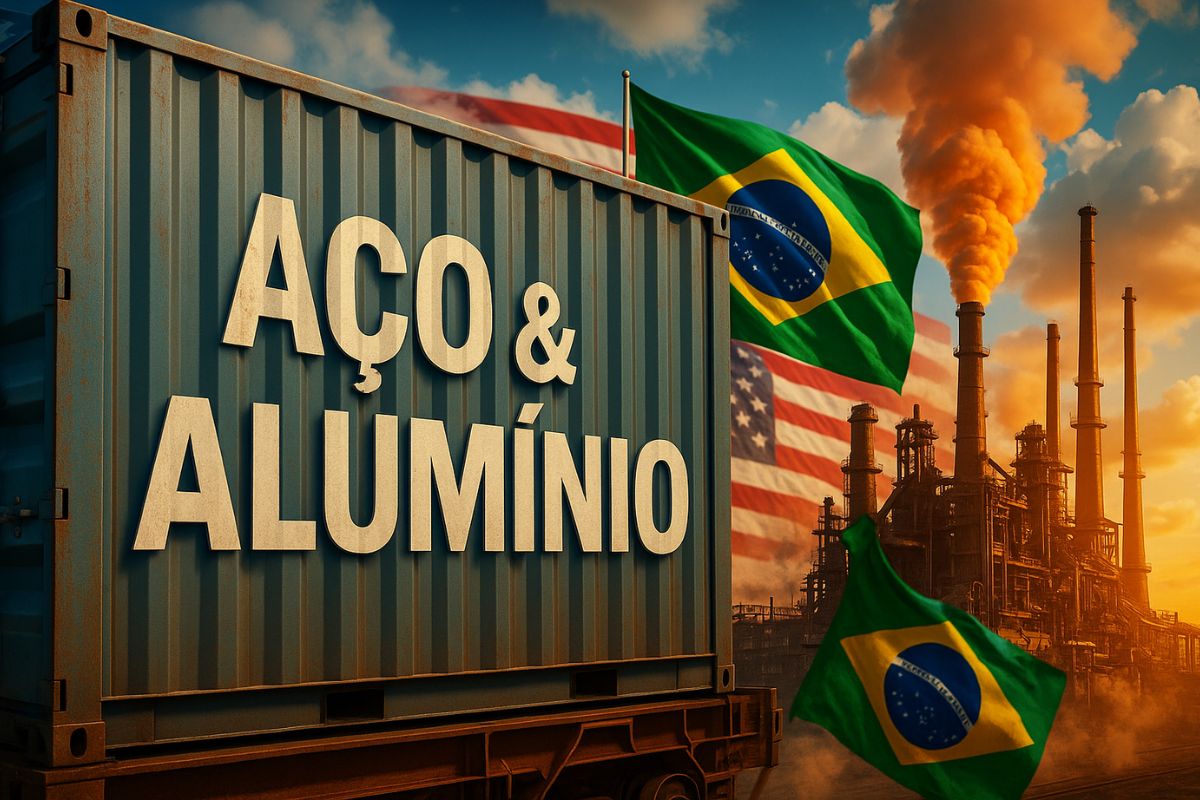


If It’s Up to Us, the Tariff Issue in Brazil Will Be Over by Tomorrow, Says Alckmin. Vice President Emphasizes That the Government Is Seeking to Accelerate Negotiations to Reduce Tariffs on Steel and Aluminum, Which Have a Strong Impact on Brazilian Exports.
The tariff issue in Brazil, imposed by the United States on steel and aluminum products, continues to be one of the biggest challenges for the national industry. In a recent statement, the Vice President and Minister of Industry and Commerce, Geraldo Alckmin, affirmed that, if it depended solely on the government, the surcharges would be eliminated immediately. The statement reinforces the administration’s effort to reduce economic impacts and defend the most affected sectors.
According to the government, emergency measures are already underway, including special credit lines from BNDES and diplomatic negotiations to diversify the destinations of Brazilian exports. The goal is to minimize losses, maintain jobs, and strengthen competitiveness in the global market.
What Is at Stake with the Tariff Issue in Brazil?
The tariff issue directly affects steel and aluminum products exported by Brazil, increasing their cost to reach strategic markets, especially the USA. These materials are the backbone of industries such as machinery, heavy equipment, automotive, and motorcycles, which amplifies the ripple effect across different segments of the economy.
-
Oil surged to $115 a barrel due to the war in the Middle East, and diesel in Brazil has already risen to R$ 7.45 per liter, while the United States…

-
Brazilian city bets on the business environment to generate jobs and attract investments in the energy sector — secretary reveals strategy at Macaé Energy 2026.

-
50 viaducts, 4 tunnels, 28 bridges, and 40 kilometers of bike paths: BR-262 in Espírito Santo will receive 8.6 billion reais for the largest engineering project in the state’s history, inspired by the Immigrant Highway in São Paulo.

-
Brazil produces too much clean energy and doesn’t know what to do with it: over 20% of solar and wind capacity was wasted in 2025 while investors flee and 509 renewable generation projects were abandoned in the last year.


For Alckmin, the measure not only harms the trade balance but also pressures the national industry to seek quick alternatives. The dependence on specific markets makes the impact even more severe, putting thousands of jobs and the financial sustainability of exporting companies at risk.
Support from BNDES and Emergency Measures
The government announced a R$ 10 billion boost in credit from BNDES, raising the total available for companies affected by the tariff issue to R$ 40 billion. The initiative seeks to ensure liquidity, preserve production chains, and stimulate the search for new customers abroad.
In addition to credit, the government has offered technical support for exporters to adapt to international standards and expand their presence in other markets. Small and medium-sized enterprises can also access the lines, provided they demonstrate a connection to sectors impacted by the tariffs.
International Strategy and New Markets
Alckmin highlighted the importance of expanding strategic partnerships, citing the trade mission to Mexico as an example of opening new export channels. Sectors such as biofuels, health, sustainable energy, and agribusiness are at the center of negotiations, with significant expansion potential.
The goal is to reduce dependence on traditional markets, such as the United States, and strengthen Brazil’s integration into the global trade. To achieve this, the government also focuses on international forums, business rounds, and investments in innovation to maintain the competitiveness of the Brazilian industry.
Impacts on the National Industry
The industrial sector believes that the measures are essential to avoid production cuts and mass layoffs. Medium and large companies, as well as small suppliers in the automotive and metallurgy supply chain, are feeling the effects of the tariff issue. Without relief from the tariffs, the risk of a decline in exports is immediate, leading to billion-dollar losses in revenue.
On the other hand, the search for new markets and the focus on technology and innovation can make the Brazilian industry more resilient in the long term. The expectation is that the combination of credit, diplomatic negotiations, and diversification will help cushion the impact until the tariffs are revised.
The tariff issue in Brazil represents one of the largest recent challenges for the national economy, directly affecting strategic sectors and thousands of jobs. The government of Geraldo Alckmin signals urgency in removing the barrier, but acknowledges that the solution depends on complex negotiations in the international arena.
And you, do you think the government is taking the right measures to tackle the tariff issue? Do you believe the Brazilian industry will be able to overcome this challenge? Leave your opinion in the comments — your insight can enrich the debate.







Infelizmente o governo brasileiro esta indo na contramão sobre as negociações. Infelizmente o governo do PT não sabe negociar na minha opinião o Presidente Lula deveria assumir as negociações com o governo Americano esse seria o melhor caminho