





 Portuguese
  English
  Spanish
  3 min of reading
  1 comment


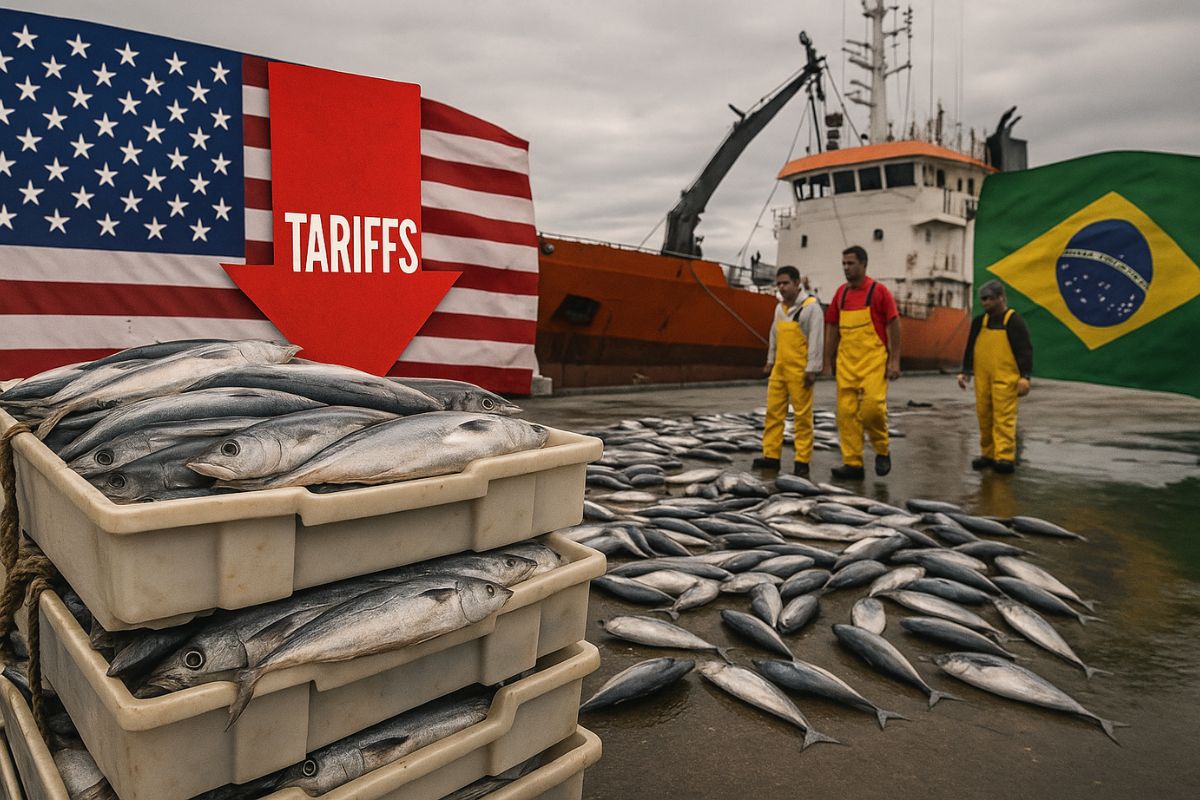

Fish Sector Is The First To Feel The Impact Of The 50% Surcharge Announced By The USA; Containers With More Than 1,000 Tons Of Fish Are Stuck In Northeastern Ports.
The Brazilian fish industry was the first to feel the direct impact of the new Trump Tariffs. Just one day after U.S. President Donald Trump announced a 50% surcharge on Brazilian products, the export of around 1,000 tons of fish was paralyzed on Thursday, July 10, 2025.
According to information from the Brazilian Association of Fish Industries (ABIPESCA), 58 refrigerated containers that were supposed to head to the USA were not shipped. The drastic measure reflects the infeasibility of exporting with the new tariff and raises an alert for a sector that generates R$ 8 billion annually and heavily relies on the American market.
What Happened? The 50% Surcharge And The Immediate Impact
The crisis was triggered by the announcement from Donald Trump’s government to impose a 50% tariff on a range of Brazilian products, effective from August 1, 2025.
-
The largest food company on the planet, JBS, has just opened a 4,000 square meter laboratory in Florianópolis to develop customized proteins that modulate muscle mass gain, immune response, and metabolic performance.

-
After nearly 30 bids and competition among industry giants, a Spanish company purchases one of the largest airports in Brazil for almost R$ 3 billion and takes over the management of Galeão in a concession that will last until 2039.

-
The Federal Revenue Service now automatically cross-references everything you declare with data from banks, credit cards, brokerage firms, and insurance companies, and any discrepancy between your income and your expenses triggers an alert in seconds.

-
Amid global tensions, Brazil blocks the United States’ proposal at the WTO and paves the way for a trade crisis and possible retaliations.

The market’s reaction was immediate. On July 10, a total of 58 containers loaded with approximately 1,000 tons of fish had their shipment to the United States canceled. The cargo is now awaiting a definition regarding the future of trade relations between the two countries.
Where Is The Stuck Cargo? The Ports Of The Northeast
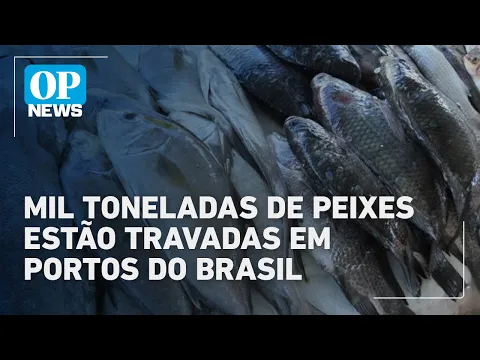

The containers with halted production are distributed across three of the main ports in the Brazilian Northeast:
- Port of Salvador, in Bahia.
- Port of Suape, in Pernambuco.
- Port of Pecém, in the metropolitan region of Fortaleza, Ceará.
Why Is The Fish Sector So Vulnerable To Trump Tariffs?
The Brazilian fishing sector is particularly dependent on the North American market, making it extremely vulnerable to the new Trump Tariffs.
- Primary Destination: Between 70% and 80% of all fish exports from Brazil go to the United States.
- Closed European Market: The European Union, another major consumer market, has maintained sanitary restrictions on Brazilian fish since 2017, limiting export alternatives for companies in the sector.
The Industry’s Position: “There’s No Way To Absorb The Production”
The situation is critical, according to ABIPESCA. The president of the association, Eduardo Naslavsk, stated that the Brazilian internal market cannot absorb all the production that was supposed to be exported to the USA.
According to him, production costs have already been incurred based on sales to the external market, and redirecting to the national market would be unfeasible.
The Uncertain Future: What Will Happen To Exports?
The suspension of exports is due to logistical and time constraints. Maritime transportation of containers between Brazil and the United States takes, on average, 18 to 20 days.
This means that any new shipment sent from now on would arrive at its destination after August 1, already under the new 50% tariff. As American importers do not want to bear this new cost, exports have been suspended until there is clarity on the new Trump Tariffs.
What do you think about the impact of these new tariffs on the Brazilian economy? Share your opinion in the comments.







O Lula quer afundar o Brasil