





 Portuguese
  English
  Spanish
  5 min of reading
  0 comments


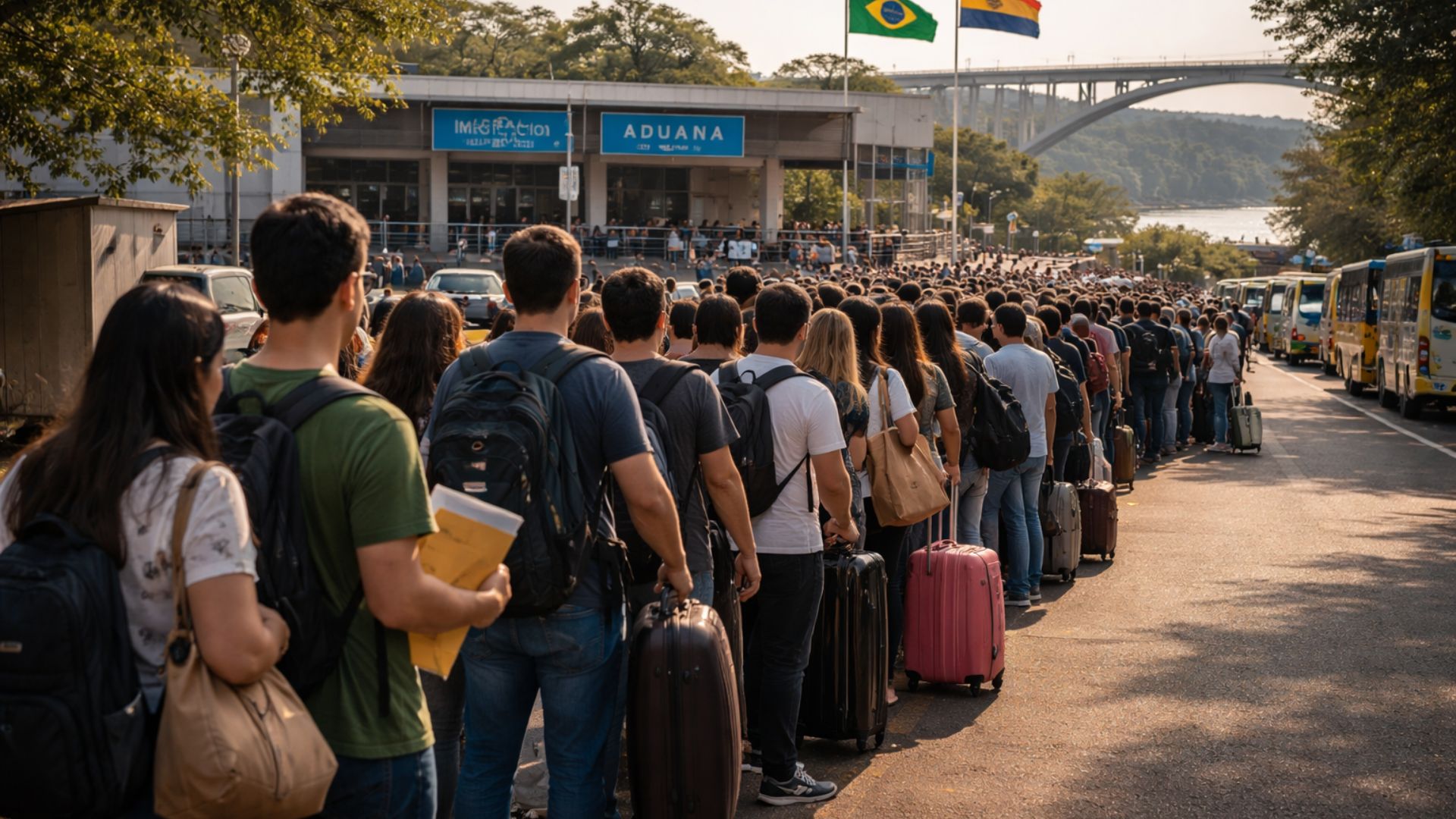
Record Movement of Brazilians Toward Paraguay Exposes New Dynamics at the Border, Accelerates Residency Applications and Transforms Ciudad del Este into an Axis of Migratory Regularization, Businesses and Public Cooperation Between the Two Countries.
The movement of Brazilians seeking residency in Paraguay gained unprecedented scale throughout 2025 and consolidated the neighboring country as the main regional destination for migratory regularization for this group.
Official data from the National Directorate of Migrations of Paraguay shows that, by the end of November, 20,852 Brazilians had obtained residency in the country, a number that placed Brazil in the lead among nationalities with the highest volume of grants during the period.
Ciudad del Este Concentrates Residency Applications in Paraguay
The increase is also reflected in the total number of processes.
-
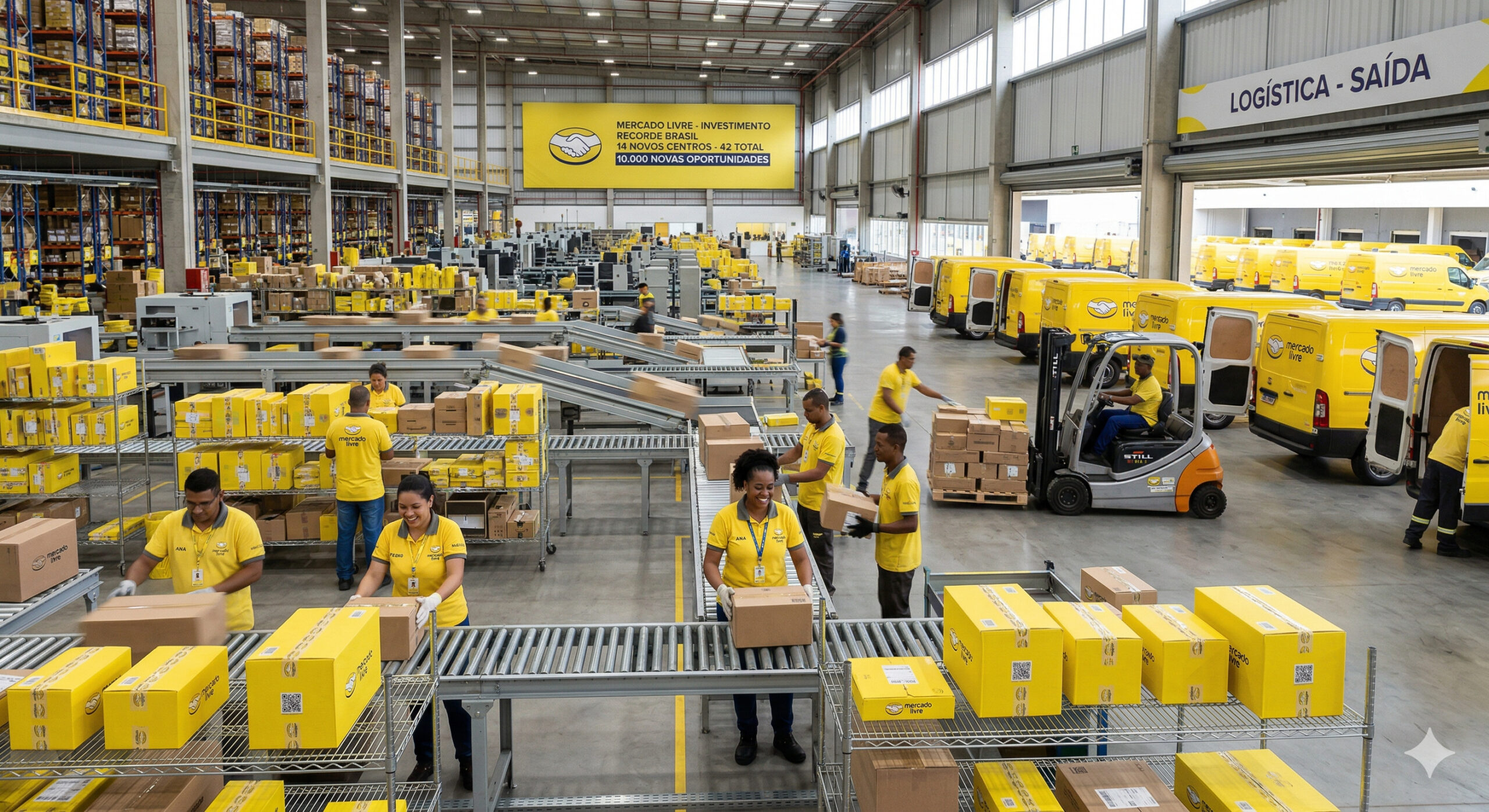
Mercado Livre “opens the vault” and announces a record investment of R$ 57 billion in Brazil in 2026, a value 50% higher than the previous year, with an expansion plan that includes 14 new logistics centers, totaling 42 units in the country and hiring an additional 10,000 employees.
-
How investment in technology can revolutionize the national economy and enhance industrial gains, according to a study that highlights the direct impact on productivity, innovation, and wealth retention within Brazil.

-
The largest food company on the planet, JBS, has just opened a 4,000 square meter laboratory in Florianópolis to develop customized proteins that modulate muscle mass gain, immune response, and metabolic performance.

-
After nearly 30 bids and competition among industry giants, a Spanish company purchases one of the largest airports in Brazil for almost R$ 3 billion and takes over the management of Galeão in a concession that will last until 2039.


In the first half of 2025, Paraguay granted 16,406 residencies to foreigners, up from 11,576 recorded in the same time frame in 2024, according to the Paraguayan migration authority.
Up to November, there were 36,263 residencies granted and 43,802 applications received, representing a growth of over 50% compared to the entire previous year.
In practice, the pressure from this demand has become more visible in Ciudad del Este, a city neighboring Foz do Iguaçu and the main axis of this flow.
The official program MigraMóvil, created to decentralize and accelerate migration services, held at least three major editions in the city in 2025.
In March, the initiative received 1,065 residency applications.
In June, another 765 applications were registered.
In September, a new edition concluded the week with 1,180 requests, this time at the Mangoré Cultural Center.
These mobilizations help explain why Ciudad del Este has become one of the main points of regularization for foreigners interested in living in Paraguay.
The National Directorate of Migrations itself reports that MigraMóvil was designed to expand, decentralize and expedite the reception of applications, with mobile teams capable of receiving, processing and delivering migratory documents outside the central headquarters.


How Temporary Residency Works for Brazilians
Temporary residency, one of the most sought-after modalities by Brazilians under the Mercosur agreement, has a validity of two years.
According to the rules officially announced, it allows foreigners to remain legally in the country and serves as a preliminary step for permanent residency.
The Paraguayan migratory legislation also provides, during the processing period, a migratory status that enables study and work during the application process.
What was previously concentrated in the Paraguayan capital has begun to be resolved, in part, within the border area itself.
This administrative relocation has reduced the dependency on trips to Asunción and transformed eastern Paraguay into a corridor not only for commerce but also for documentation.
The schedule of MigraMóvil and the sequence of operations in border cities show that the Paraguayan government has started to treat migratory regularization as a permanent routine, rather than sporadic services.
Border Between Brazil and Paraguay Enters a New Phase
The advancement of this process accompanies a broader reconfiguration of the relationship between Brazil and Paraguay in the trinational region.
If, at first, crossing the border was marked by business migration and the search for lower costs, now the movement also involves individuals interested in residing, working, and establishing businesses in Paraguayan territory in a regular manner.
The numbers from formal migration help illustrate this change in profile.
While the demand for residency is growing, governments and educational institutions are trying to respond with a technological cooperation and public management agenda.
On February 11, 2026, the Government of Paraná and the Universidad Nacional del Este signed a protocol of intent to create a Binational Innovation Hub Paraná-Paraguay, with participation from the Paraguayan university and collaboration with the Itaipu Paraguay Technology Park.
The official proposal is to transform the border region into a “laboratory-territory” aimed at concrete solutions for governments, the productive sector, and society.
Binational Hub Invests in Innovation and Public Services
According to the Paraná government, the project aims to connect existing assets in the region, such as energy generation, logistics, tourism, and university structures, to test public policies and technologies in areas such as artificial intelligence applied to the public sector, security, strategic logistics, energy, green hydrogen, and smart cities.
One of the highlighted axes is public security, with integrated tools for support at the border and improvement of services for women victims of violence.
In announcing the agreement, Secretary Alex Canziani stated that the initiative represents “a concrete step” to transform the border into an environment for technological development and real solutions for the population.
Rector José Sanchez mentioned that the partnership expands scientific and technological cooperation and may generate direct benefits for Alto Paraná.
The statements show that, from the institutional perspective, the border has begun to be treated as a space for shared public policy.
This scenario helps to understand why the residency queue and integration projects go hand in hand.
Formal migration is growing at a time when the area between Foz do Iguaçu and Ciudad del Este is ceasing to function merely as a corridor for shopping, tourism, and cargo transport.
What is emerging is a more integrated region, where the movement of people, documentation, public services, and innovation are becoming part of the same machinery.
In the migratory field, official data leave no doubt about Brazil’s centrality in this process.
In the institutional field, the new hub suggests an attempt to organize this transformation with some governance.
The sum of these factors reinforces the position of Ciudad del Este and the triple border as a strategic area for business, documentation regularization, and cross-border cooperation, with effects that already transcend the traditional logic of border trade.








-

2 pessoas reagiram a isso.