





 Portuguese
  English
  Spanish
  5 min of reading
  61 comments





Embraer Considers Transferring KC-390 Production to the United States, Evaluating Strategies to Circumvent Tariffs and Maintain Presence in One of the Largest Markets in the Aerospace Sector. Decision Could Impact Jobs and Global Production Chain of the Company.
Embraer, a global reference in the aerospace industry, is considering transferring part of the production of the KC-390 military cargo plane to the United States in response to the escalation of tariffs imposed by the U.S. government on Brazilian products.
As reported on Tuesday (29) by InvestNews, the decision primarily aims to bypass the increase in tax costs and protect the company’s competitiveness in one of the world’s most strategic markets, which could mark a significant inflection in the Brazilian manufacturer’s industrial strategies.
Tariffs in the United States Pressure Embraer
The announcement of a 50% tariff on Brazilian products made by President Donald Trump raised alarms among investors, businesspeople, and industry experts.
-
The largest food company on the planet, JBS, has just opened a 4,000 square meter laboratory in Florianópolis to develop customized proteins that modulate muscle mass gain, immune response, and metabolic performance.

-
After nearly 30 bids and competition among industry giants, a Spanish company purchases one of the largest airports in Brazil for almost R$ 3 billion and takes over the management of Galeão in a concession that will last until 2039.

-
The Federal Revenue Service now automatically cross-references everything you declare with data from banks, credit cards, brokerage firms, and insurance companies, and any discrepancy between your income and your expenses triggers an alert in seconds.

-
Amid global tensions, Brazil blocks the United States’ proposal at the WTO and paves the way for a trade crisis and possible retaliations.


Embraer was soon identified as one of the companies most exposed to the impacts of the new measure, given that about 30% of the company’s export revenue comes from the United States.
When local operations are considered, the American market represents more than half of Embraer’s revenue.
In an interview with InvestNews, Embraer’s CEO, Francisco Gomes Neto, stated that the effect of such a high tariff would be similar to the impact of the Covid-19 pandemic on the company in 2020.
At that time, commercial aircraft production dropped from one hundred to fifty units annually.
Embraer also had to deal with Boeing’s withdrawal from acquiring its commercial division, deepening the crisis in the global aerospace sector.
Production Strategies and Jobs at Risk
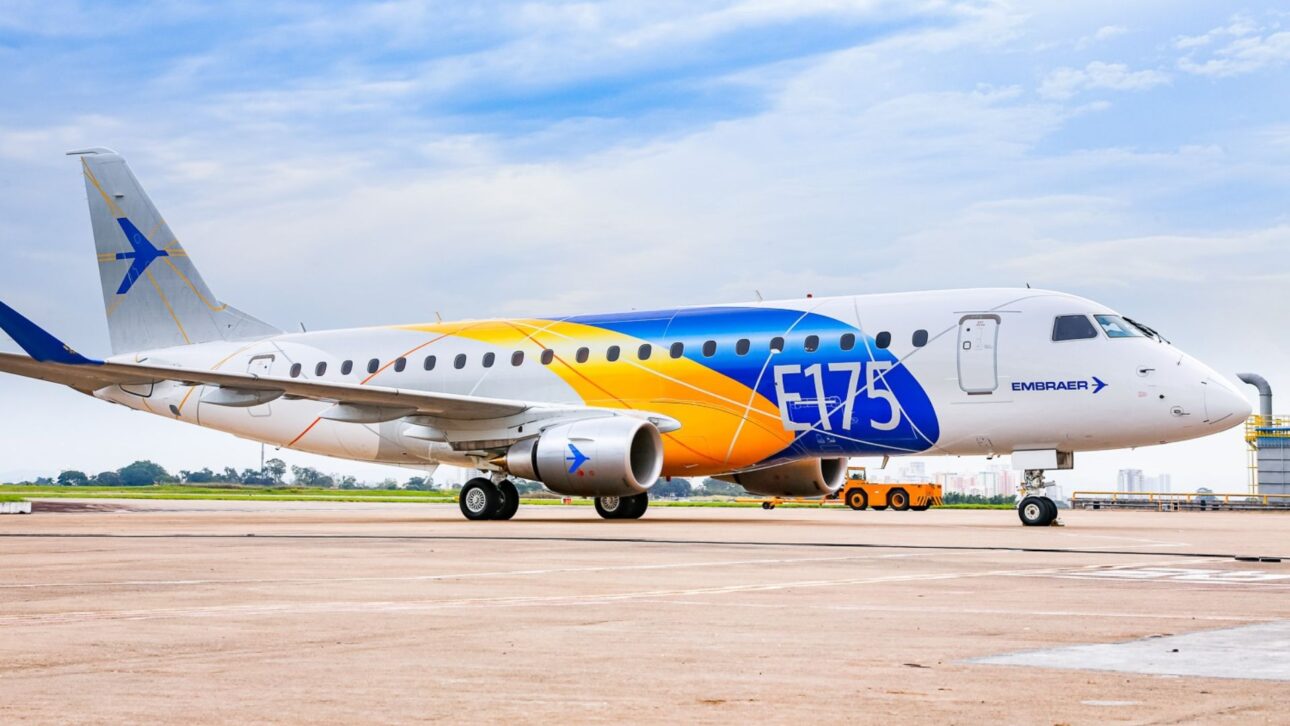
Currently, Embraer has factories in the United States, with its main product being the E-175 regional jet, originally produced in São José dos Campos, São Paulo.
InvestNews reported that, given the persistence of high tariffs, there is a concrete possibility of canceling a significant portion of orders, which would force the company to reassess its production plans and consider a 20% reduction in its workforce.
Before the tariff crisis, Embraer expected to increase its revenue by over 50% in the next five years, reaching US$ 10 billion, but this scenario is now under strong uncertainty.
Despite the unfavorable context, Francisco Gomes Neto stated in an interview with InvestNews that he still hopes for a negotiated solution, highlighting the economic importance of Embraer for both Brazil and the United States.
The executive has intensified meetings with authorities from both countries and with strategic partners such as suppliers and airlines.
As highlighted by the website, the CEO has received positive feedback from interlocutors on both sides.
Strategic Partnerships and Global Relevance
In releasing the second-quarter results, Robert D. Isom, CEO of American Airlines — the world’s largest operator of E-175 aircraft — expressed support for Embraer and willingness to participate in negotiations.
According to InvestNews, Isom emphasized the strategic value of the partnership and the importance of the E-175 for American regional aviation. Embraer operates with an internationalized supply chain.
The E-175, for instance, utilizes engines manufactured in the United States, along with components from Germany, France, Spain, and Japan.
This global integration is one of the factors that has sustained tariff exemption for the global aviation sector for nearly fifty years. The newspaper also pointed out that the new tariff scenario threatens to break with this historical tradition.
Financial Impacts and International Negotiations
According to InvestNews, since April, Embraer has already faced a 10% tariff on Brazilian products, considered manageable by the company and the market.
The company managed to offset the impact, which was 0.9 percentage points on the Ebitda margin.
However, the imminence of the 50% tariff represents a totally different risk, with potential structural and financial repercussions for Embraer.
According to InvestNews, Francisco Gomes Neto believes that the solution may involve negotiations similar to those conducted between the United States and the United Kingdom, where mutual purchasing commitments generated tariff benefits.
The executive believes that economic rationality should prevail to avoid losses not only for Embraer but also for the U.S. market itself.
North American Market and Embraer Leadership
The American market is the primary destination for Embraer’s executive jets, with 70% of sales to customers in the United States.
In the country, the company’s fleet of executive jets already exceeds 1,100 aircraft, about 7% of the total for the U.S.
Models such as Phenom and Praetor, assembled in Florida, have a significant composition of components from Brazil and other countries subject to tariffs: 40% in the case of the Phenom and 60% in the Praetor.
In commercial aviation, Embraer also stands out with nearly a thousand aircraft in operation, mainly the E-175, responsible for 88% of the small commercial jet market.
InvestNews highlighted that, due to the American “scope clause,” which limits the maximum takeoff weight on regional routes, the E-175 remains practically irreplaceable for airlines in the country.
Industrial Presence and Supply Chain in the United States
Embraer has a consolidated industrial and commercial presence in the United States for 45 years, with factories in Melbourne and Jacksonville, as well as service centers in states like Texas, Arizona, and Tennessee.
Today, the company directly employs about 3,000 people on American soil, in addition to generating 10,000 indirect jobs among suppliers and service providers.
The total value of Embraer’s assets in the United States already reaches US$ 3 billion.
InvestNews further reported that, from a commercial standpoint, the relationship between Embraer and the U.S. favors the American market: the Brazilian manufacturer expects to purchase over US$ 20 billion in components over the next five years, while exports to the United States are expected to total US$ 13 billion during the same period.
This data reinforces Embraer’s arguments to try to exclude aircraft and parts from the tariff scope.
Expansion of KC-390 Production in the USA
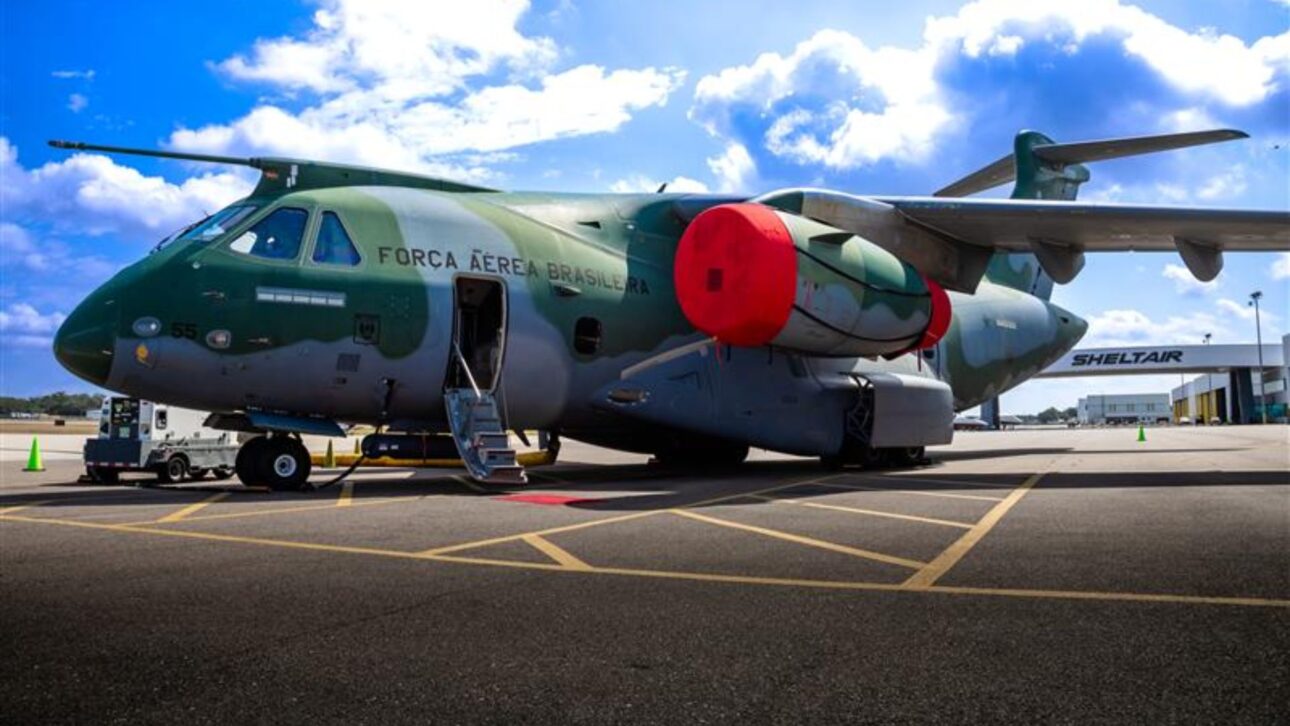
Another possibility under consideration, according to information from InvestNews, is the expansion of KC-390 military cargo aircraft production in the United States.
The model, already sold to over 40 air forces around the world, could be produced on American soil if demand, especially from countries like India, grows substantially.
The company evaluates that, in light of this scenario, establishing new assembly lines in the United States would be feasible to meet market needs and generate local jobs.
Uncertain Future and Prospects for Embraer
In light of the new tariff scenario, Embraer’s future remains uncertain, but the company shows willingness to adapt its structure and negotiate alternatives, following the rapid political and economic transformations in the sector.
Do you believe that KC-390 production in the United States could be the solution for Embraer to overcome the tariffs and maintain its leadership in the aerospace sector?






Vamos lá seus petistas jumentos façam o L agora pro maior presidente do Brasil que esta afundando o brasil vejam se vcs acordam.
Esse site é certamente entreguista, anti nacionalista
Esse KC-390 da foto inicial, entre o Lula e o Trump, tá tunado hein kkkk QUADRIMOTOR!