





 Portuguese
  English
  Spanish
  3 min of reading
  0 comments



Federal Court of Accounts Evaluates Nine Processes This Week, Including Impasses in the Contract of the Southeast Railway and Fiscal Reports of the Federal Government
The Federal Court of Accounts (TCU) begins this week a series of votes involving nine processes of great economic and institutional impact. Among the items on the agenda, the consensual solution process regarding the contract of the Southeast Railway stands out, extended in 2022 for another 30 years, valid until 2056.
According to UOL, the analysis of the contract takes place amid controversies related to infrastructure works, such as viaducts, walkways, and signaling systems, which raised questions about the execution and the costs incurred by the concessionaire MRS Logística S.A. The theme is reported by Minister Jorge Oliveira and is expected to be debated in the plenary on Wednesday, September 17.
What’s at Stake in the Southeast Railway
The contract for the Southeast Railway was prematurely extended in July 2022, in a process that ensured MRS Logística the continuation of the concession until 2056.
-
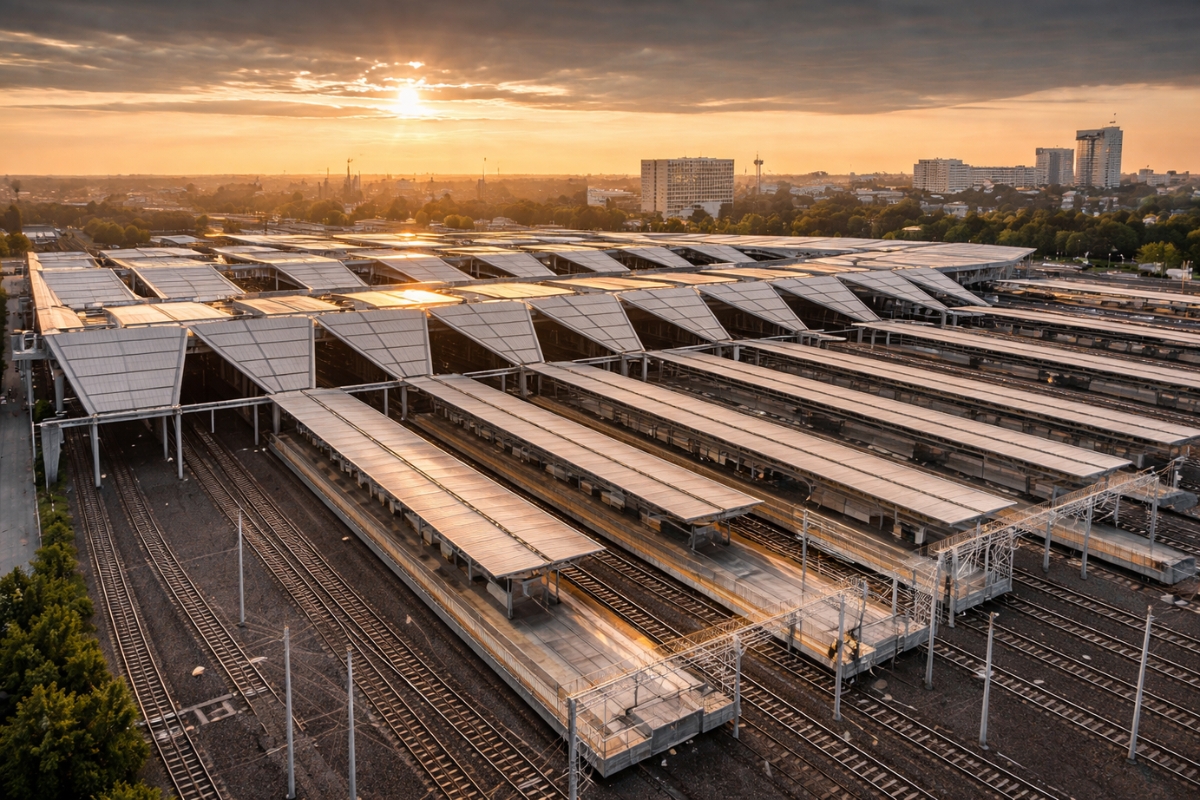
In A European City, The Country’s Largest Railway Junction Was Modernized Without Closing Its Doors, Kept Trains Running During Years Of Construction, Now Serves Up To 60,000 Passengers Per Day, And Installed Solar Panels That Generate About 30% Of Its Energy
-
Famous Brazilian Railway May Become a Parking Lot

-
The Country of “Punctual As a Train” Admits It Has Lost Control: High-Speed Trains Delay, Stop, Disappear from the Map and Turn 6-Hour Trips into 10, While Deutsche Bahn Promises Restructuring in 2026 But Faces 19th Century Infrastructure, Staff Shortages and Sections Closed for Months

-
With an Investment of R$ 700 Million in One of the Country’s Main Rail Networks, VLI Reinforces Infrastructure, Receives 8 New Locomotives, and Expands the Corridor Connecting 7 States, Boosting Jobs and the Transportation of Grains, Ore, and Oil Products to the Port of Santos


The main debate point is the form of compensation for the required investments, especially in urban areas crossed by the railway.
Among the planned works are the construction of walkways and viaducts, as well as the modernization of railway signaling.
For the TCU, the question is to verify whether the agreed-upon countermeasures are being fulfilled and whether public resources are being adequately applied.
Denunciation Involving Petrobras Will Also Be Analyzed
Another relevant process on the agenda is a denunciation about alleged irregularities in bidding for chartering vessels by Petrobras.
According to information from UOL, the TCU seeks to investigate whether there were flaws in the competitive process and whether the contracts respected the principles of transparency and efficiency.
The analysis of this case occurs alongside other inspections in the energy sector, including contracts for the purchase and sale of electricity under the Priority Thermoelectric Program (PPT).
Fiscal Monitoring and Audits in Social Programs
In addition to the Southeast Railway and Petrobras, the TCU ministers will also evaluate the report on the fiscal results of the second bimester of 2025, under the report of Minister Benjamin Zymler.
Another item on the agenda is an operational audit of the Bolsa Família Program, which aims to support inspection reports on public policies of the federal government.
According to the Court, the goal is to ensure the correct application of resources and evaluate the effectiveness of the social program.
Extraordinary Session and Other Processes Under Analysis
On Tuesday, the TCU will also hold an extraordinary session to address the revision of the Internal Rules of the Court, a proposal that may change internal procedures for judgment and inspection.
Among the other processes, the following are expected:
Representations regarding the inspection of electricity contracts,
monitoring of concession auctions in the transmission sector,
and denunciations about port tariffs charged by the National Agency for Waterway Transportation (Antaq).
The TCU’s agenda this week highlights the relevance of the Court of Accounts in monitoring billion-dollar contracts and strategic public policies.
The analysis of the Southeast Railway contract, extended until 2056, will be one of the central points, but denunciations at Petrobras and social audits are also expected to generate repercussions.
And you? Do you believe that the extension of the Southeast Railway contract until 2056 serves the public interest or should it be reviewed? And how do you evaluate the TCU’s actions in cases involving Petrobras and social programs? Leave your opinion in the comments — your view is essential for this debate.








-

Uma pessoa reagiu a isso.